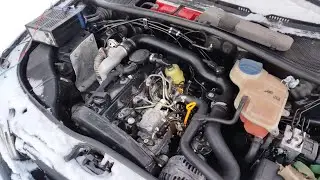
RENAULT triber vehicle speed multiplexed information check antipoluction system
Автор: Automotive Solution
Загружено: 2026-01-07
Просмотров: 294
Описание:
Vehicle speed multiplexed information refers to how a car's speed data (and other signals) is shared across a network of electronic control units (ECUs) using a single communication line, rather than dedicated wires for each signal, reducing complexity and cost by transmitting data like wheel speed (from ABS) to the engine, transmission, and instrument cluster via a Controller Area Network (CAN) bus, often seen in diagnostic codes like "Vehicle speed multiplexed information missing".
How it works
Centralized Sensing: A sensor (often in the Anti-lock Braking System - ABS) detects wheel or transmission speed.
Multiplexing: This single speed signal, along with other data, is bundled and sent as digital messages (packets) over a twisted pair of wires (the CAN bus).
Information Sharing: Other ECUs (like the Engine Control Module, Transmission Control Module, instrument cluster) "listen" to the network and pick up the speed data they need.
Benefits
Less Wiring: Fewer wires, connectors, and reduced weight.
Cost Reduction: Cheaper due to less material.
Increased Reliability: Fewer connection points mean fewer potential failures.
Integrated Control: Allows different systems (traction control, cruise control, speedometer) to work together seamlessly.
Common issues
Diagnostic Codes: A code like "Vehicle speed multiplexed information missing" (DTC) indicates a problem with this shared signal, often pointing to a faulty sensor or network issue, preventing ECUs from getting accurate speed data.
Example scenario
The ABS module reads wheel speed, sends it as a multiplexed signal on the CAN bus, and the engine module uses it for traction control, while the instrument cluster uses it to show the driver the speedometer reading.
Повторяем попытку...

Доступные форматы для скачивания:
Скачать видео
-
Информация по загрузке: