RWO Oily Water Separator Functionality
Автор: Separator Spares & Equipment, LLC
Загружено: 2023-09-13
Просмотров: 3962
Описание:
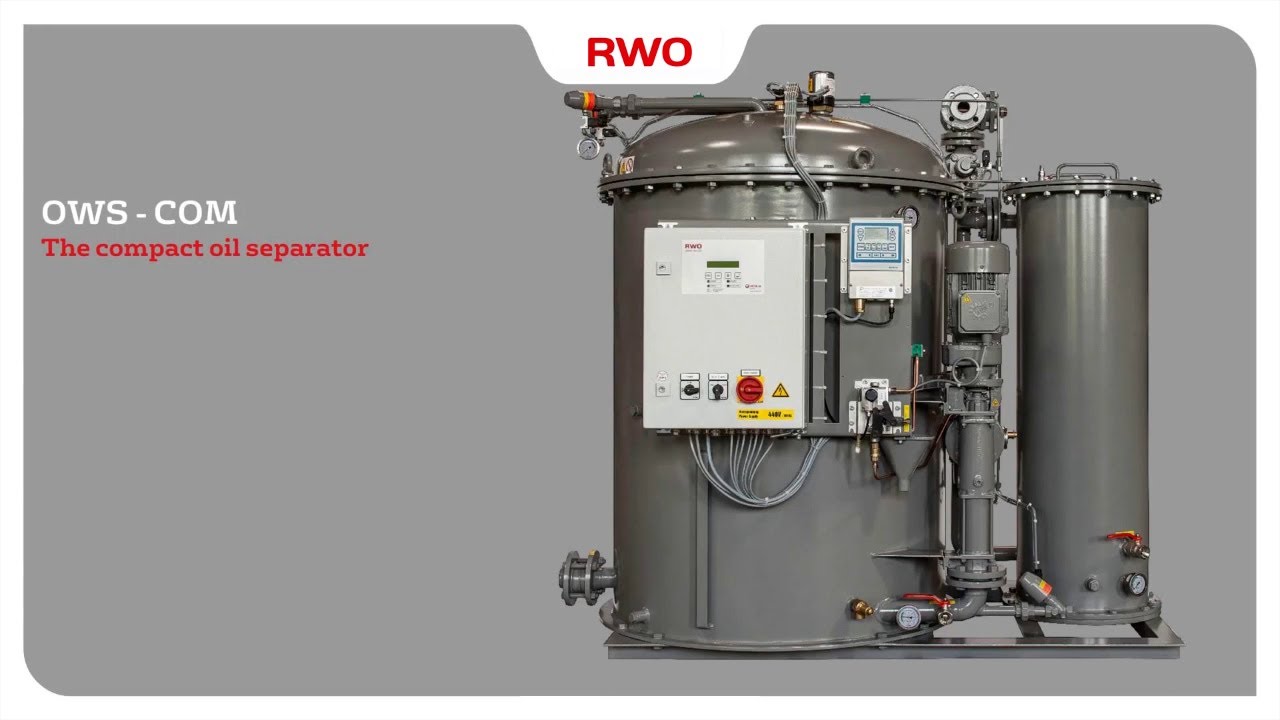
In this animation, RWO illustrates the working principle of the RWO Oily Water Separator.
The RWO oily water separators are based on over 45 years of experience in bilge water treatment. Over 16,000 ships have already been equipped with this oily water separator system. The RWO OWS-COM oily water separator complies with the IMO Resolution MEPC.107(49) by using a combination of the highly effective open porous coalescer together with a second stage emulsion breaking oil and hydrocarbon polisher.
The bilge of a vessel is the lowest compartment on a vessel. This is where bilge water collects. It may result from condensate, rough seas, rain, leaks in the hull or stuffing box, or other interior spillage. The collected water may contain various contaminants, including oil and lubricants, and must be pumped out periodically when the bilge holding tank gets filled.
Discharge of bilge liquids may be restricted and for commercial vessels is regulated in international waters under the jurisdiction of the International Maritime Organization (IMO) through the regulation Marpol Annex I. IMO Resolution MEPC.107 (49) requires for treated bilge water overboard discharge that does contains no more than 15 parts per million (ppm) oil content.
Other regulations require even stricter discharge standards. The voluntary DNV-GL Clean (Design) notation stipulates a maximum of 5 ppm of oil content remaining in the water after treatment before pumping overboard.
0:05 OWS - COM Water Discharge - Overboard
0:21 OWS - COM Water Pass Adsorber - Overboard
0:38 OWS - COM Water Pass Adsorber - Recirculation
0:54 OWS - COM Oil Discharge
1:12 OWS - COM Flushing
The most commonly used oily water treatment systems use gravity to separate water from oil and solids. They are based on the principle of coalescence. Coalescers bind smaller and minuscule droplets of oil into oil droplets, which then rise faster in accordance with Stokes‘ law. Coalescing elements, on the surface of which the finest oil droplets settle, promote the coalescence of smaller droplets and ensure that the oil-water emulsion separates into coherent phases more quickly and completely. As a result, the lighter oil collects on the surface, while the cleaned water remains in the lower part of the oil separator tank, where it can be drained off and pumped through a second oil separator stage for fine filtration. In this second filter stage, emulsions are separated by activated carbon filters, and hydrocarbons still present in the water are bound. Through this process, concentrations well below 5 ppm can be achieved. The particles adhere to the filter cartridges. Over a period of time, depending on the degree of contamination, the activated carbon filters become saturated.
Before discharge overboard, a sensor measures whether the pre-set maximum concentration of, e.g., 15 ppm residual oil content has been reached by this treatment. If it is still higher than this, the mixture is usually pumped back into the bilge water tank. The RWO OWS-COM is equipped with an oil content measuring unit, which takes measurements before and after the second oil separation stage.
If the first stage of the coalescence process has already reached the desired target, the treated water is discharged directly from the ship without passing through the second filter stage. This approach extends the service life of the activated carbon filter cartridges and reduces the energy used.
Need RWO oily water separator spare parts or service?
Separator Spares & Equipment supplies spare parts and services for RWO Oily Water Separators.
SERVICE: https://separatorequipment.com/servic...
SPARE PARTS: https://separatorequipment.com/spare-...
Повторяем попытку...
Доступные форматы для скачивания:
Скачать видео
-
Информация по загрузке:


