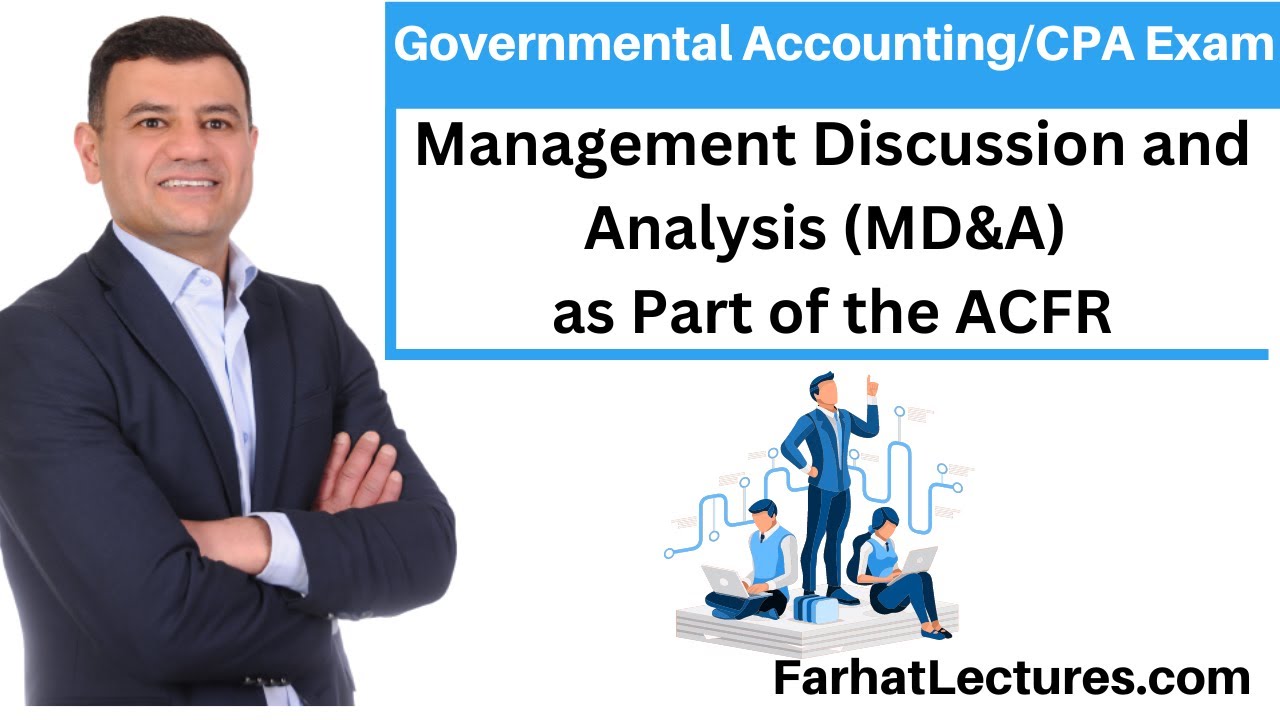
Management Discussion and Analysis (MD&A) Annual Comprehensive Financial Report (ACFR). CPA Exam
Автор: Farhat Lectures. The # 1 CPA & Accounting Courses
Загружено: 2023-11-29
Просмотров: 861
Описание:
In this video, I cover management discussion and analysis as part of the annual comprehensive financial report.
✔️Accounting students or CPA Exam candidates, check my website for additional resources: https://farhatlectures.com/
0:00 Introduction
This video explains the Management Discussion and Analysis (MD&A) section found in government financial reports.
Here's a summary:
The MD&A is a crucial part of the Annual Comprehensive Financial Report (ACFR) for governments, similar to the 10K for for-profit businesses (0:07, 0:17).
Its purpose is to provide a concise, narrative overview of the government's financial activities and outlook (0:42, 1:24). It allows management to explain the financial numbers and changes from period to period (1:41).
The MD&A typically has four main sections:
Description of the financial statements (3:08, 5:01)
Identification of the primary government and discrete components (3:12, 8:12)
Economic conditions and outlook (3:15, 8:30)
Major initiatives for the future (3:19)
The video walks through an example using the City of Philadelphia's MD&A to show these sections in practice (3:47).
The Management Discussion and Analysis (MD&A) section in an Annual Comprehensive Financial Report (ACFR) is a critical narrative that offers context and explanations for the financial statements and data presented in the report. Here are some key aspects of MD&A in an ACFR:
Overview of the Financial Statements: MD&A provides a high-level summary of the financial statements, highlighting significant changes and trends in the fiscal year. This section is designed to give readers a quick understanding of the financial health and performance of the entity.
Analysis of Financial Performance: It includes a detailed analysis of the financial performance of the organization, comparing the current year's results with previous years. This analysis helps stakeholders understand the reasons behind any significant changes in revenues, expenses, assets, or liabilities.
Discussion of Budgetary Issues: The MD&A often addresses budgetary concerns, including any variances between the budgeted and actual financial figures. It may also discuss the reasons behind these variances, such as unexpected expenses or changes in revenue sources.
Future Outlook and Strategies: This section typically includes a discussion about the future financial outlook of the organization. It may cover forecasts, anticipated challenges, and strategies planned to address future financial goals and obligations.
Compliance and Regulatory Issues: The MD&A may discuss how the organization is complying with relevant laws and regulations, and any significant legal or regulatory challenges it faces.
Risk Management: Discussions about the risks faced by the organization, including financial risks, and the strategies in place to manage these risks, are often included in the MD&A.
Narrative Format: Unlike the rest of the financial report, which is largely numerical, the MD&A is narrative, providing explanations, insights, and interpretations that are not evident from the numbers alone.
Stakeholder Communication: It serves as a key communication tool with stakeholders, providing transparency and enhancing the understanding of the organization's financial decisions and condition.
In summary, the MD&A in an ACFR offers a comprehensive, narrative overview of an organization's financial activities, providing insights into its financial health, performance, and future prospects. It is essential for stakeholders who need to understand the context and nuances behind the numbers in the financial statements.
#cpaexaminindia #cpaexam #accountinglectures
Повторяем попытку...
Доступные форматы для скачивания:
Скачать видео
-
Информация по загрузке: