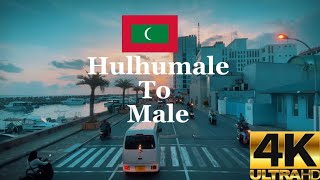
Malé revisited @ a abdat
Автор: a abdat
Загружено: 2025-09-10
Просмотров: 16
Описание:
Malé is the capital and most populous city of the Maldives. With a population of 211,908 in 2022 within its administrative area and coterminous geographical area of 8.30 square kilometres, Malé is one of the most densely populated cities in the world. Traditionally it was the King's Island, from where the ancient royal dynasties ruled and where the palace was located. The city was then called Mahal. Formerly it was a walled city surrounded by fortifications and gates (doroshi). The Royal Palace (Gan'duvaru) was destroyed along with the picturesque forts (koshi) and bastions (buruzu) when the city was remodelled under President Ibrahim Nasir's rule in the aftermath of the abolition of the monarchy in 1968. However, some buildings remained, namely, the Malé Friday Mosque. In the last few decades, the island has been considerably expanded in size through land reclamation. Over the years, Malé has been the center of political protests and milestone events.
Islam has played a central role in the city's history since 1153 CE, when the Maldives converted from Buddhism to Islam under the influence of North African traders and missionaries. This religious shift deeply influenced Malé’s cultural and architectural identity, visible today in the form of mosques such as the 17th-century Hukuru Miskiy (Friday Mosque), completed in 1658, the mosque is the oldest and most ornate mosque in the Maldives. It has intricate carvings, with inscriptions in Quranic script. The mosque, in a walled enclosure, is made of interlocking coral blocks with its hypostyle roof supported by cut-coral columns. With three entrances, the mosque has two prayer halls surrounded by antechambers on three sides. Its vaulted, decorated ceiling is indented in steps. Local master carpenters, known as maavadikaleyge, fashioned the mosque's woodwork, roof and interior, and its wall panels and ceilings have many culturally-significant examples of traditional Maldivian woodcarving and lacquerwork. The mihrab, with a mimbar (pulpit) at one end, is a large chamber. The main building, used for daily prayers, is divided into three sections: the mihtab (used by the imam to lead the prayers), the medhu miskiy (the mosque's central area) and the fahu miskiy (the rear of the mosque). A long, carved 13th-century panel memorialises the introduction of Islam to Maldives. The most revered place in Malé is the Medhu Ziyaaraiy, across the street from the Malé Friday Mosque: the tomb of Abu al-Barakat Yusuf al-Barbari, considered to have converted the Maldives to Islam in 1153.
Повторяем попытку...

Доступные форматы для скачивания:
Скачать видео
-
Информация по загрузке:


![Top 10 Best Things to Do in Malé, Maldives [Malé Travel Guide 2024]](https://ricktube.ru/thumbnail/5JnhrojFduA/mqdefault.jpg)