Hu Jintao re-elected as China's president, Xi Jinping appointed VP
Автор: AP Archive
Загружено: 2015-07-21
Просмотров: 31125
Описание:
(15 Mar 2008) SHOTLIST
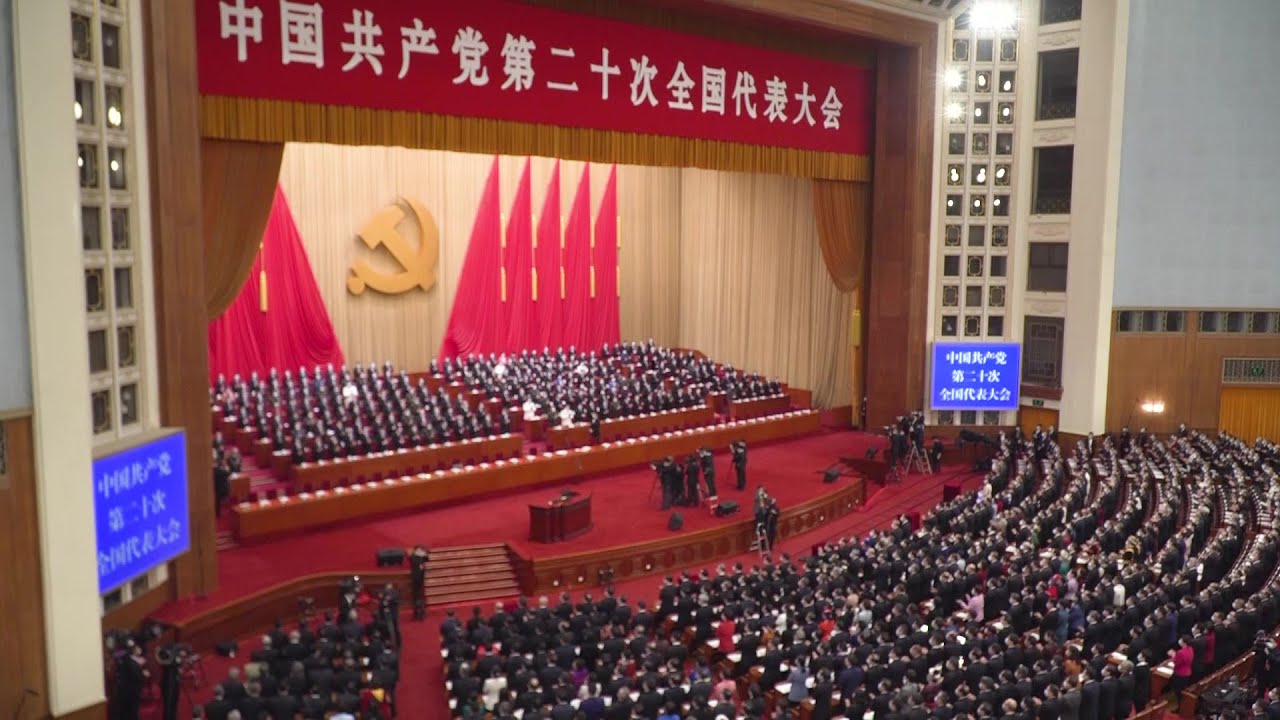
1. Wide pan down from red flags to Great Hall of the People
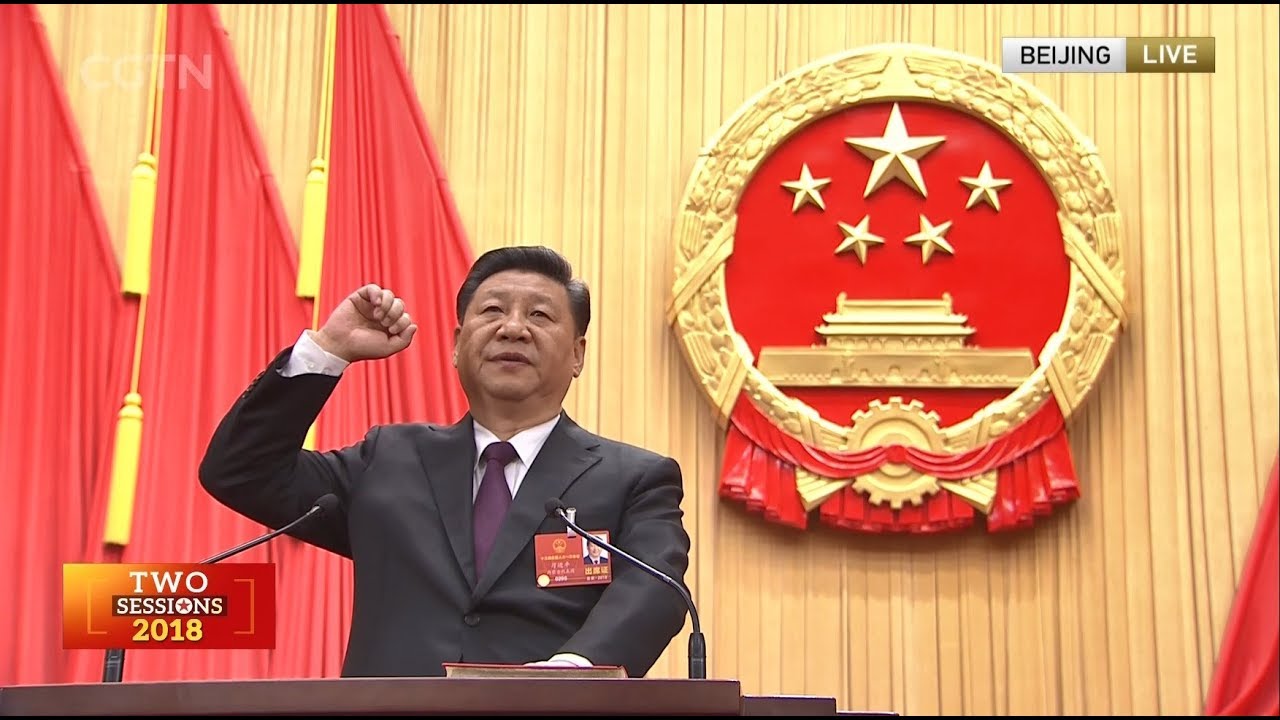
2. Close of national emblem
3. Wide of Olympic countdown clock on Tiananmen Square
4. Army officers walking toward Great Hall
5. Wide exterior entrance to Great Hall
6. Mid interior of assembly hall with President Hu Jintao, National People's Congress chairman Wu Bangguo and Premier Wen Jiabao taking their seats
7. Wide of assembly hall
8. Delegates seated reading their ballots
9. Focus from camera to electronic board with vote results
10. Cutaway of reporter
11. Wide of military official voting
12. Wide announcement of re-election of president Hu Jintao as China president, Hu stands and bows
13. Cutaway of electronic board with election results for Hu vote
14. Wide of newly elected vice president Xi Jinping standing, turns to outgoing vice president Zeng Qinghong, hugs and shakes hands
15. Wide of hall
16. Xi walks from stage
STORYLINE
China's legislature re-elected Hu Jintao president on Saturday, giving him a second five-year term as leader of the world's most populous country.
It also returned Hu as head of the Central Military Commission, the body overseeing the armed forces.
The National People's Congress appointed Xi Jinping, a top Communist Party leader and the son of a revolutionary, as vice president. Xi, ranked No. 6 in the party hierarchy, is widely seen as Hu's apparent heir and has risen quickly through the party's ranks in just six months.
The congress also approved a plan to reshuffle the Cabinet by establishing five "super ministries" and a ministerial-level energy commission.
Both men received virtually unanimous support from the nearly 3-thousand National People's Congress delegates, known to unfailingly carry out decisions made by the party's top leadership.
There were no other candidates for the positions, reflecting the one-party state's stress on consensus and
outer harmony.
As the results were read out, each man stood and bowed from the dais of the cavernous Great Hall of the People. Neither addressed the body.
Under Hu, China's economy has continued to grow rapidly while its international profile has steadily risen, a development embodied by Beijing's hosting of the Olympic Games in August.
Hu and Premier Wen Jiabao, who heads the government administration, are generally well supported among middle class urban Chinese, who see the two leaders as competent and sympathetic to their concerns over housing woes, inflation, medical care and education.
In a sign of Xi's rise to prominence, he has been placed in charge of preparations for the Olympics, an event generating enormous national pride and regarded by the leadership as a chance to show off a dynamic new China to the world.
But Hu and his advisers face stiff challenges during his second term.
Soaring food costs have driven inflation to its highest level in nearly 12 years.
And snowstorms this winter brought many parts of China to a halt, highlighting transportation weaknesses, power infrastructure and government planning.
Deadly anti-Chinese riots in Tibet this week have underscored the lack of progress in tamping down unrest among the country's minority groups.
The vice presidency, though devoid of real power, offers Xi an opportunity to nudge his profile higher through official travel and public appearances at state events. Like all would-be successors in rank-conscious China, Xi is
careful to talk up his boss, telling officials to study Hu's speeches and follow his orders.
Hu is believed to favour the party's seventh ranking official, Li Keqiang, to succeed him.
Find out more about AP Archive: http://www.aparchive.com/HowWeWork
Twitter: / ap_archive
Facebook: / aparchives
Instagram: / apnews
You can license this story through AP Archive: http://www.aparchive.com/metadata/you...
Повторяем попытку...

Доступные форматы для скачивания:
Скачать видео
-
Информация по загрузке: