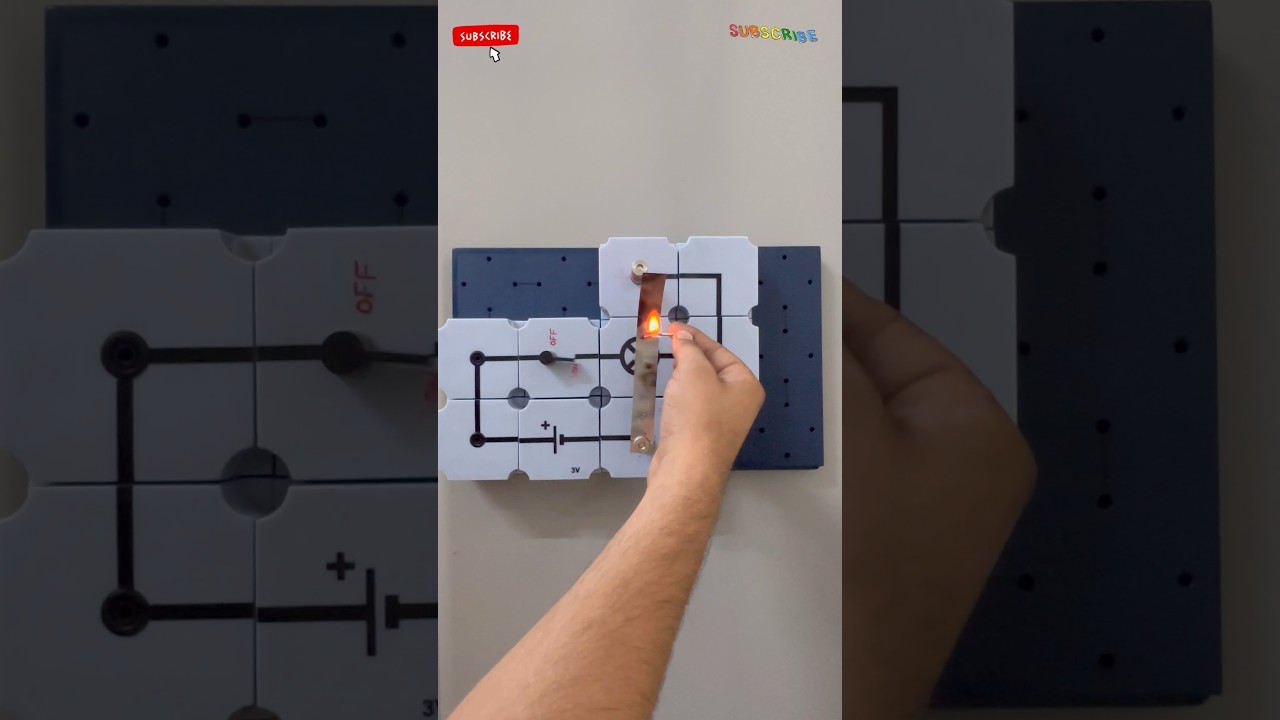
Bimetallic Switch ! bimetallic strips ! thermal expansion !
Автор: Crazy Light Wala
Загружено: 2024-10-27
Просмотров: 6892
Описание:
Bimetallic Switch ! bimetallic strips ! thermal expansion !
thermocouple sensors
thermal sensors
bimetal strip
factores that effect the evaporation
metal resistance versus temperature devices
thermal effects
bimetallic thermometer
temperature control
sclaes of temperature
temprature difference
temperature transducer
strip
natre of liquids
A bimetallic strip, or bimetal strip, is a thin strip made from two different metals bonded together. These metals expand at different rates when heated. This difference causes the strip to bend one way when it gets warmer, and in the opposite direction when it cools down. The metal that expands more sits on the outer side of the curve when heated, and on the inner side when cooled.
The invention of the bimetallic strip is credited to John Harrison, an 18th-century clockmaker. He used it in his marine chronometer (a precise timekeeping device for ships) to counteract the temperature changes that could affect the clock’s balance spring. Harrison’s invention is honored in a memorial at Westminster Abbey in England.
How Bimetallic Strips are Used:
Temperature Controls: Bimetal strips are commonly used in household items like irons or ovens to control temperature. As the strip bends with heat, it can trigger electrical contacts that either directly control power or use a relay to do so. In natural gas heaters, a thermocouple (heated by a small flame) powers these contacts, and in modern devices without a pilot light, a relay is used to control an ignitor.
Thermometers: Many household thermometers, like meat or patio thermometers, use a bimetallic strip shaped into a coil. The coil’s twisting motion as it heats or cools moves a needle to indicate temperature. More advanced designs, like the Breguet thermometer, add an extra metal to make readings even more precise.
Simple Heat Engines: Although not very powerful, bimetallic strips are sometimes used in basic heat engines to demonstrate how temperature differences can create movement. These are mainly found in small toy models for educational purposes.
Electrical Devices: Bimetal strips play a key role in circuit breakers, which protect against excess current. When the strip heats up due to high current, it bends, triggering a spring mechanism that cuts off power to the circuit. Once it cools down, it can be reset. Bimetal strips are also used in time-delay relays, oven safety valves, old-style turn signal flashers, and even in certain voltage regulators for cars.
In short, the unique bending ability of bimetallic strips due to temperature change makes them incredibly useful for various temperature-sensitive devices. Whether they’re in our kitchens, heating systems, or electrical safety devices, bimetallic strips are a clever, simple solution to convert temperature changes into mechanical movement.
Повторяем попытку...
Доступные форматы для скачивания:
Скачать видео
-
Информация по загрузке:





![Почему реактивный двигатель не плавится? [Veritasium]](https://imager.clipsaver.ru/F6UB0V2Fct4/max.jpg)