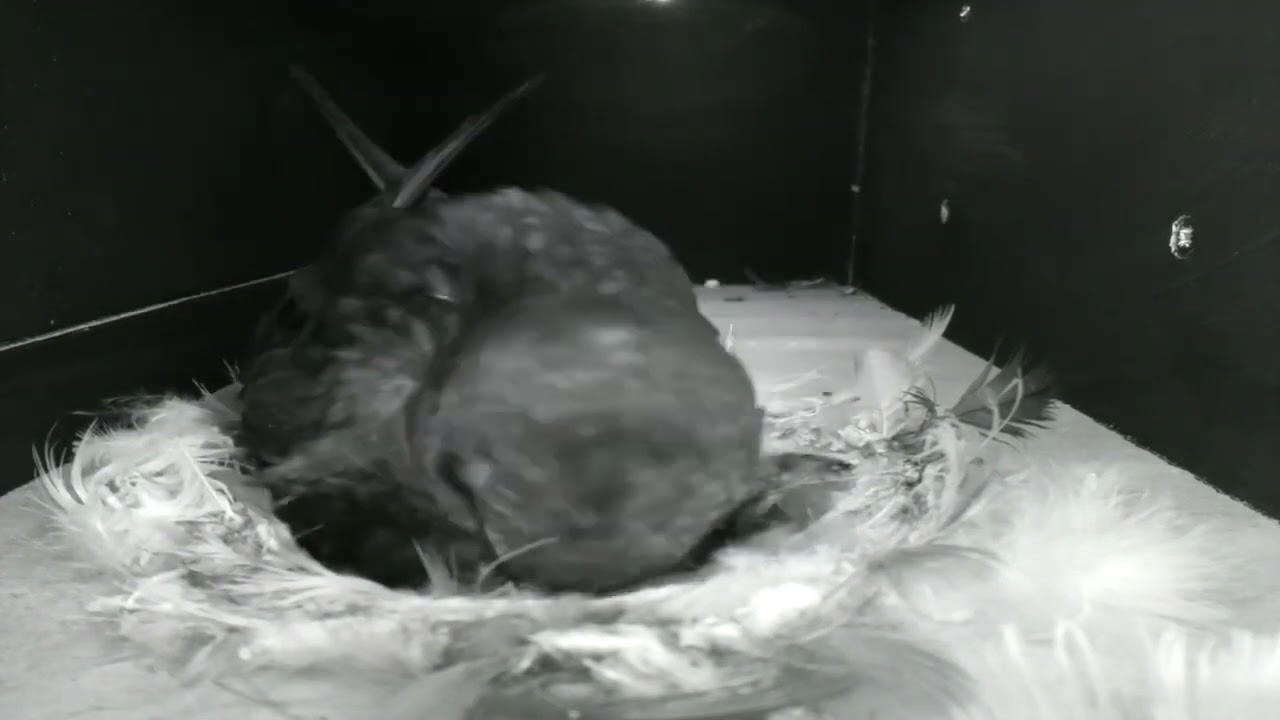
From empty nest to first egg- camera highlights 2022 #4
Автор: Crazy Hunt
Загружено: 2022-06-18
Просмотров: 103
Описание:
From empty nest to first egg- camera highlights 2022 #4 #birds #kestrel #nest #moments
The term kestrel (from French: crécerelle, derivative from crécelle, i.e. ratchet) is the common name given to several species of predatory birds from the falcon genus Falco. Kestrels are most easily distinguished by their typical hunting behavior which is to hover at a height of around 10–20 meters (35–65 ft) over open country and swoop down on ground prey, usually small mammals, lizards, or large insects, while other falcons are more adapted for active hunting during flight. Kestrels are notable for usually having mostly brown in their plumage.
Most species termed kestrels appear to form a distinct clade among the falcons, as suggested by a comparison of mtDNA cytochrome b sequence data and morphology. This seems to have diverged from other Falco around the Miocene–Pliocene boundary (Messinian to Zanclean, or about 7–3.5 mya). The most basal "true" kestrels are three species from Africa and its surroundings which lack a malar stripe, and in one case have—like other falcons but unlike other true kestrels—large areas of grey in their wings.
Approximately during the Gelasian age (Late Pliocene or Early Pleistocene, around 2.5–2 mya), the main lineage of true kestrels emerged; this contains the species characterized by a malar stripe. This too seems to have evolved in Africa and subsequently spread across the Old World until they reached Australia sometime during the Middle Pleistocene, less than one million years ago. This group contains several taxa found on Indian Ocean islands. A group of three predominantly grey species from Africa and Madagascar are usually considered kestrels due to their general shape and habits but are probably distinct from the true kestrels as outlined above.
The American kestrel is the only New World species termed "kestrel". The molecular data of Groombridge[1] as well as morphological peculiarities (like grey wings in males and a black ear-spot) and biogeography, strongly support the view that this species, among the Falco falcons, is not a kestrel at all in the phylogenetic sense but perhaps closer to the hobbies. Another recent DNA analysis takes a similar view that the American kestrel is not a true kestrel, but rather than being linked to the hobbies is more likely genetically more closely related to the larger American falcons such as the aplomado falcon, the peregrine falcon, and prairie falcon. Though the species has not been renamed as a result of these genetic analyses, it is thus likely a descendant of archaic larger falcon ancestors that evolved through a process of convergent evolution to fit a similar small prey niche in the ecosystem as the true kestrels.
wildlife,nature,animals,birds,wildlife art,robert fuller,robert e fuller,Kestrels Year,kestrel,kestrels,kestrel nest,kestrel nest box,robertefuller,nest cam,bird nest cam,kestrel eggs,kestrel chicks,chicks,birds of prey,bird of preywildlife,nature,animals,birds,wildlife art,robert fuller,,kestrel,kestrels,kestrel nest,kestrel nest box,nest cam,bird nest cam,kestrel eggs,kestrel chicks,chicks,birds of prey,bird of prey,livefromashwood,live from ashwood,kestrel bird,falcon,kestrel flying,kestrel call,american kestrel,falconry,bird nest,황조롱이육아 앙코르 편,nest on the balcony,falcons,american kestrel nest,kestrel chick,kestrel feeding chicks,kestrel nest camera
Повторяем попытку...
Доступные форматы для скачивания:
Скачать видео
-
Информация по загрузке:


