Sino-Soviet Border Conflict of 1969
Автор: Daily Dose Documentary
Загружено: 2021-07-23
Просмотров: 32776
Описание:
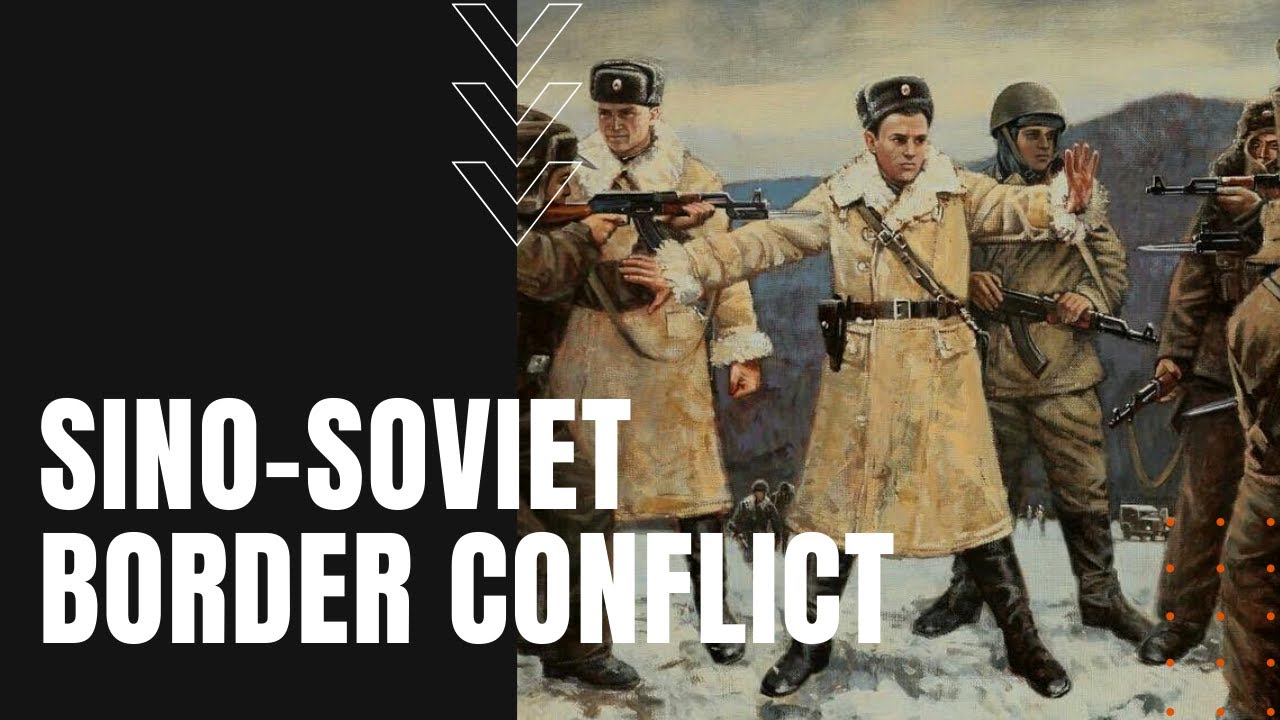
In 1969, Russian and Chinese hostilities ignited over a disputed border along a Siberian River, resulting in a conflict that almost turned nuclear before the US stepped in to cool the situation.
The Daily Dose provides microlearning history documentaries like this one delivered to your inbox daily: https://dailydosenow.com
Learn more: https://dailydosenow.com/sino-soviet-...
Subscribe for daily emails: https://subscribe.dailydosenow.com/
Become a Patron: / dailydosenow
Follow us on social media:
Twitter: / thedailydose18
Facebook: / thedailydosenow
Click to subscribe on YouTube: / @dailydosedocumentary
#SinoSoviet #BorderWar #History
Today's Daily Dose short history film covers the Sino-Soviet War of 1969, which came close to becoming a nuclear war. The filmmaker has included the original voice over script to further assist your understanding:
Today on The Daily Dose, The Sino-Soviet Border War of 1969.
Nineteen years after Chinese soldiers and airmen sprang a winter surprise on U.S. and allied forces in the Korean War, China stood up to the world’s second superpower from March the 2nd, 1969 until September 11th of that same year. Troop buildups and skirmishes erupted sporadically over a disputed border along the frozen Ussuri River in Siberia, prompting Chairman Mao to proclaim in the People’s Daily Newspaper that the Russians were attempting to create an “anti-China ring of encirclement.” In a compounding sequence of actions and reactions, both sides amassed a large military presence along the disputed border, which peaked at 658,000 Soviet soldiers against 814,000 lesser-trained combatants on the Chinese side. Mao threatened the Soviets with a massive “People’s War,” while years later, high-ranking Russian defector, Arkady (R coddy) Shevchenko, reported that the Soviet Supreme Leader Leonid Brezhnev and the Politburo were terrified about a “nightmare vision of invasion by millions of Chinese.”
The undeclared border war started in March when a group of People’s Liberation Army soldiers ambushed Soviet border guards on Zhenbao (Jen bay oh) Island, causing the loss of 248 Chinese soldiers, as well as 58 deaths on the Soviet side. Sporadic engagements would take place over the next six months, until an edgy peace was established through diplomatic negotiations, but the real threat of the Sino-Soviet Border War was just how close it came to a nuclear tragedy.
While the Soviets at the time had a nuclear arsenal of some 10,000 warheads, China had but a handful of nuclear warheads only, minus any form of delivery vehicle, which effectively made them a non-nuclear power. As late as November of 1968, Mao himself admitted that China could not be counted as a nuclear country, leaving them no other options but to fight a war with conventional weapons.
Soviet military leaders, on the other hand, believed that a preemptive nuclear strike was the only way to end China’s growing threat, obliging the Soviet Union to go so far as to approach the Nixon administration to gauge how the U.S. would react if the Soviets aimed their missiles at Beijing and other strategic targets. As then U.S. national security advisor Henry Kissinger later reflected, “The Soviet Union was much closer to a preemptive (nuclear) attack than we realized” at the time.
The Soviet Union stood down from their planned nuclear offensive, only after Washington warned Moscow that they would not stand idly by if the Soviets chose a nuclear option. While the situation cooled by September of 1969, the ongoing border dispute would not see a lasting resolution until a series of border agreements were penned as late as 2004, giving China several hundred disputed islands along three rivers in a largely unproductive yet vital waterway in Siberia.
And there you have it, the almost nuclear war of 1969, today on The Daily Dose.
Повторяем попытку...
Доступные форматы для скачивания:
Скачать видео
-
Информация по загрузке: