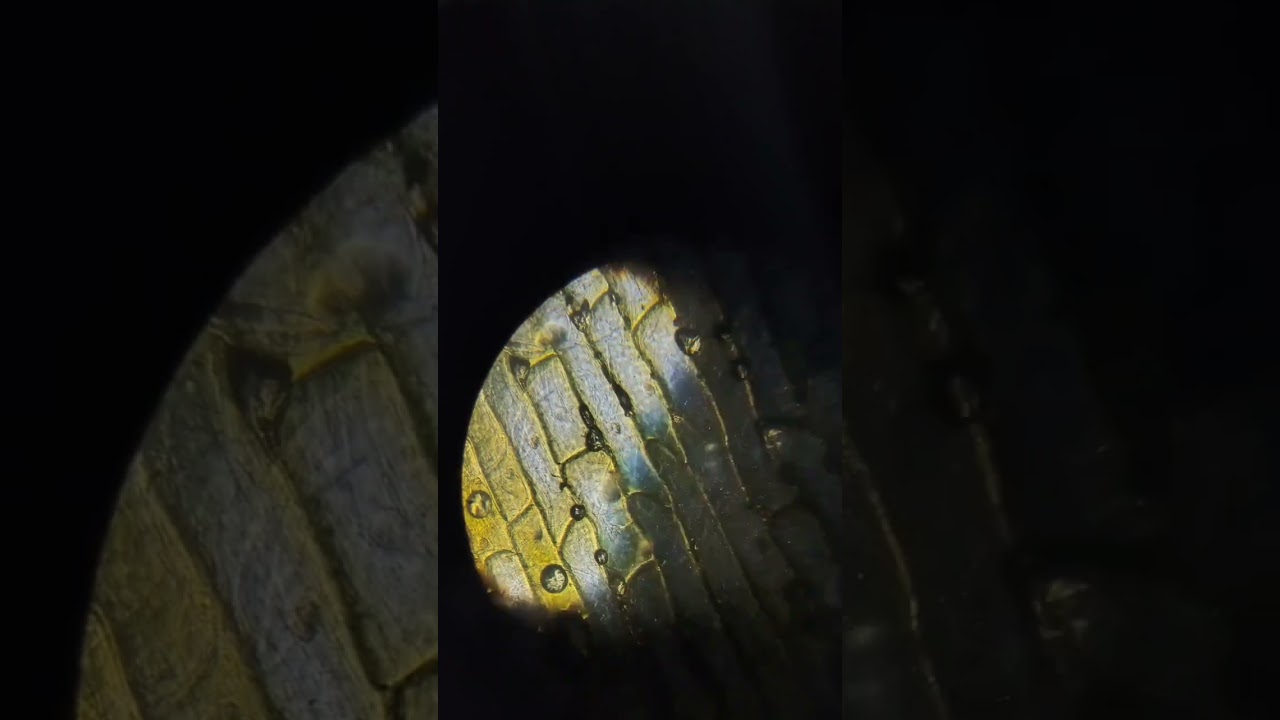
how to use a microscopeto see bacteria?
Автор: chemistrybyganpatsir
Загружено: 2025-07-20
Просмотров: 2138
Описание:
Microscope testing, also known as microscopy analysis or microscopic examination, involves using a microscope to analyze samples at a microscopic level, often revealing details not visible to the naked eye. This technique is used in various fields, including medicine, materials science, and microbiology, to diagnose conditions, analyze materials, and study microorganisms.
Methods for Observing Microorganisms:
Light Microscopy:
This is the most common method, using different types of light to illuminate the sample and reveal its structure.
Compound Microscope: Widely used for observing bacteria, it offers various magnification levels (40x to 1000x or more) to visualize details of bacterial structures.
Phase-Contrast Microscope: Useful for viewing live, unstained microorganisms, as it enhances contrast and reveals internal structures.
Fluorescence Microscopy: Used to detect specific microorganisms or their components by using fluorescent dyes or antibodies.
Staining:
Microorganisms are often stained to enhance contrast and visualize specific structures. Common staining techniques include:
Gram Staining: Differentiates bacteria based on their cell wall composition, helping in classification.
Capsule Staining: Reveals the presence of a capsule, a protective layer around some bacteria.
Endospore Staining: Identifies endospores, resistant structures formed by some bacteria.
Other Microscopy Techniques:
Scanning Electron Microscopy (SEM): Provides high-resolution images of microbial surfaces and detailed morphological features.
Atomic Force Microscopy (AFM): Used to study the surface topography and mechanical properties of microorganisms.
Applications of Microscopy in Microbiology:
Identification of Microorganisms:
Microscopy helps in identifying bacteria, fungi, and other microorganisms based on their morphology and staining characteristics.
Diagnosis of Infections:
Microscopic examination of patient samples can help diagnose infections caused by bacteria, fungi, or other microorganisms.
Studying Microbial Diversity:
Microscopy is used to assess the diversity of microbial communities in different environments.
Monitoring Microbial Growth and Activity:
Microscopy can be used to observe microbial growth, cell division, and other cellular processes.
Evaluating Sterility:
Microscopy can be used to verify the sterility of samples and products.
Research and Development:
Microscopy plays a vital role in research on microbial physiology, genetics, and interactions with other organisms.
Повторяем попытку...
Доступные форматы для скачивания:
Скачать видео
-
Информация по загрузке: