Town Hall Hilversum NL
Автор: Hans Jan Dürr
Загружено: 2018-09-22
Просмотров: 491
Описание:
Town Hall Hilversum, the Netherlands
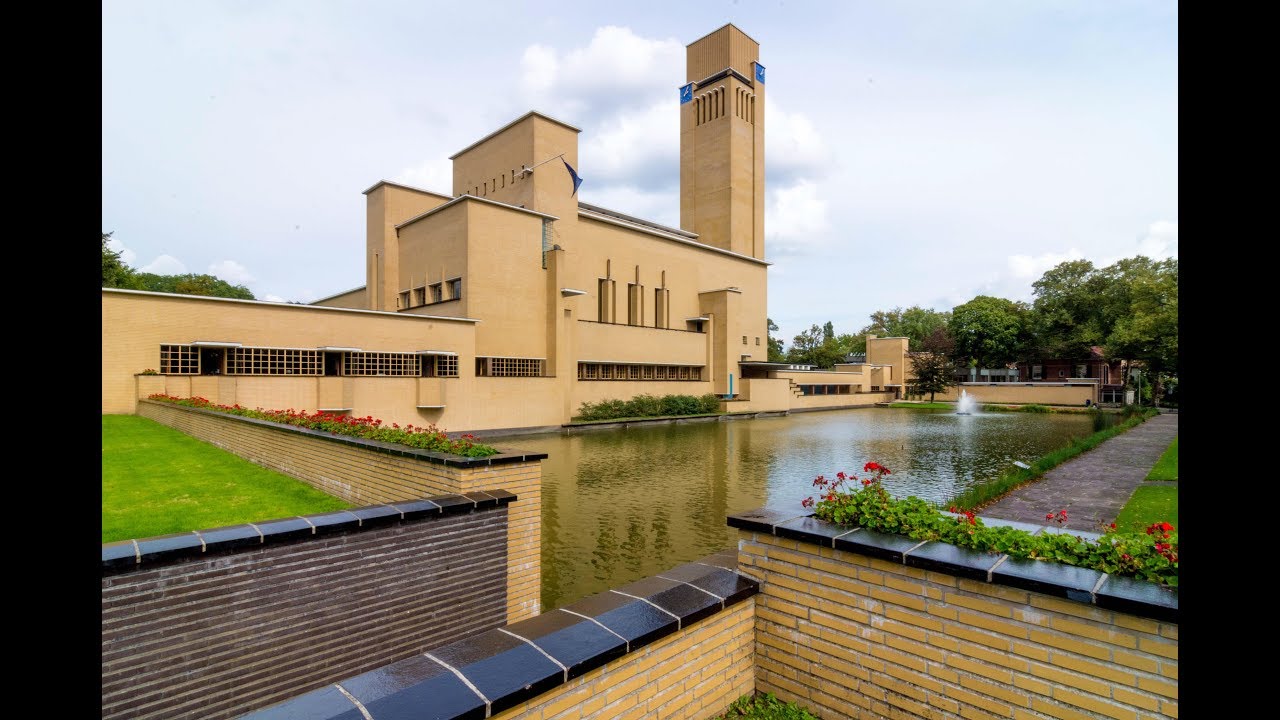
In the Town Hall of Hilversum, architect Dudok language manages the vertical and horizontal volumes, the set of masses against hollow, flat roofs floating and monumentality. This remarkable and in many ways unique structure, whose first sketches were made in 1924, is considered the masterpiece of brilliant but anti avant-garde architect’s career. When the building was completed in 1931, the public embraced this example of modern architecture, for its balance between form and function, and it seemed traditional in composition, fine craftsmen and high quality finishes and materials used. But above all, it was praised for its monumentality. Some critics, however, felt that the building had an anti – structural arrangement, which was proportionally irresponsible in their ways and accused of diluting Dudok modernist designs or be halfway modernism, playing another contemporary, rather than create a formal language itself. By insisting that its architecture lacked a specific style, critics suggested that their designs were not fluent, thus limited to a strict formula for the entire architecture. However, the end result becomes a sculptural expression of a subject composition. It is a testament to the consistent harmonic form, function, art and human need. Hilversum City Council is not only the magnum opus Dudok ‘s career, but also one of the most successful buildings in the history of the modern movement.
The structure consists of load-bearing walls, reinforced concrete floors and concrete lintels above the horizontal windows, while the roof structure in the council chamber is steel. Its balanced masses make a synthesis of functionality and romanticism. Has been criticized, however the arrangement and construction irresponsible proportions addition forms. The use of overhanging eaves, an unusual feature to the Netherlands, and a simple tree -dimensional asymmetric geometry arranged around a square courtyard provide a modern structure while reflecting the medieval municipalities historicism by the presence of a large and a tower room. It is a masonry construction, using, in addition to reinforced concrete and steel beams, yellow bricks specially made for this project, including all facades. Dudok, who also designed the furniture and interior decoration, yellow bricks ordered in special sizes. Some decorative touches were made with blue and green glazed tiles, red tiles strips, black and gold, as the wall facing the columns of the gallery entrance, covered with light blue tiles or dark details on the bases of columns and red in the upper parts. Blue was also used in other decorative details, particularly in the outer columns coating. In the thin elongated interior columns were used and refined golden tiles, highlighting the dark colour of some soils, covered with marbles combinations, like some of the walls in the lobby or the stairwell. Glass is another recurring element in the sophisticated decoration, not only in window openings where clear glass was used, semitransparent, bevelled and stained glass in some gaps, but also excels in the decorative lighting, also designed by the architect.
The building was restored between 1989-1995 by Dutch Van Hoogevest Architects. Restoration costs caused some scandal, as it was at the time the proposal to sell a Mondrian painting from the collection of the city to pay for the restoration.
Повторяем попытку...
Доступные форматы для скачивания:
Скачать видео
-
Информация по загрузке: