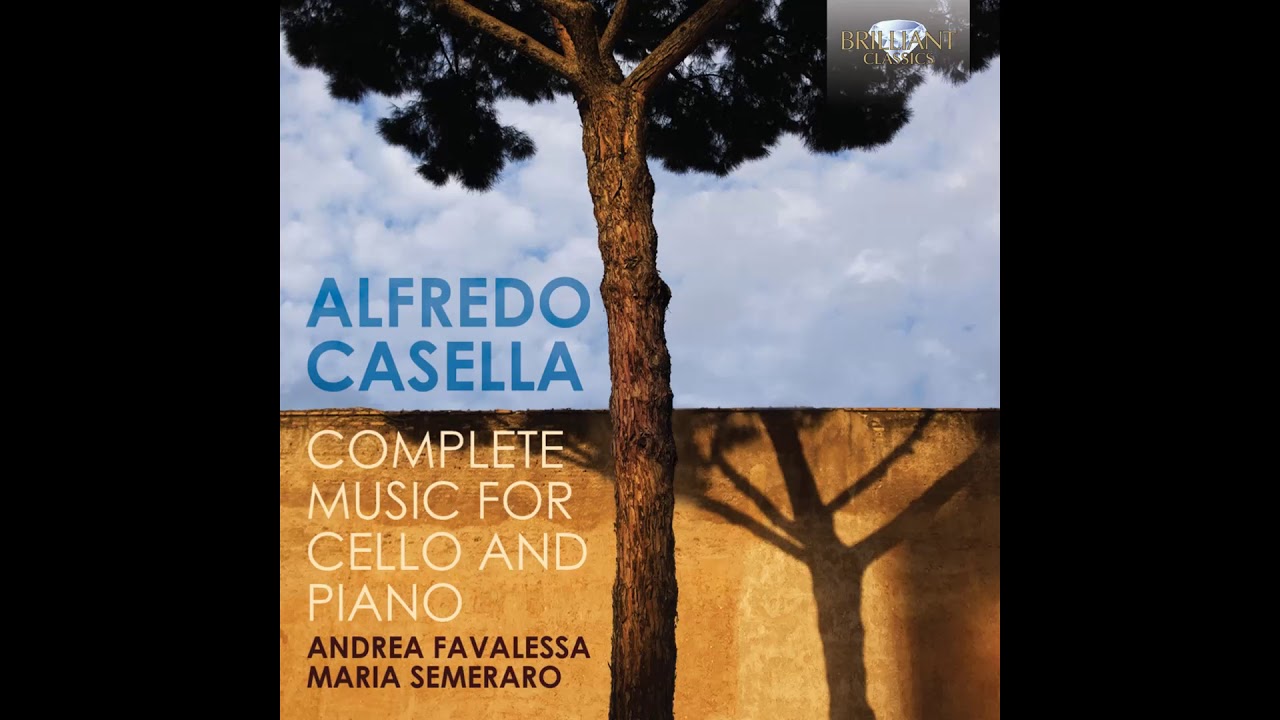
Sonata for Cello and Piano No.2 in C major - Alfredo Casella
Автор: Sergio Cánovas
Загружено: 2019-04-30
Просмотров: 1739
Описание:
Performed by Maria Semeraro (pianist) and by Andrea Favalessa (cellist).
I - Preludio. Largo molto e sostenuto - (attacca): 0:00
II - Bourrée. Allegro molto vivace e scherzando: 10:06
III - Largo - (attacca): 14:04
IV - Rondo. Allegro molto vivace, quasi giga: 22:10
Casella's two cello sonatas belong to two different periods of Casella's output: the first one is a youthful work, while the second dates back to his maturity as a composer. The second sonata in C major is a product of Alfredo Casella's maturity, which explains why it reveals a change in compositional approach. In fact, it bears witness to his interest in a style that he defined as "baroque in its monumentality".
The work is constructed in the unusual form of four movements, it is more extensive and with dynamics based on deep contrasts between passages that are passionate and vigorous, and others in which the atmosphere is quietly intimate. If the first sonata was full of tension and dark emotions, the second sonata is completely different in spirit.
The first movement is a prelude written in a free form. Starts with a long introduction of the piano with solemn chords in C major played resolutely. Then the cello presents a bright and optimist theme. A central section comes, which consist in dialogues between the cello and the piano with a powerful rhythmic and expressive impact, based on the previous theme as a kind of free variations. After a gentle transition, the bright theme of the start is repetaded in pianissimo, in an atmosphere that is more contemplative and celestial, with a finale that becomes rarefied and nebulous, giving way to the next movement.
The second movement is a bourree, a french folk dance that was present in the suites of the baroque era. Starts with a lively and playful theme presented by both cello and piano, wich will be developed virtuosistically along the movement. This part is charactericed for the brilliant counterpoint and imitations between the instruments and continous changes in the metre of the phrases and the syncopated rhythms.
The third movement is the slow part of the work. Starts with a declamation of the piano as an introduction, followed by the presentation of an expressive and intense theme, entrusted to the cello with the support of piano chords. The theme becomes more dark and chromatic in its development. At the central part we find some luminous phrases in a contemplative enviroment. The lyrical theme of the start is reexposed in a varied way. The gently transition lead us to the next movement.
The fourth movement is structured as a rondo in miniature (A-B-C-A-B-A-Coda). Starts with a fast and light main theme, followed by a short and lyrical B theme as a dialogue between the cello and piano. The A theme is repeated, followed by a new brief lyrical interlude as the C theme. The A theme is recapitulated and followed by a varied repetition of the B theme. The first theme comes, followed by a conclusive coda. As with the Bourrée, this movement stands out for its imaginative counterpoint and dialogues between the instruments
Finding inspiration in early music was an important feature of Casella's output; the second and fourth movements of the sonata (Bourrée and Rondo), for example, should be performed allegro molto vivace, quasi giga. Massimo Mila suggests that Casella's primary source of inspiration was his encounter with "pre-existing musical forms". When he engages with the past, however, the composer's approach is not merely imitative: each form derived from the past has to be interpreted, recreated (on occasions with "burlesque and allusions in caricature") that derived from Casella's own personality.
Indeed, the early forms are revisited so that they coexist with a new idiom, which can also become harmonically strident and stirring. Underlying these developments is a subtle sense of humor, which Brémond has described as "a deep-rooted desire to express something by pronouncing its contrary out loud".
Sources from the booklet of the recording. Musical Analysis done by myself.
Повторяем попытку...
Доступные форматы для скачивания:
Скачать видео
-
Информация по загрузке:









![Beethoven - 32 Piano Sonatas (complete) (Audio+Sheet) [Kempff]](https://imager.clipsaver.ru/lML14o7C6r8/max.jpg)