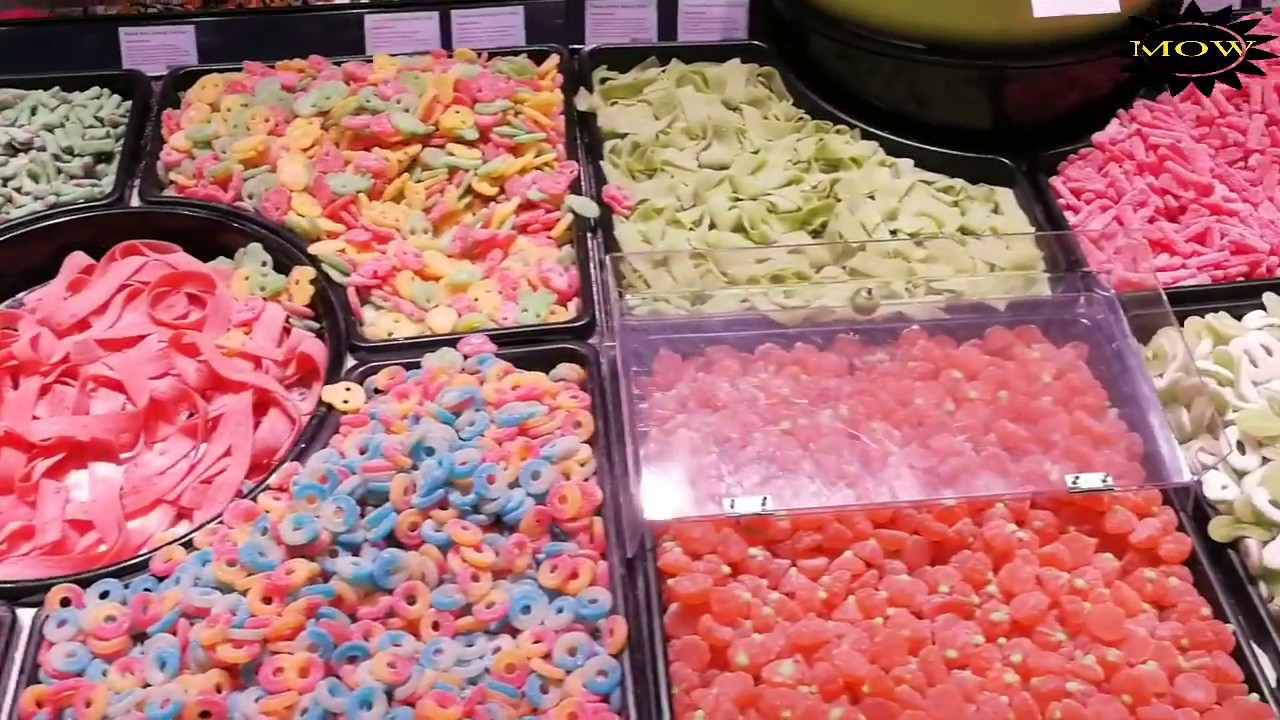
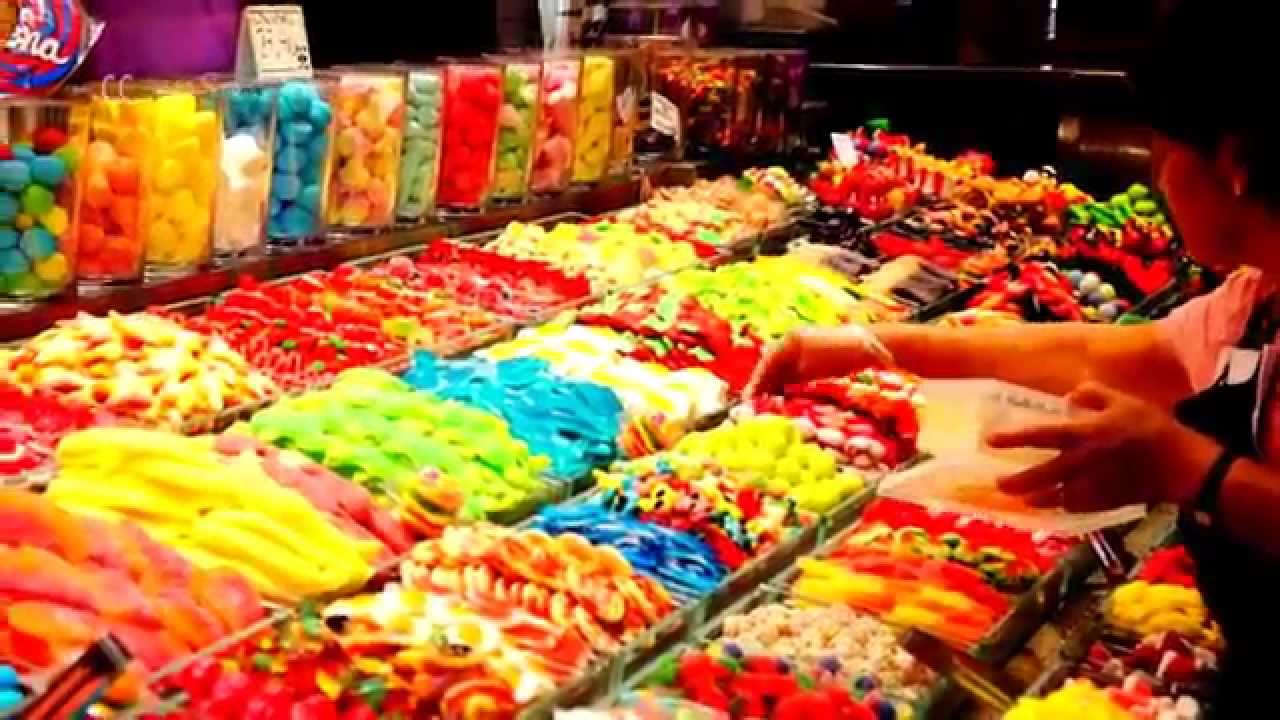
Sweet Candy Market in Barcelona
Автор: epSos.de
Загружено: 2015-10-17
Просмотров: 3666
Описание:
Free video about sweet candy. This free video was created for you by http://epsos.de and can be used for free under the creative commons license with the attribution of epSos.de as the original author of this sweet candy video.
Thank you for supporting the creative commons movement !!
A candy is a more colloquial way of referring to sugar. There are also dietary based sweeteners like candy sucralose or stevia rebaudiana , which are specially developed for persons regime but still continue to have a detrimental amount of sugar for diabetics or others who try to lose weight.
Sweets can nibble as candy or medical be taken for reasons such as cough drops.
Candies come in almost every imaginable color and flavors that shape is usually that of an ellipsoid, rarely a sphere or a cube. Partly sweets have a particularly sweet, sour or liquid filling. A distinction is made between hard candies, which have a glassy texture and water content have up to 3%, and soft candy, which are tough, a gum-like have consistency and contain up to 8% water. These soft candies are also chewy candy called chewed and unlike other candy and not sucked. Unlike chewing gum is such a candy dissolves gradually during mastication.
It sells sweets mostly in plastic bags and in addition in the candy typical single-package in which the candy is wrapped in a small piece of colored paper or foil. Has a candy a handle for holding, one also speaks of a lollipop. Frequently, the word "sweet" and generally as a synonym for a reward, a bonus or an additional service used (for example, a car dealer offers at closing a set of new tires than candy).
The history of candy dates back over a thousand years before the manufacture of sugar became known, there was in ancient China, Greece, the Roman Empire and other regions of honey sweets made which corresponded sweets among other coated fruits or flowers. After it was discovered around 600 in Persia, as in sugar cane juice sugar could be obtained, was traded to 700 in Arabia "Fanid Chsai" as a consequence, a candy mass of sugar and fruit juice. The pharmacists were the first to the bitter herbal extracts with sugar mixed in Europe, to make them more palatable.
The industrial sweet production in Germany goes to Franz Stollwerck back. He founded 1839 in Cologne a shortbread bakery and quickly realized that "breast candy" were in great demand because of the then frequent cervical and lung diseases. He that in his time as a journeyman in Paris caramelizing had learned, so the Versieden sugar and mixing with all sorts of herbs and fruits, he extended his Conditorei a candy factory. Here he produced in 1841 "Stollwerck'sche breast candy" and ran through its sales success quickly in a legal dispute with the pharmacists, the production of such pharmaceutical supplies reserving itself. After numerous processes he reached a ministerial order of January 2, 1846, after which it was "not preclude the confectioners of the whole Prussian state, produce caramels, candy and other goods and to sell".
Some of the candy sold today is not with sugar but with sugar substitutes prepared. Sugar substitutes are not intensive sweeteners. The sweetener used in candy most often is isomalt. It is made of beet sugar produced and tastes almost like sugar. The sweets made of isomalt about half as much energy like sugar candy. They have a glycemic index of 8 and thus twelve times lower effect on blood sugar levels.
Many of the known candy brands are also available in a sugar-free version. Whether a candy with sugar or sugar substitute is produced, must be declared on the package. As a rule, is "sugar-free" on the package, on the declaration list is exactly what sugar substitute was used. In the case of more than 10% content of substitutes must be based on the package to a possible "laxative effect if consumed to excess" advised [5]. Sugar substitutes act like dietary fiber. Particularly sensitive people may therefore notice a similar effect such as after eating prunes or wholemeal bread. Normal amounts of sugar-free candies are very well tolerated by both adults and children in general.
A candy is a confectionary, usually flavored with various sweet tastes. Sweets are sold in bulk or weight packaged in plastic bags, individually wrapped or not. The candy is a global market lucrative and represents a reward for the child who is the main target. At this point they are added to the mass of candy: colorants, flavorings and all other additives required by the recipe.
Thank you for supporting the creative commons movement !!
Повторяем попытку...
Доступные форматы для скачивания:
Скачать видео
-
Информация по загрузке: