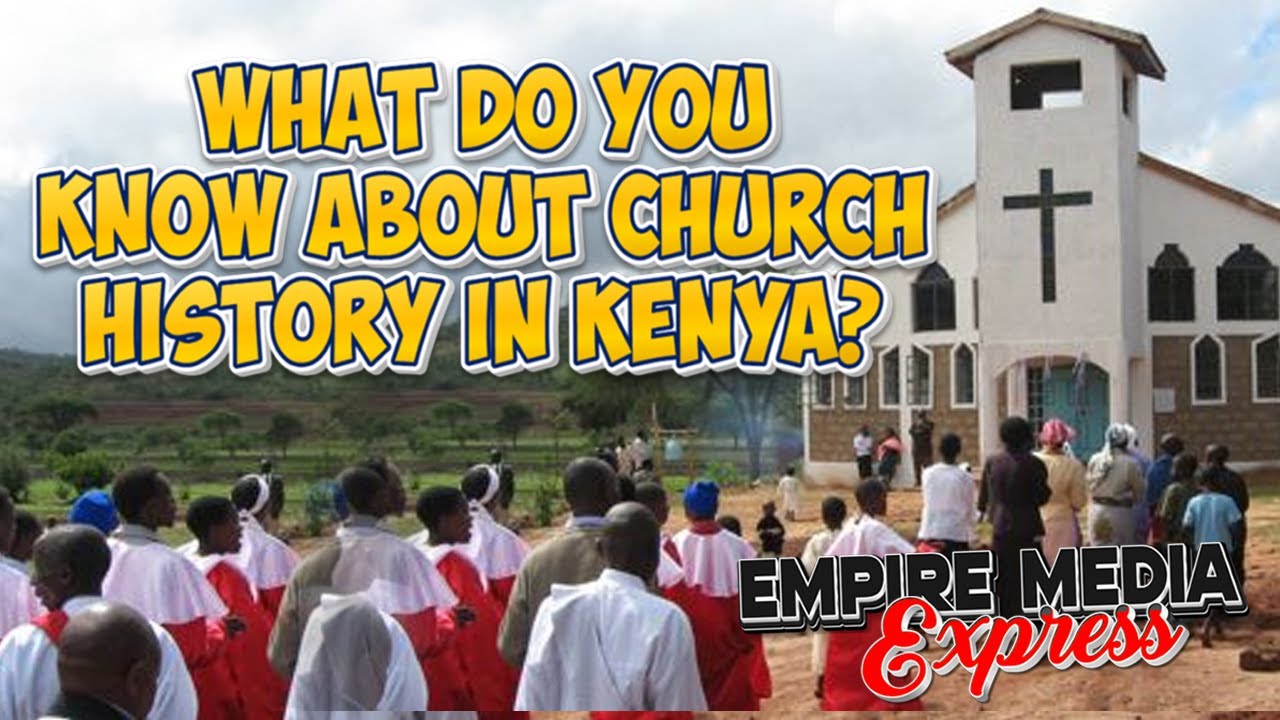
What do you know about the History of the Church in Kenya? The "Missionary Era" & Colonialism!
Автор: EMPIRE MEDIA EXPRESS
Загружено: 2026-01-14
Просмотров: 49
Описание:
1. Early Contacts (Before 1498)
While not leading to established churches, there was likely very early exposure to Christianity through trade connections (the Ethiopian Orthodox Tewahedo Church) from the north and possibly from traders along the East African coast.
2. The Portuguese Period (1498 – 1729)
Arrival with Vasco da Gama (1498): The first recorded Christian presence was Roman Catholic, accompanying Portuguese explorers.
Franciscan Mission in Mombasa: The most significant effort was the establishment of Fort Jesus in Mombasa (1593) and a subsequent Franciscan mission. They made some converts, mainly in the coastal city-states.
Collapse: This presence was entirely tied to Portuguese military and commercial power. Resistance from local communities (like the Omani Arabs) and a lack of deep social integration led to its complete disappearance after the Portuguese were expelled from the coast by the early 18th century.
3. The "Missionary Era" & Colonialism (1844 – 1963)
This is the period that fundamentally shaped the modern church in Kenya, closely tied to European exploration and colonization.
Pioneers: The first modern missionaries were Johann Ludwig Krapf and Johannes Rebmann (CMS - Church Missionary Society, Anglican) from Germany, arriving in 1844. They established a station at Rabai, near Mombasa. They are famed for being the first Europeans to report sightings of Mount Kenya and Kilimanjaro and for producing the first scholarly work on Swahili and local languages.
Inland Expansion: Other major missionary groups followed:
Holy Ghost Fathers (Catholic, 1892) – Eastern Kenya.
Gospel Missionary Society (1901) – Nyanza.
Scottish Presbyterian Mission (1891) – Kikuyu highlands (Thogoto).
Africa Inland Mission (AIM, 1895) – Rift Valley and Western Kenya.
Friends (Quakers, 1902) – Western Kenya.
Relationship with Colonialism: Missions often worked in a symbiotic, yet sometimes conflicted, relationship with the British colonial administration (established after 1895). They provided education and healthcare, which facilitated colonial control. However, they also sometimes challenged colonial abuses (e.g., the Harry Thuku incident, 1922).
Education and Medicine: Churches built the first schools and hospitals, creating the first educated African elite. Alliance High School (founded by CMS, AIM, and Scottish Presbyterians in 1926) is a prime example.
Indigenous Resistance & African Instituted Churches (AICs): A major reaction to missionary paternalism and cultural imposition (e.g., on female circumcision, polygamy) was the rise of independent churches. Notable early examples include:
Nomiya Luo Church (1914, by Johana Owalo) – First AIC in Kenya.
Dini ya Msambwa (by Elijah Masinde, 1940s) – Militantly anti-colonial.
African Orthodox Church (1929) – Linked to the Kikuyu independent schools movement and political activism.
4. Church and the Independence Struggle
The church was not monolithic:
Mainstream Missions: Initially ambivalent, often urging moderation, but became more supportive of reform as independence neared.
AICs and Mau Mau: Many Kikuyu AICs, along with segments of the mission churches, were deeply involved in the Mau Mau uprising (1952-1960), seeing it as a spiritual and political liberation struggle. Missionaries like Canon Bewes (CMS) documented colonial atrocities.
Key Figures: Future President Jomo Kenyatta was educated at a Presbyterian mission. Prominent church leaders like Bishop Festo Olang' (Anglican) and Cardinal Maurice Otunga (Catholic) became important moral voices in the transition to independence.
5. Post-Independence & Growth (1963 – Present)
Nation-Building: Churches were crucial partners for the new government in education, health, and social cohesion. The National Christian Council of Kenya (NCCK) played a key advisory role.
Catholic Social-Political Influence: The Catholic Church, under Cardinal Otunga and later, became a powerful voice for human rights and multi-party democracy, especially challenging the repressive regime of President Daniel arap Moi during the 1980s and 90s. The 1990 Lenten Pastoral Letter was a pivotal moment.
Pentecostal & Charismatic Explosion (1980s onward): The fastest-growing sector of Kenyan Christianity. Churches like David Oyedepo's Winners' Chapel (Nigeria-origin) and indigenous ones like Jesus is Alive Ministries (Bishop Margaret Wanjiru) and Mavuno Church revolutionized worship, media use, and theology, emphasizing prosperity, healing, and personal faith. This has also led to debates over the "prosperity gospel" and televangelism.
Повторяем попытку...
Доступные форматы для скачивания:
Скачать видео
-
Информация по загрузке: