Gujarat Land Grabbing Prohibition Act 2020, Land Grabbing Cases Advocates, Lawyer for Land Grabbing
Автор: Advocate Paresh M Modi Top Lawyer in Gujarat
Загружено: 2025-02-15
Просмотров: 4156
Описание:
The Gujarat Land Grabbing (Prohibition) Act, 2020 – Comprehensive Legal Guide
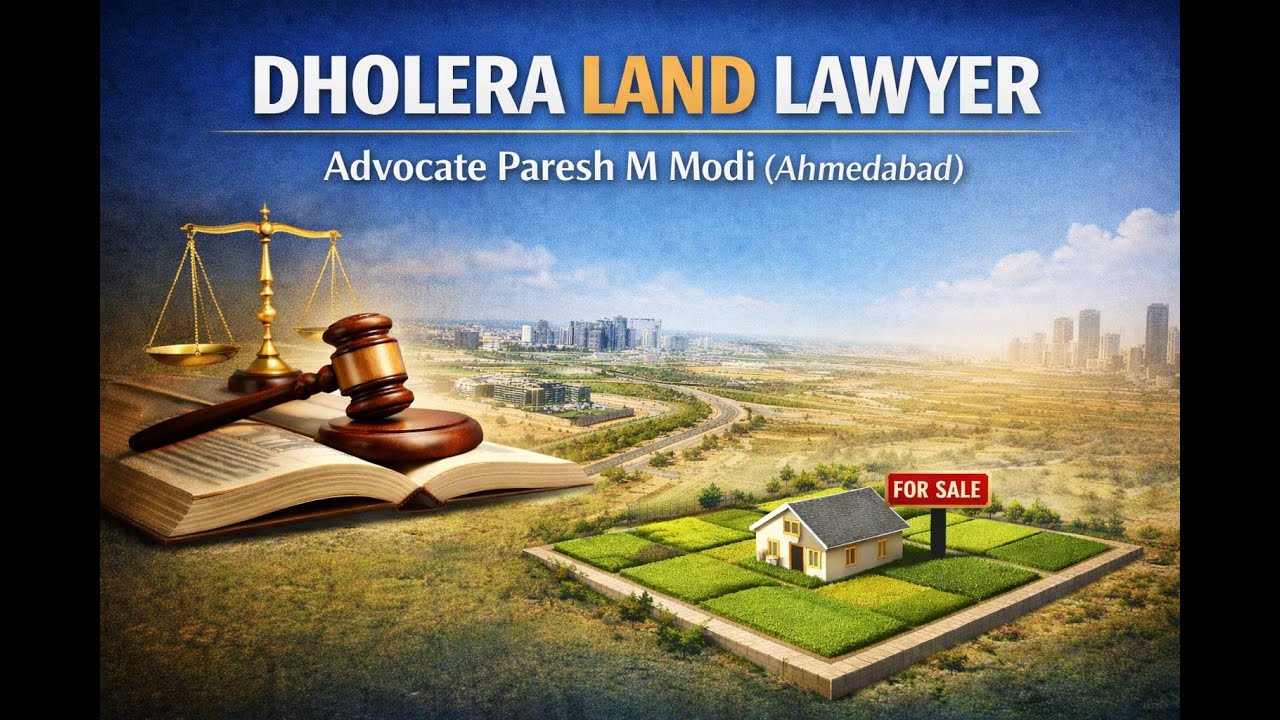
Advocate Paresh M Modi, a highly experienced land and property dispute lawyer in Ahmedabad, Gujarat, specializes in cases related to The Gujarat Land Grabbing (Prohibition) Act, 2020. This webpage provides a detailed understanding of this landmark law, covering its provisions, penalties, court procedures, witness requirements, defenses for the accused, and much more.
Key Definitions Under the Act
✔️ Land Grabber – Any person or group who illegally occupies land and refuses to vacate it.
✔️ Land Grabbing – Unlawfully taking possession of government or private land for personal use or profit.
✔️ Competent Authority – A government-appointed officer responsible for detecting and investigating land grabbing cases.
✔️ Special Court – A designated court under the Act to ensure speedy trials of land grabbing cases.
Important Sections of The Gujarat Land Grabbing Act & Punishments
Section Description of Offense Punishment
Section 3 Prohibits land grabbing and declares it illegal. Seizure of land and criminal action
Section 4 Declares land grabbers as offenders under the Act. Minimum 10 years to Maximum 14 years imprisonment + Fine up to ₹5 lakh
Section 5 Any person found aiding or abetting land grabbing. Same punishment as the main offender
Section 6 Allows government to reclaim land from grabbers. Land will be taken back without compensation
Section 7 Establishes Special Courts for speedy trials. Cases to be decided within 6 months
Section 8 Any sale, lease, or agreement related to grabbed land is void. Cancellation of all transactions
Section 9 Government-appointed officers have the authority to investigate. Power to conduct inquiries, gather evidence, and report cases
Section 10 Empowers the Special Court to order land restoration. Land must be handed over to the rightful owner or the government
Section 11 Offenses under this Act are non-bailable and cognizable. Immediate arrest and denial of bail in most cases
Section 12 Allows the government to take action even in pending civil disputes. Criminal proceedings can continue alongside civil cases
Section 13 The burden of proof lies on the accused. The accused must prove their ownership legally
Section 14 Punishment for false complaints under the Act. Up to 5 years imprisonment and a fine of ₹1 lakh
Section 15 Provides protection to government officials working on land grabbing cases. Legal immunity from personal liability
Legal Procedure & Court Proceedings
1️⃣ Complaint Filing
The landowner or a government authority can file a complaint before the Competent Authority.
FIR is registered under the Gujarat Land Grabbing Act & IPC sections, if applicable.
2️⃣ Investigation & Evidence Collection
Authorities verify land records, revenue documents, sale deeds, and ownership papers.
Site inspections and surveys are conducted to determine illegal encroachments.
Witness statements and electronic evidence (CCTV footage, photographs, GPS location, etc.) are collected.
3️⃣ Notice to Accused
The accused is given a show-cause notice to present ownership proof.
If ownership is not proven, further legal action is taken.
4️⃣ Special Court Trial
Case proceeds to the Special Land Grabbing Court.
The government advocates and the accused’s lawyers argue the case.
The burden of proof lies on the accused to prove the land is legally owned.
5️⃣ Court Decision & Land Restoration
If the accused is found guilty, the court orders:
✔️ Eviction of illegal occupants
✔️ Restoration of land to rightful owner or government
✔️ Imprisonment and fines as per Section 4 of the Act
6️⃣ Appeal Process
The convicted party can appeal to the High Court within 30 days of the judgment.
Requirement of Witnesses in Land Grabbing Cases
✔️ Official Witnesses – Revenue officers, government surveyors, or police officials.
✔️ Landowners & Neighbors – People who have seen the encroachment happen.
✔️ Documentary Witnesses – Sale deeds, title documents, municipal tax records.
✔️ Expert Witnesses – Surveyors, legal experts, or land valuation officers.
✔️ Electronic Evidence – CCTV footage, drone images, satellite maps, etc.
Defenses Available for the Accused
1️⃣ Legal Ownership Proof – If the accused holds valid ownership documents, the case can be dismissed.
2️⃣ Adverse Possession – If the accused has occupied the land for 12+ years and has tax receipts, they may claim ownership.
3️⃣ False Allegations Defense – If the complaint is politically motivated or filed out of personal rivalry, it can be challenged.
4️⃣ Improper Investigation – If the Competent Authority fails to follow proper procedures, the case can be dismissed.
5️⃣ Lack of Evidence – If the prosecution fails to prove illegal possession, the accused can seek acquittal.
6️⃣ Delay in Filing the Case – If the case is filed after several years without a valid reason, the accused can question the delay.
Повторяем попытку...
Доступные форматы для скачивания:
Скачать видео
-
Информация по загрузке: