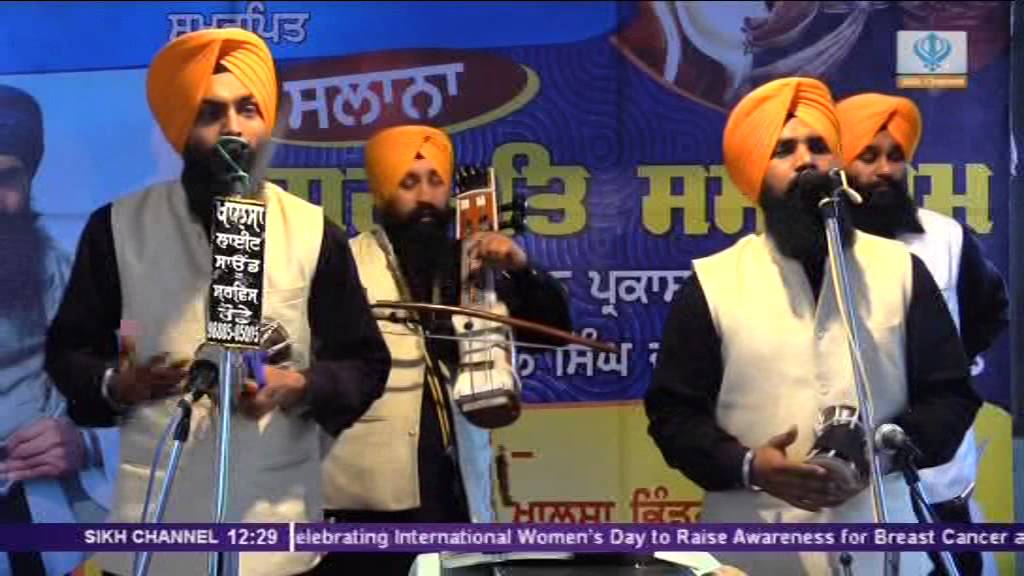
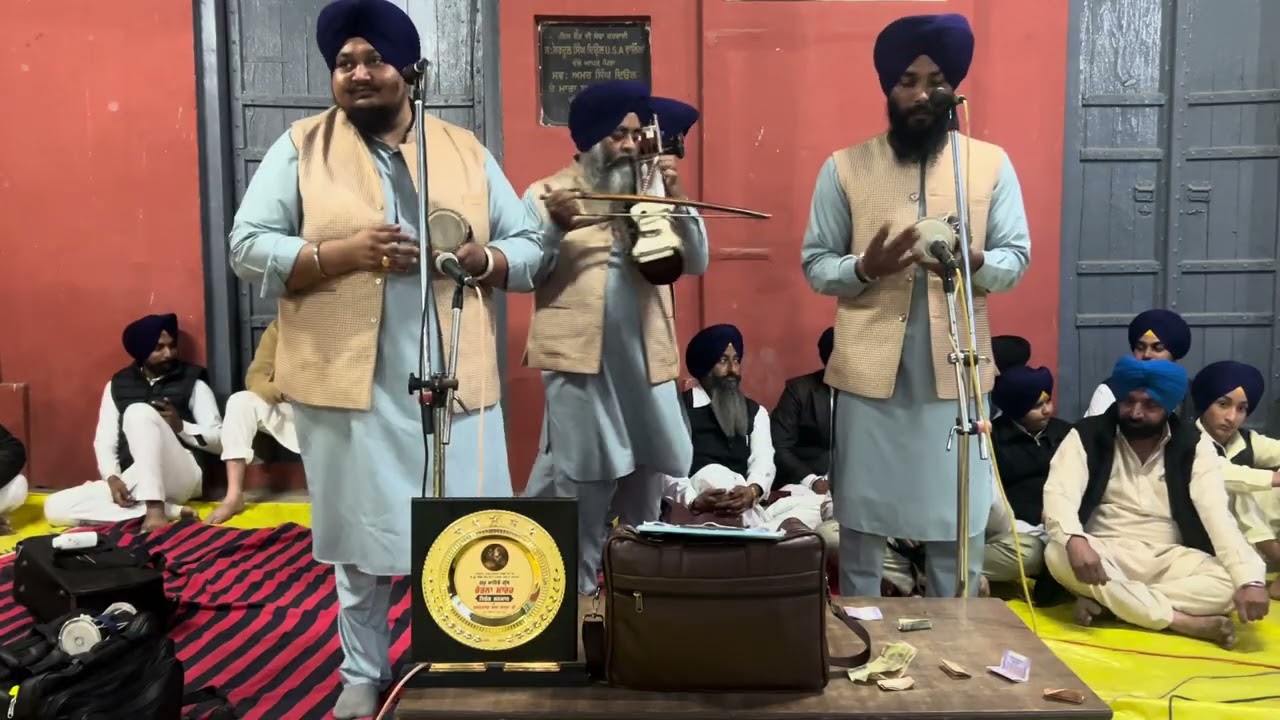
Dhadi Parminder Singh Paras On Parkash Purb Guru Gobind singh ji
Автор: RCF GURUDWARA
Загружено: 2018-01-15
Просмотров: 10997
Описание:
at Gurdwara Singh Sabha Rail Coach Factory Kapurthala Punjab 144602
Guru Gobind Singh
(Redirected from Guru gobind singh ji)
This is a featured article. Click here for more information.
This is a featured article. Click here for more information.
This is a featured article. Click here for more information.
Guru Gobind Singh
(1667 to 1708)
Guru Gobind Singh Sahib Ji (1667-1708).jpg
Full Name : Gobind Rai
Personal Details
Birth : Friday, January 5, 1667 in Patna, Bihar, India
Guruship : 1675 to 1708
Joti Jot : Thursday, 21 October, 1708 at Nanded
Family
Parents : Guru Tegh Bahadur & Mata Gujri
Brother/Sisters : N.A
Spouse : Mata Jeeto, Mata Sundri, and Mata Sahib Kaur.
Children : Zorawar Singh, Ajit Singh, Jujha Singh, Fateh Singh
Other Details
Bani in GGS: Recomposed the Sri Guru Granth Sahib Ji at Damdama Sahib in 1706
Other Info: Wrote Dasam Granth and Sarabloh Granth
Creation of Khalsa Panth
Fought wars of defense for righteousness
Guru Gobind Singh ji (Gurmukhi: ਗੁਰੂ ਗੋਬਿੰਦ ਸਿੰਘ) (January 5, 16671 - 21 October, 1708), born "Gobind Rai" at Patna Sahib, Bihar, India, was the tenth and last of the human form Gurus of Sikhism. He became Guru on November 24, 1675 at the age of nine, following the martyrdom of his father, the ninth Guru, Guru Tegh Bahadur Ji.
A divine messenger, a warrior, a poet, a philosopher, Guru Gobind Singh molded the Sikh religion into its present shape, with the institution of the Khalsa fraternity, and completion of the sacred scripture, the Guru Granth Sahib, in the final form that we find today. Before leaving his mortal body in 1708, Guru Gobind Singh decreed the Guru Granth Sahib as the next and perpetual Guru of the Sikhs.
It may not be out of context to consider that throughout the chronicles of human history, there has been no individual who lived a life more inspirational than Guru Gobind Singh. He is variously revered as Sarbans Dani (the merciful donor, who sacrificed his all), Mard Agamra (man without any parallels), Shah-e-Shahenshah (emperor of emperors), Bar do Alam Shah (ruler of both worlds), amongst others.
"If we consider the work which (Guru) Gobind (Singh) accomplished, both in reforming his religion and instituting a new code of law for his followers, his personal bravery under all circumstances; his persevering endurance amidst difficulties, which would have disheartened others and overwhelmed them in inextricable distress, and lastly his final victory over his powerful enemies by the very men who had previously forsaken him, we need not be surprised that the Sikhs venerate his memory. He was undoubtedly a great man." (W, L. McGregor)
It is said that after the martyrdom of his father, Guru Tegh Bahadur, the tenth Master declared that he would create such a Panth (community/society), which would challenge the tyrant rulers in every walk of life to restore justice, equality and peace for all of mankind. Via institution of the Khalsa in 1699, Guru Gobind Singh Ji infused the dual spirit of a saint and a soldier in the minds and hearts of his followers to fight oppression in order to restore righteousness (Dharma) and to uplift the down-trodden people in this world.
As a prophet, the Guru is unique. His teachings are very scientific and most suitable for all times. Unlike many other prophets he never called himself God or 'the only son of God.' Instead he called all people the sons of God sharing His Kingdom equally. For himself he used the word 'slave' or servant of God.
"Those who call me God, will fall into the deep pit of hell. Regard me as one of his slaves and have no doubt whatever about it. I am a servant of the Supreme Being; and have come to behold the wonderful drama of life."
Повторяем попытку...
Доступные форматы для скачивания:
Скачать видео
-
Информация по загрузке: