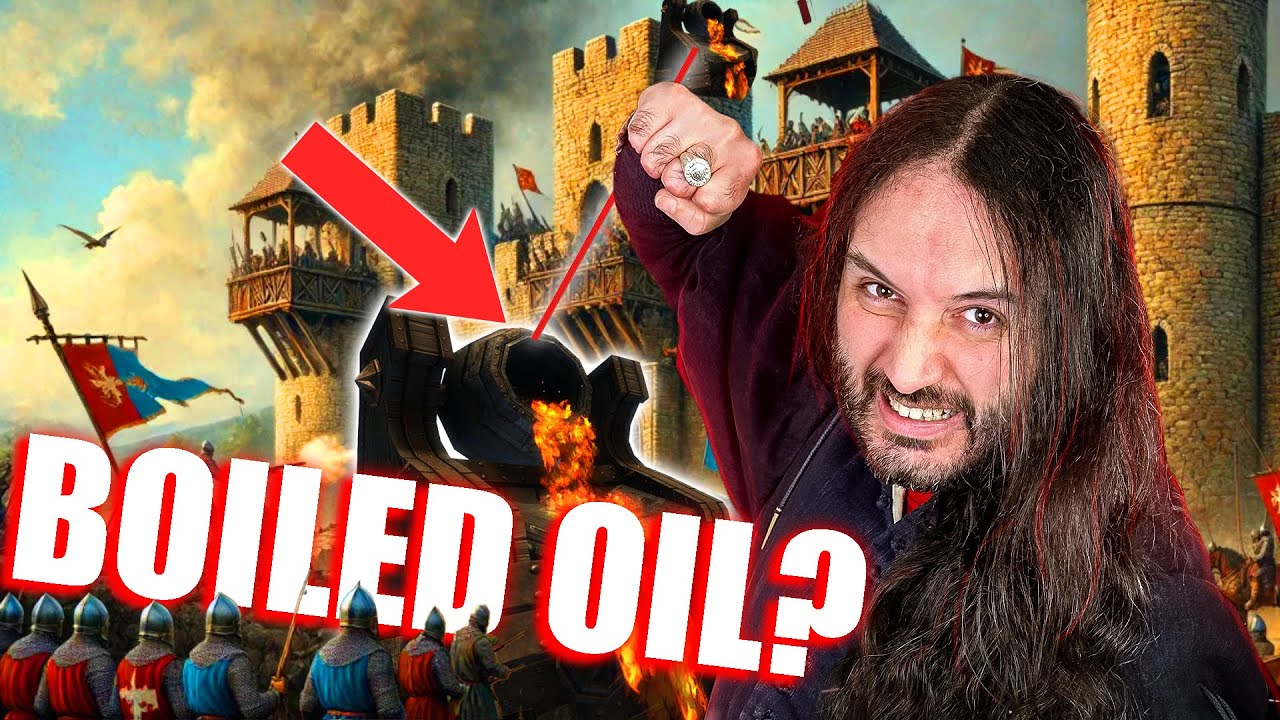
Medieval MYTHS You Still Believe: Boiled OIL in Sieges?
Автор: Metatron
Загружено: 2025-08-10
Просмотров: 25502
Описание:
Please get a Metatron pedantic plushie LAST DAY Love ya!
https://www.makeship.com/products/met...
I have a Patreon page with extra content!
/ themetatron
All the good links:
Come watch me live stream on Twitch! Almost every night 9pm CST
/ metatrongemini
Join this channel to get access to more old school Metatron videos the algorithm wouldn't prioritize!
/ @metatronyt
My second channel about languages
/ @metatronacademy
My third channel about gaming
/ @theprotectorate-yq7vi
My Twitter/X
https://x.com/pureMetatron
Medieval armies and defenders did very occasionally use boiling oil as a defensive weapon, though it was a lot less common than popular culture suggests. Hot oil was poured from castle walls and fortifications onto attacking forces below, causing severe burns and deterring siege attempts. However, oil was expensive and not always readily available, so defenders more commonly used heated water, sand, or even molten lead. The practice was documented in various siege accounts throughout the medieval period, particularly during the 12th and 13th centuries. While effective as a psychological deterrent and tactical weapon, boiling oil required significant preparation and resources, making it more of a desperate last resort than a standard defensive measure.
The use of boiling oil and other heated substances in medieval warfare was part of a broader arsenal of defensive techniques employed during castle sieges. Medieval defenders were remarkably creative in their methods of repelling attackers, and the deployment of scalding liquids represented just one aspect of sophisticated defensive strategies that evolved over centuries.
The practical logistics of using boiling oil were considerable. Defenders needed large cauldrons or containers that could be heated over fires, requiring substantial amounts of fuel to maintain the necessary temperatures. The oil itself was typically cooking oil, animal fat, or sometimes tar-like substances, all of which were valuable commodities that castle inhabitants might otherwise need for food preparation or lighting. This economic consideration meant that boiling oil was often reserved for the most desperate situations or when other resources were exhausted.
More commonly, defenders relied on heated water, which was far more abundant and economical. Sand was another popular alternative, as it retained heat well and created additional problems for attackers by getting into armor joints and weapon mechanisms. Molten metals like lead were sometimes used in more affluent fortifications, as they could cause devastating injuries and were particularly effective against armored opponents.
The psychological impact of these weapons often exceeded their physical effectiveness. The mere threat of scalding substances being poured from above could break the morale of attacking forces and discourage prolonged siege attempts. Medieval chroniclers frequently recorded accounts of attackers retreating after witnessing the gruesome injuries inflicted by boiling liquids, suggesting that the terror factor was as important as the actual casualties caused.
Archaeological evidence from medieval castles occasionally reveals the infrastructure used for these defensive measures. Murder holes in castle ceilings, specialized chambers for heating large quantities of liquid, and reinforced platforms for supporting heavy cauldrons all point to the systematic nature of these defensive preparations. Some castles featured dedicated "killing fields" where multiple defensive measures, including heated substances, could be concentrated on attacking forces.
The decline of boiling oil and similar defensive tactics came with changes in siege warfare technology. The development of more powerful siege engines, firearms, and eventually artillery made traditional castle defenses less effective. By the late medieval period, military engineers were designing fortifications that relied more on cannon-resistant walls and strategic positioning rather than the close-quarters defensive measures that had characterized earlier castle warfare.
#debunkingmyths #mythbusting #medievalhistory
Повторяем попытку...
Доступные форматы для скачивания:
Скачать видео
-
Информация по загрузке: