Arabs Will Drink Cheap Water Because Of Only India | अरब देशों को पीने का सस्ता पानी देगा भारत
Автор: TrainSome
Загружено: 2026-07-13
Просмотров: 50997
Описание:
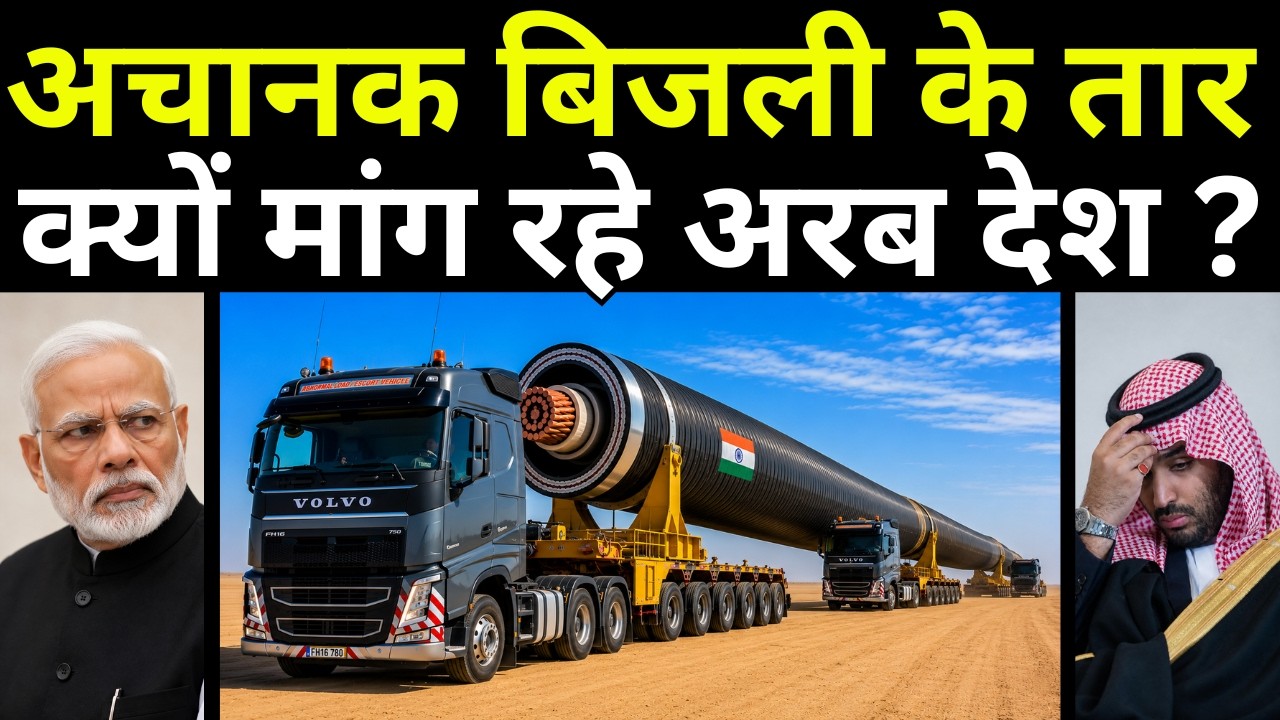
India is preparing for one of its most ambitious cross-border energy infrastructure initiatives through proposed submarine cables connecting the country with the UAE and Saudi Arabia. The planned India UAE Power transmission Line is expected to play a significant role in enabling clean electricity trade between South Asia and the Gulf region. If implemented, the project could allow renewable electricity generated in India to reach energy-intensive economies in the Middle East through advanced undersea High Voltage Direct Current (HVDC) transmission technology.
The proposed project is closely linked with the growing strategic partnership under India UAE Relations and the expanding economic cooperation reflected in India UAE Trade. Discussions around the Saudi Arabia India Power Line agreement have also highlighted the long-term vision of creating an energy corridor capable of supporting regional power security while reducing dependence on conventional fossil-fuel-based electricity generation.
Although Saudi Arabia and the UAE possess vast petroleum and natural gas reserves, both countries consume enormous amounts of electricity for industrial operations, urban infrastructure, and especially for large-scale Water Treatment plant in Saudi Arabia facilities. One of the biggest electricity consumers in the Gulf is seawater desalination. Every year, Desalination plant in Arab Nations process billions of cubic meters of seawater into drinking water, requiring significant amounts of reliable electricity. Access to competitively priced renewable energy imported from India could help reduce long-term operating costs while supporting sustainability goals.
A key technology behind this ambitious vision is the use of specialized submarine cables. Unlike conventional transmission lines, submarine power cables are engineered to operate for decades beneath seawater under high pressure while minimizing transmission losses. Modern HVDC submarine cable systems are designed to withstand corrosive marine environments, underwater pressure, and continuous high-voltage electricity transmission with exceptional reliability. These cables form the backbone of international power interconnections already operating between countries such as the United Kingdom and Norway, Norway and the Netherlands, as well as several other European nations.
India's growing manufacturing ecosystem is also becoming an important part of this story. Several Submarine cable manufacturers in India have significantly expanded their capabilities in high-voltage cable manufacturing, marine cable engineering, and specialized offshore applications. Companies including APAR Industries, Universal Cables, and Sterlite Power have strengthened India's domestic expertise in advanced power transmission technologies. While long-distance commercial HVDC submarine cable manufacturing continues to evolve, India's capabilities have improved considerably over the past decade, reducing dependence on imported technologies in several areas of cable manufacturing.
The proposed Power Transmission From India initiative represents much more than an electricity export project. It combines renewable energy expansion, regional energy cooperation, advanced manufacturing, and high-value engineering into a single long-term strategic vision. As India rapidly increases its renewable energy capacity through solar and wind projects, international electricity trade could become an important component of its future energy economy.
Globally, the submarine power cable market continues to expand as countries invest in offshore wind farms, cross-border electricity trade, and underwater transmission corridors. These projects require sophisticated engineering, precision manufacturing, and decades of operational reliability, making submarine cable technology one of the most specialized segments of the global power infrastructure industry.
If the India-UAE and India-Saudi Arabia interconnection projects move from planning to execution, they could become landmark examples of regional energy integration while opening new opportunities for Indian engineering companies and power equipment manufacturers. The success of these projects may also strengthen India's position in future international energy connectivity initiatives.
Повторяем попытку...
Доступные форматы для скачивания:
Скачать видео
-
Информация по загрузке: