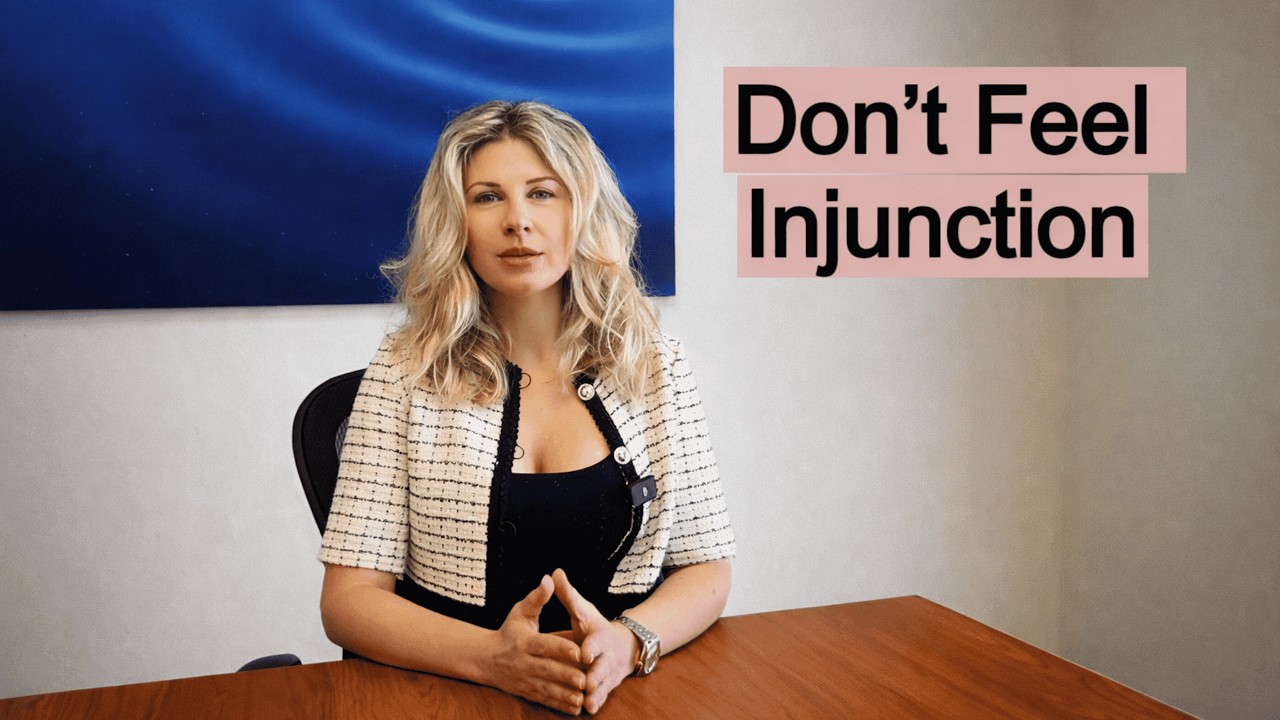
5. Don’t Feel Injunction
Автор: aiforpsy
Загружено: 2026-02-22
Просмотров: 14
Описание:
Don’t Feel Injunction
This injunction develops when a child learns that certain emotions are unsafe, unwelcome, or unacceptable in their environment.
Every child is born emotionally expressive.
They cry, laugh, rage, fear, attach, protest, delight.
But when their emotional world consistently disrupts connection —nor overwhelms caregivers — the child adapts.
And the adaptation often sounds like: “It’s safer not to feel.”
Not because feelings disappear — but because expressing them costs too much.
How this injunction is formed
A baby cries — and is met with irritation.
Or is told, even nonverbally, to quiet down.
Or is left alone to “self-soothe.”
The nervous system absorbs:
“My feelings disturb the environment.”
“My distress is too much.”
If intense emotion does not bring comfort, the infant may reduce expression.
Less crying.
Less visible need.
More internal holding.
This is not maturity.
It is emotional suppression in the service of attachment.
Explicit Emotional Prohibitions
As the child grows, messages may become clearer:
• “Stop crying.”
• “Don’t be so dramatic.”
• “There’s nothing to be afraid of.”
• “Good girls don’t get angry.”
• “Boys don’t cry.”
• “Calm down.”
Sometimes only certain emotions are forbidden:
• anger may be punished;
• sadness may be mocked;
• fear may be dismissed;
• joy may be toned down if “too much.”
The child quickly learns which feelings are allowed and which ones threaten connection.
Substitution Factor
When authentic feelings are not permitted, they don’t disappear.
They are replaced.
This is what Fanita English described as the substitution factor.
A child may:
• replace anger with sadness;
• replace fear with intellectualization;
• replace sadness with humor;
• replace vulnerability with compliance;
• replace authentic joy with performative excitement.
Over time, the substituted emotion becomes automatic.
The child no longer knows what they truly feel.
They know only what is safe to express.
The Racket System
Erskine & Zalcman described how this evolves into a racket system.
The child develops:
• a fixed emotional pattern,
• recurring self-beliefs,
• predictable behaviors,
• reinforcing memories,
• and bodily tension patterns.
For example:
Authentic anger → not allowed → replaced with guilt.
Guilt becomes habitual.
The body stores it.
Relationships reinforce it.
The system stabilizes around the substituted emotion.
And the original feeling becomes inaccessible.
How it manifests in adulthood
In adulthood, this injunction can appear in two major patterns.
1️⃣ Emotional Freezing
Some adults disconnect from their emotional life almost entirely.
• difficulty naming feelings;
• describing experiences in purely logical terms;
• saying “I don’t know what I feel”;
• appearing calm in situations that would normally evoke emotion;
• tension in the body, shallow breathing;
• chronic fatigue from emotional suppression.
Under stress, they may enter a shutdown or numbness.
The body learned long ago: “Feeling equals danger.”
2️⃣ Emotional Distortion or Overcompensation
Others appear highly emotional — but the emotion is not authentic.
They may:
• exaggerate reactions;
• laugh too loudly;
• cry in ways that feel theatrical;
• dominate emotional space in a room;
• hug or touch others impulsively;
• over-disclose too quickly.
The intensity is real — but it may be disconnected from core emotion.
For example:
• sadness masking anger;
• anxiety masking grief;
• humor masking shame;
• “being dramatic” masking unmet attachment needs.
In some cases, a person may intellectualize everything — talk about feelings without feeling them.
This is still Don’t Feel.
It is controlled emotion.
Internal Experience
Adults with this injunction often say:
• “I feel empty.”
• “I should feel something, but I don’t.”
• “I overreact and then regret it.”
• “I can’t tell what’s real.”
Underneath both numbness and exaggeration is the same early conclusion: “My authentic feelings are not safe.”
Permissions
Feel.
Not perfectly.
Not dramatically.
Just honestly.
Your emotions are not dangerous.
They are information.
Anger protects.
Sadness connects.
Fear alerts.
Joy expands.
Feeling does not destroy attachment.
Suppression does.
You are allowed to experience your full emotional range
without losing connection.
Your feelings are not too much.
They are human.
Повторяем попытку...
Доступные форматы для скачивания:
Скачать видео
-
Информация по загрузке: