CONSTITUTIOANL LAW 2- THE MAKING OF 1992 CONSTITUTION AND ITS OVERVIEW
Автор: GHANA LAW TV
Загружено: 2025-03-24
Просмотров: 2291
Описание:
SUMMARY OF GHANA’S 4TH REPUBLICAN CONSTITUTION (1992)
The 1992 Constitution of Ghana arose from a significant period of reform and consultation under the Provisional National Defence Council (PNDC). These reforms in the late 1980s aimed to decentralize governance, democratize political power, and expand local administrative districts. At the same time, Ghana’s economic reforms depended on international donor support, which increasingly required a return to constitutional democracy. This global climate coincided with the collapse of communism and generated further momentum for constitutional government.
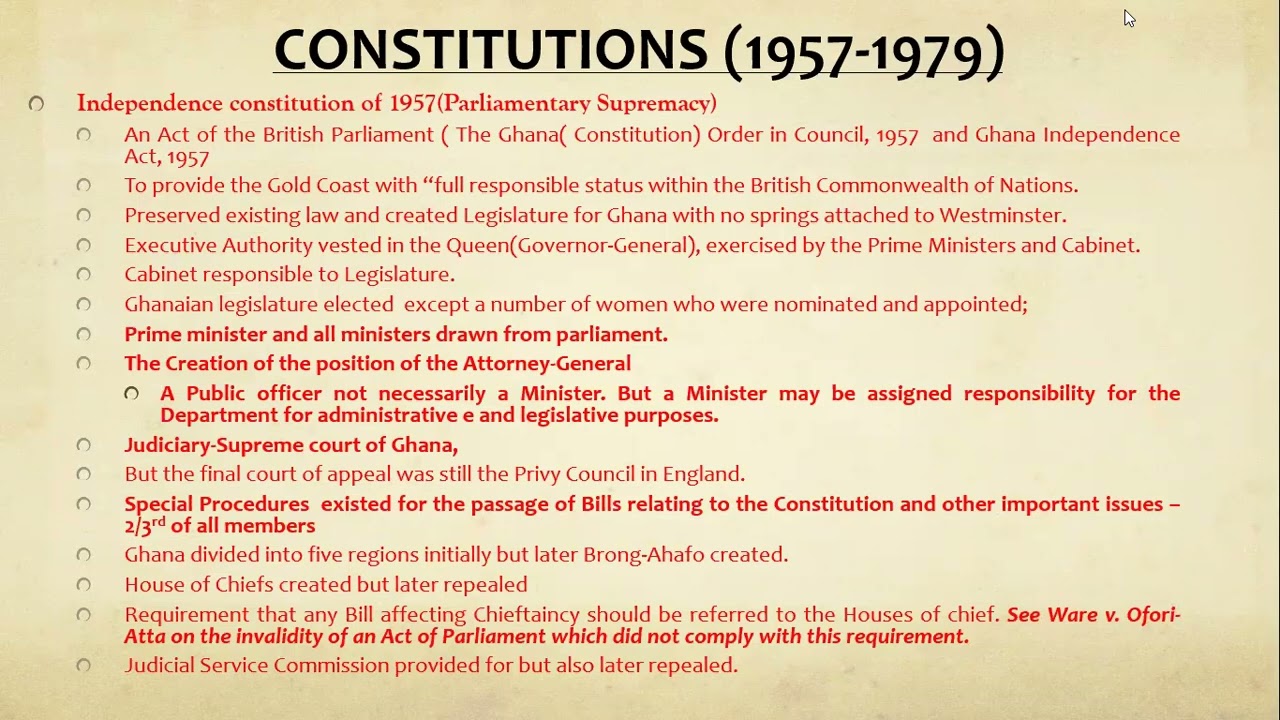
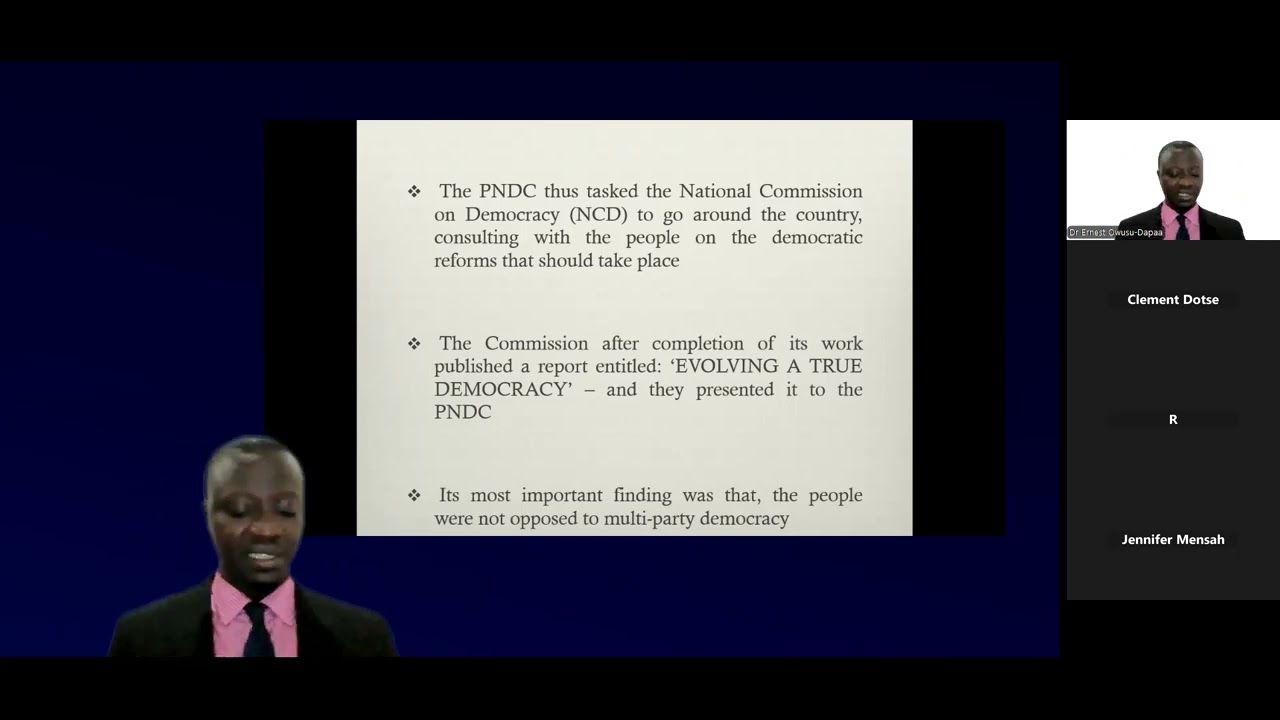
The PNDC formed the National Commission on Democracy (NCD) to consult citizens on their vision of democracy. Their report, “Evolving a True Democracy,” revealed a general acceptance of multi-party democracy. This led to the Committee of Experts (Constitution) Law, 1991 (PNDCL 252), which mandated a Committee to propose a new constitution, drawing insights from the NCD’s report and Ghana’s earlier constitutions (1960, 1969, and 1979). Subsequently, a Consultative Assembly convened under the Consultative Assembly Law, 1991 (PNDCL 253), preparing a final draft that Ghanaians overwhelmingly approved in a national referendum on 28 April 1992. The new Constitution took effect on 7 January 1993.
Notably, the Constitution is technically a Schedule to the Constitution of the Republic of Ghana (Promulgation) Law, 1992 (PNDCL 282). PNDCL 282 gives the Constitution legal effect. If the Constitution is printed without PNDCL 282, it must match the version endorsed at the referendum for it to retain validity.
---
1. The Executive
Under the 1992 Constitution, Ghana has an Executive Presidency. The President is Head of State, Head of Government, and Commander-in-Chief of the Armed Forces. All executive authority vests in the President and may be exercised personally or by delegated officers (article 58). The President takes precedence over all persons in Ghana, followed in descending order by the Vice-President, Speaker of Parliament, and Chief Justice.
*Presidential Succession*
Two main scenarios exist:
Permanent vacancy: If the President dies, resigns, or is removed, the Vice-President succeeds for the remainder of the term (articles 60(6), 60(7), 60(9), 60(10), and 60(13)).
Temporary vacancy: If the President (and, where relevant, Vice-President) is abroad or otherwise unable to perform duties, the Vice-President—or if both are absent, the Speaker—assumes presidential functions until the President or Vice-President can resume. This was affirmed in Asare v. Attorney-General (2003-2004) SCGLR 823, where the Supreme Court reasoned that “absent from Ghana” constitutes an inability to perform presidential functions.
*Term and Removal*
The President serves a four-year term and may seek a second four-year term if re-elected (article 66). Removal from office (article 69) involves impeachment proceedings and requires demonstrating grave misconduct or violation of the Constitution.
---
2. The Legislature
Ghana’s Parliament consists of no fewer than 140 elected members (article 93). Legislative authority is vested in Parliament (article 93(2)). Prospective members must be citizens of Ghana, at least 21, and registered voters. They must hail from or have significant residence ties to the constituency, and they must have settled their tax obligations (article 94(1)).
*Legislative Process*
Article 106 outlines the procedure for passing bills, typically requiring thorough deliberation and committee review. Parliament cannot enact retroactive criminal laws (article 107). Disputes about an MP’s valid election or a seat’s vacancy are determined by the High Court (article 99).
---
3. The Judiciary
The Judiciary is vested with the nation’s judicial power and is independent from other branches. It consists of the Superior Courts—the Supreme Court, Court of Appeal, and High Court (with Regional Tribunals)—and lower courts established by Parliament (article 126). Justice is administered in the name of the Republic.
**
---
4. Constitutional Bodies and Freedoms
*Press Freedom*
Chapter 12 of the Constitution guarantees press freedom.
*Independent Institutions*
The Commission on Human Rights and Administrative Justice (CHRAJ) investigates human rights violations and administrative abuses, while the National Commission for Civic Education (NCCE) promotes constitutional awareness and participation in governance. Both bodies safeguard core democratic values.
-
Повторяем попытку...
Доступные форматы для скачивания:
Скачать видео
-
Информация по загрузке: