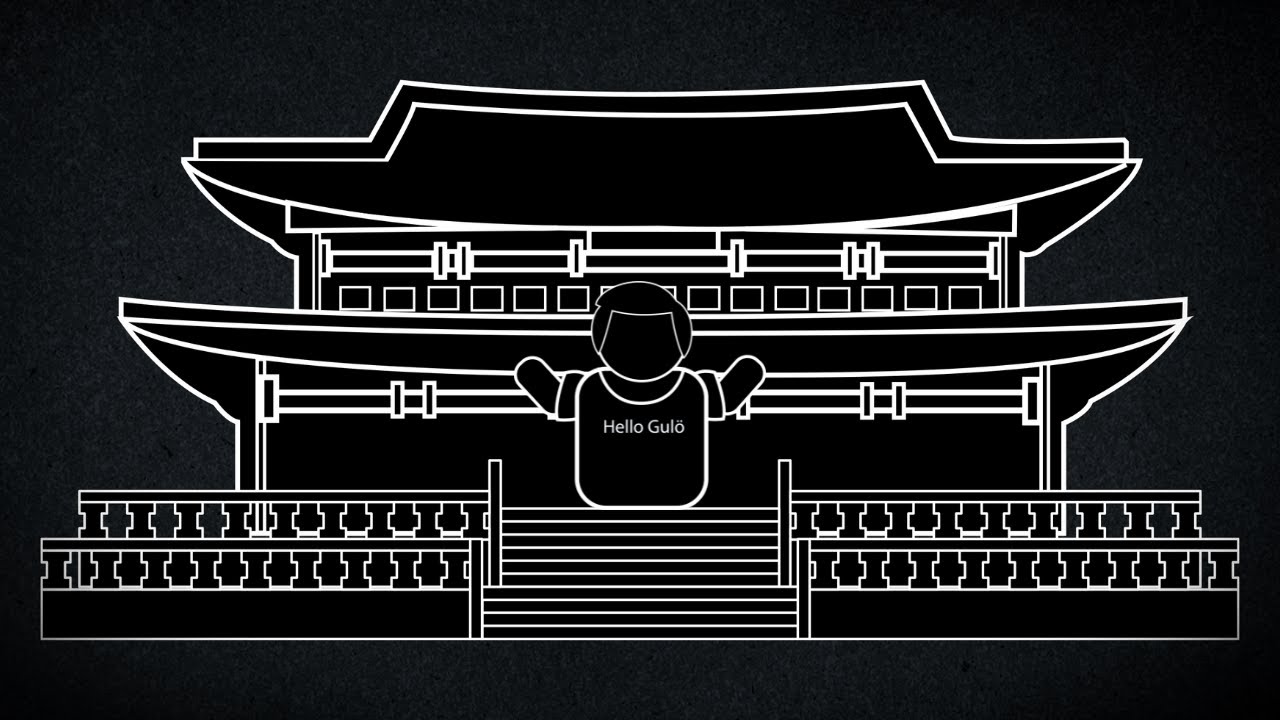
The History of Gyeongbokgung Palace, South Korea
Автор: Hello Gulö
Загружено: 2025-09-20
Просмотров: 13450
Описание:
Welcome to Seoul, the capital city of South Korea.
And here stands a beautiful landmark: Gyeongbokgung Palace (경복궁)
Annyeonghaseyo, 안녕하세요. I’m Gulö.
And this is the story of a palace that holds Korea’s soul.
The Beginning
It’s 1395. King Taejo, the first king of the Joseon Dynasty, wanted a new symbol for his kingdom.
He chose a site in northern Seoul and named it Gyeongbokgung, meaning "Palace Greatly Blessed by Heaven."
01:42 Royal Life
Gyeongbokgung became the home of the king, queen, concubines, scholars, and royal guards.
The king ruled from the Geunjeongjeon Throne Hall, where two dragons still look down from the ceiling.
Meals were art. The royal kitchen, Sojubang, served up to 12 dishes at once and even brewed soy sauce.
Music played. Court ladies (궁녀) worked behind the scenes. Fashion flourished with Hanbok like in your favorite K-dramas.
02:55 The gates of Gyeongbokgung
The palace is guarded by gates like:
Gwanghwamun, the grand main gate
Heungnyemun, for high officials
Yeongchumun, leading to royal living quarters
Each gate had a role, reflecting rank and purpose.
03:39 A love story
In 1720, King Yeongjo married Queen Jeongsun. At first, for politics.
But slowly, they fell in love.
When she died in 1760, he was heartbroken.
He built places in the palace to remember her, and visited her tomb often.
Even royalty is touched by love and loss.
04:57 Fire and war with Japan
In 1592, Japan invaded Korea under Toyotomi Hideyoshi.
Over 150,000 soldiers marched in. In just 20 days, they took the capital, then called Hanseong, now Seoul.
King Seonjo fled north. People were angry. But one man stayed: Admiral Yi Sun-sin.
With his Turtle Ships, armored, spiked, cannon-powered, he turned the war at sea and stopped reinforcements.
In 1598, after six years, Japan left. Korea was free but damaged.
King Gwanghaegun tried to rebuild but was later removed from power.
09:15 Restoration and Rebirth
270 years later, King Gojong and his father Heungseon Daewongun rebuilt the palace in 1867.
It was glorious again, full of life and vision for a modern Korea: electricity, telephones, even a hospital.
But peace didn’t last.
In 1895, Japanese agents killed Queen Min inside the palace.
King Gojong fled to the Russian Embassy and never returned to Gyeongbokgung.
In 1910, Japan colonized Korea. Over 90% of the palace was destroyed.
They built the Government-General Building in front of the throne hall to block and erase Korea’s royal heart.
After Freedom
After World War II in 1945, Korea regained independence.
But Gyeongbokgung was forgotten, damaged and buried in silence.
In the 1990s, South Korea began to restore the palace. Not for kings, but for the people.
Craftsmen, historians, and artists worked for years.
Step by step, the palace came back to life.
Today
Now, over 5 million people visit every year.
They wear Hanbok, watch the royal guard ceremony, and walk through history.
Gyeongbokgung is also home to:
The National Palace Museum of Korea
The National Folk Museum of Korea
From K-Dramas like Kingdom and Mr. Sunshine, to BTS photoshoots, the palace lives on in modern culture.
It’s more than stone and wood.
It’s pain, pride, and passion.
It’s the soul in Seoul.
I’m Gulö. See you in the next video.
감사합니다! Gamsahabnida!
Повторяем попытку...
Доступные форматы для скачивания:
Скачать видео
-
Информация по загрузке:





![[Korea Foundation] Korean Style - Architecture, One with Nature](https://image.4k-video.ru/id-video/FKDIpuh--N8)
![[TVZONE] Gwanghwamun Gate through the Years](https://image.4k-video.ru/id-video/SDWbTSTkJQI)