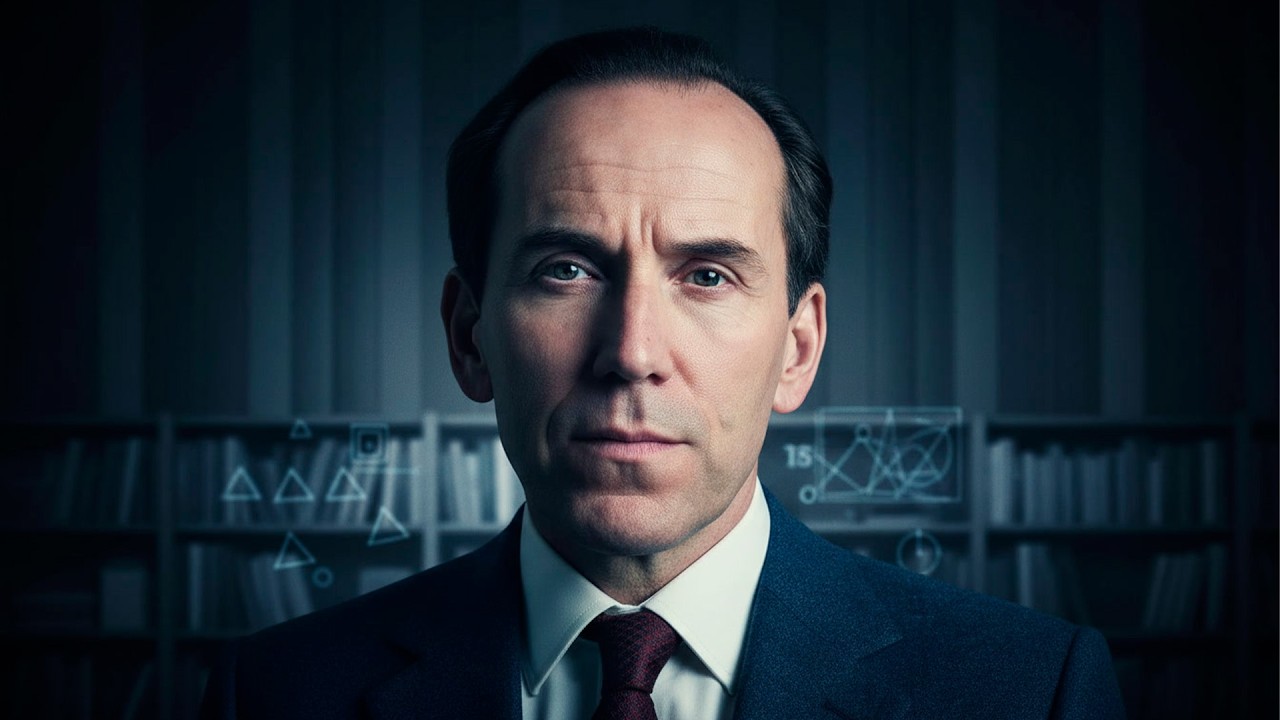
Classic Hollywood Restored – Fred MacMurray Through AI
Автор: fotoripple
Загружено: 2026-01-22
Просмотров: 35
Описание:
Fred MacMurray was born on August 30, 1908, in Kankakee, Illinois. He was raised in a family with strong ties to music rather than film – his father was a concert violinist and his mother a vocal instructor. MacMurray initially trained as a saxophonist and played professionally in dance bands during the late 1920s, including work with Gus Arnheim’s orchestra. This musical background influenced his later acting style, particularly his sense of timing and restraint.
MacMurray entered Hollywood in the early 1930s under contract with Paramount Pictures. His early film appearances were modest, but he gained attention with “She Married Her Boss” (1935), which established him as a reliable romantic lead. Throughout the mid-1930s, he appeared in a series of light comedies and dramas, often portraying affable, middle-class characters rather than larger-than-life figures.
His breakthrough came with a string of successful comedies opposite Claudette Colbert, including “The Gilded Lily” (1935), “No Time for Love” (1943), and most notably “The Palm Beach Story” (1942), directed by Preston Sturges. These films cemented MacMurray’s image as a charming but understated leading man. Unlike many contemporaries, he rarely relied on exaggerated gestures or overt emotional displays, which made his performances feel natural and approachable.
During World War II, MacMurray was classified as 4-F due to a childhood illness and did not serve in the military, unlike many actors of his generation. As a result, he remained active in Hollywood while others were overseas. This contributed to his continued visibility and box-office reliability throughout the early 1940s. Studios valued him for consistency rather than volatility, and he became one of the highest-paid actors of the decade.
A major turning point in his career came in 1944 with “Double Indemnity”, directed by Billy Wilder. In the film, MacMurray portrayed Walter Neff, an insurance salesman drawn into a murder plot. The role was a deliberate subversion of his established screen persona. Wilder had to persuade MacMurray to take the part, as he feared damaging his wholesome image. The performance proved pivotal and is now regarded as one of the defining roles of film noir.
Following “Double Indemnity”, MacMurray continued to balance lighter material with darker dramatic roles. He appeared in “The Apartment” (1960), again under Billy Wilder’s direction, playing a morally compromised corporate executive. The film won Best Picture at the Academy Awards and demonstrated MacMurray’s ability to embody ethically complex characters without abandoning his restrained style.
Throughout the 1950s, MacMurray became closely associated with Walt Disney Studios. He starred in a series of popular family films, including “The Shaggy Dog” (1959), “The Absent-Minded Professor” (1961), and “Son of Flubber” (1963). These films introduced him to a new generation and reinforced his image as a dependable, paternal figure during the postwar era.
In parallel with his film career, MacMurray made a significant transition to television. From 1960 to 1965, he starred in the sitcom “My Three Sons”, playing widowed engineer Steve Douglas. The show ran for 12 seasons and became one of the longest-running family sitcoms in American television history. MacMurray’s contract allowed him to film all his scenes in a limited block each year, which made him one of the earliest examples of an actor leveraging television production schedules to his advantage.
Despite his genial screen image, MacMurray was known privately as a disciplined and financially astute individual. He invested heavily in real estate and agricultural land and became one of Hollywood’s wealthiest actors by the end of his career. He was also known for maintaining a strict separation between work and personal life, rarely socializing within Hollywood circles.
Fred MacMurray retired from acting in the early 1970s and made his final screen appearance in “The Swarm” (1978). He died on November 5, 1991, at the age of 83. Over a career spanning more than four decades, he appeared in over 100 films and television productions, navigating shifts from studio-era cinema to television dominance without losing relevance.
AI restoration serves a preservation function rather than reinvention. Many original materials from Hollywood’s golden age exist only in degraded or limited-quality formats. Through AI-assisted colorization and animation, it becomes possible to experience these figures with renewed immediacy while respecting historical accuracy.
Restored, colorized, and animated with AI using the fotoripple service at www.fotoripple.com
#AIColorization #AIPhotoRestoration #Fotoripple #FredMacMurray #ClassicHollywood #FilmNoir #DoubleIndemnity #TheApartment #GoldenAgeCinema #HollywoodHistory #ClassicFilms #VintageHollywood #AIAnimation #FilmRestoration #CinemaHistory
Повторяем попытку...

Доступные форматы для скачивания:
Скачать видео
-
Информация по загрузке:




![«ФАНТОМАС»🎭😃Как создавали Легендарный фильм с Луи де Фюнесом [Съемки Факты Интересности]](https://imager.clipsaver.ru/IHSXCZ6uiTg/max.jpg)