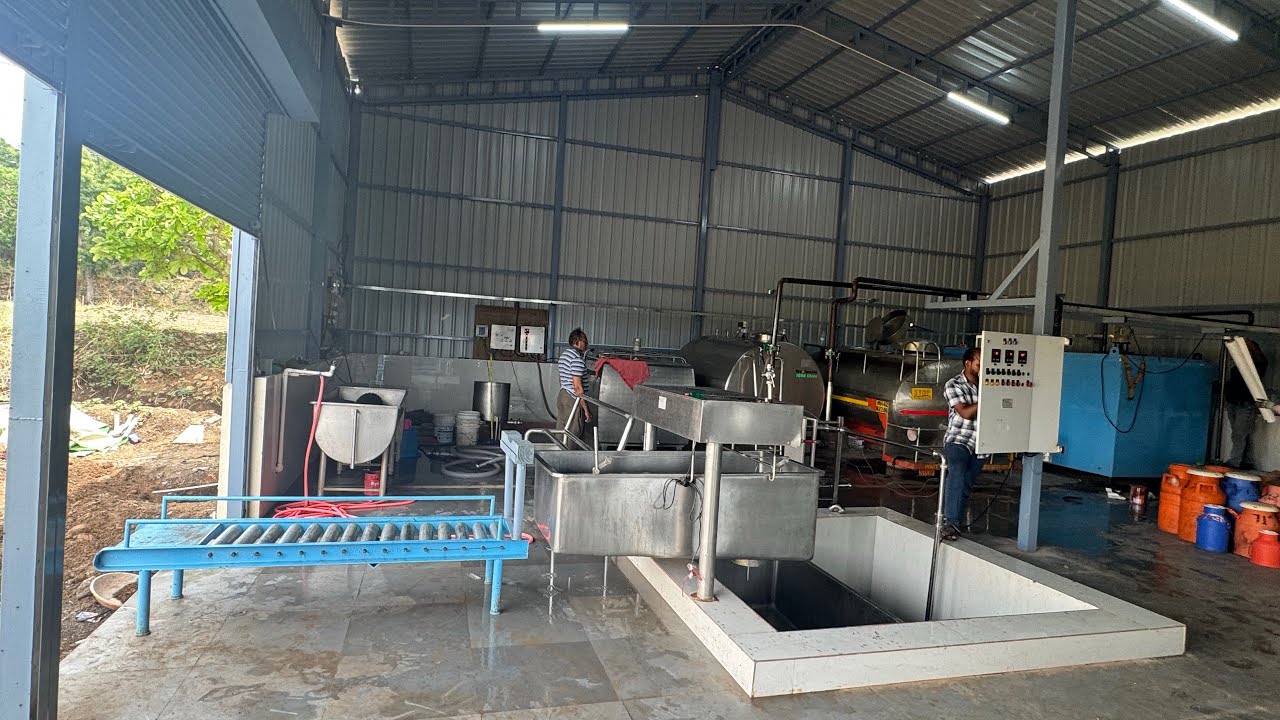
Complete Milk Processing & Value-Added Dairy By-Products Plant ( H.A.ENGINEERING)
Автор: Adv.Faiyaj Nadaf
Загружено: 2026-03-09
Просмотров: 840
Описание:
A Milk Processing and Dairy Product Manufacturing Unit is designed to process raw milk into hygienic and high-quality dairy products such as pasteurized milk, paneer, curd (dahi), and ghee. The plant follows proper pasteurization, cooling, and packaging systems to maintain food safety and product quality.
1. Raw Milk Reception
Fresh milk is collected from farmers or milk collection centers and transported to the dairy plant in insulated milk tankers. The milk is received in the milk reception dock, where it is filtered, weighed, and tested for quality parameters such as fat, SNF, acidity, and adulteration.
2. Milk Processing Section
After quality approval, milk is transferred to the milk storage tanks and processed through the following stages:
• Milk Chilling: Milk is cooled to 4°C using a plate heat exchanger (PHE) or milk chiller.
• Pasteurization: Milk is heated to about 72°C for 15 seconds to destroy harmful bacteria.
• Homogenization (optional): Ensures uniform fat distribution in milk.
• Standardization: Fat content is adjusted as required.
3. Milk Packing Section
Pasteurized milk is stored in insulated storage tanks and then sent to automatic milk pouch packing machines. The milk is packed in food-grade plastic pouches in sizes such as 250 ml, 500 ml, and 1 liter. Packed milk is stored in a cold room at 4°C before distribution.
4. Paneer Production Section
Paneer is produced by heating milk to around 85–90°C and adding food-grade coagulants such as citric acid or vinegar to separate curd from whey. The curd is pressed in paneer pressing machines to form blocks. After pressing, paneer is cut, chilled, and packed hygienically.
5. Curd (Dahi) Production Section
Pasteurized milk is cooled to 40–45°C and inoculated with starter culture. The milk is then filled into cups or containers and kept in an incubation room for fermentation. After proper setting, curd is transferred to cold storage to maintain freshness.
6. Ghee Production Section
Ghee is produced from butter or cream. The cream is first converted into butter and then heated in a ghee boiler or ghee kettle. During heating, moisture evaporates and pure clarified butter (ghee) is obtained. The ghee is filtered, cooled, and packed in tins, jars, or pouches.
7. By-Products Utilization
• Whey from paneer production can be used for beverages or animal feed.
• Skim milk can be used for curd or other dairy products.
8. Utilities and Supporting Systems
The dairy plant also requires:
• Steam boiler
• Refrigeration system (ammonia or freon plant)
• Cooling tower
• CIP cleaning system
• Cold storage rooms
• Laboratory for quality testing
9. Hygiene and Quality Control
All equipment is made from food-grade stainless steel (SS304) to maintain hygiene. The plant follows FSSAI standards and dairy industry regulations to ensure safe and high-quality products.
#milkprocessing
#dairyplant
#milkpacking
#dairyprocessing
#paneermaking
#curdmaking
#GheeProduction
#dairyindustry
#milkplant
#FoodProcessingUnit
#dairyequipment
#MilkTechnology
#PaneerPlant
#CurdPlant
#GheePlant
#MilkBusiness
#dairybusiness
#MilkProcessingPlant
#foodindustry
#dairymachinery
#startupindia
#foodfactory
#manufacturingunit
#agroindustry1992
#indiandairyfarm
Повторяем попытку...

Доступные форматы для скачивания:
Скачать видео
-
Информация по загрузке: