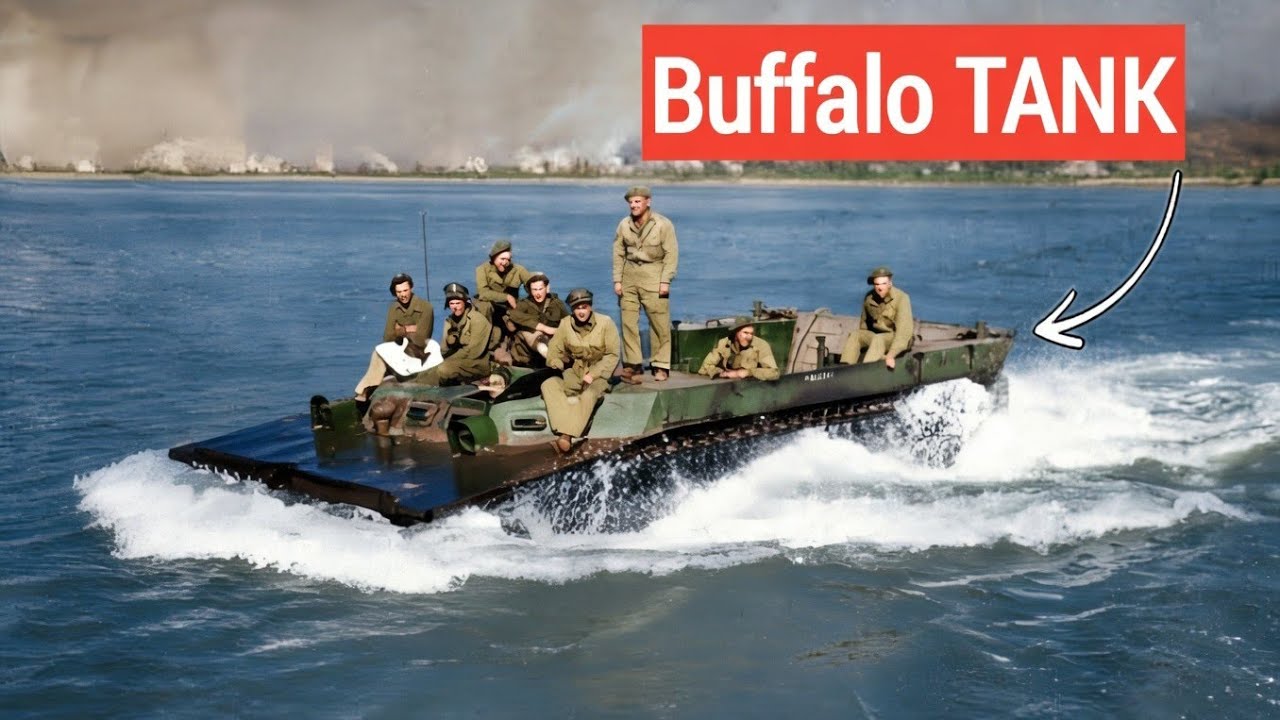
Why This ‘Borrowed’ American Vehicle Made the Rhine River Easy to Cross - LVT-4 Buffalo
Автор: The Untold WWII
Загружено: 2026-03-02
Просмотров: 0
Описание:
March 1945. The Rhine River was supposed to be uncrossable.
Four hundred yards wide. Fast-moving water. Tens of thousands of German troops waiting on the far bank. Conventional assault boats turned river crossings into suicide missions.
So Britain did something completely unexpected.
Instead of storm boats, they borrowed an American amphibious vehicle originally designed to rescue hurricane victims — and turned it into one of the most effective river-crossing machines of World War II.
During Operation Plunder, over 600 of these vehicles carried entire divisions across the Rhine in just three days. More than 3,800 crossings. Fewer than 40 crew casualties. Only nine vehicles lost.
Meanwhile, soldiers in traditional assault boats were landing hundreds of yards off target — paddling with rifle butts under machine-gun fire.
This video breaks down: • Why storm boat crossings were failing
• How a civilian rescue vehicle was transformed into a battlefield weapon
• How Britain’s specialist armored units rewrote river assault doctrine
• Why the Rhine Crossing became one of the most efficient large-scale assaults of the war
The Rhine wasn’t crossed by luck — it was crossed by innovation.
This is the story of the vehicle that turned Europe’s most dangerous river into an Allied highway.
🔔 Subscribe for more untold WW2 stories:
/ @TheUntoldWWII
👍 Like this video if you learned something new
💬 Comment below: What other WW2 tactics should we cover?
#worldwar2 #ww2history #ww2 #wwii #Since1940s #theuntoldwwii
⚠️ Disclaimer: This is entertainment storytelling based on WW2 events from internet sources. While we aim for engaging narratives, some details may be inaccurate. This is not an academic source. For verified history, consult professional historians and archives. Watch responsibly.
Повторяем попытку...
Доступные форматы для скачивания:
Скачать видео
-
Информация по загрузке: