Prague Public Transport uses art to combat graffiti
Автор: AP Archive
Загружено: 2021-04-21
Просмотров: 286
Описание:
(5 Aug 2015) LEAD-IN:
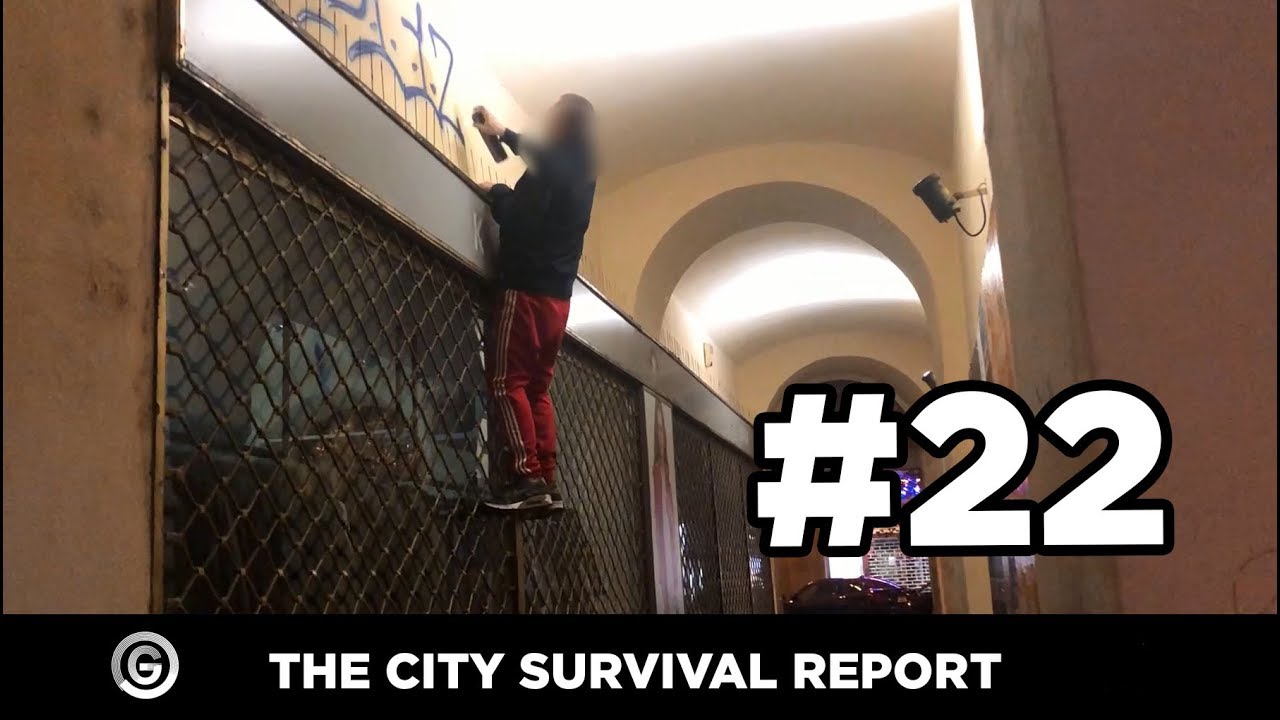
Prague Public Transport officials have long been facing a problem practically as old as written communication itself - graffiti.
Now they're solving the issue by inviting the graffitists onto the platforms.
STORY-LINE:
A regular arrival at Prague's Andel metro station in central Prague.
Busy commuters here were once only able to feast their eyes on old Communist-era artwork and various graffiti.
According to Prague Public Transport (PPT), graffiti had become particularly frequent here.
Temporary walls around an elevator project - started in 2014 - became a catch all for graffiti, political gripes and dirty messages.
"We in the transport authority were thinking of ways to refresh the station, to improve the environment. Because after a while it turned ugly," says PPT spokesperson, Jiri Stabl.
That's when authorities from PPT turned to a group of four artists for a solution, letting each of them use a wall as their own personal canvas.
Jan Kalab, once a Czech graffiti artist and now an established name in the international art world, contributed to the project.
For him, it was an odd feeling to be invited down into the metro station to work.
He previously spent years breaking into places like this to craft his own graffiti.
"I have experience (with the metro) from the time I was doing graffiti, great experience," he says.
"And this is a paradox that after all those years, they invited us and opened the doors after service hours and turned on the escalators for us. Before, we had to break in through reinforced doors and use back doors."
To create the pieces, artists worked through two nights until the station re-opened each morning.
Kalab took inspiration from the Communist-era propaganda art which still lines the walls of the metro station's platform.
On one, the original hammer and sickle still remain.
"I've chosen the yellow colour because it evokes the 1970's - it's retro, it evokes communism - of the time that I was young," says Kalab.
"I wanted it to be modern, but at the same time I wanted it to contain the history, to have a link to this particular station which used to be named after Moscow. In Moscow, it (the metro station) looks the same as here. As I said, I wanted the piece to fit the place and I think I managed to do it."
When opened during the Communist-era in 1985, this station was named after the Soviet Union capital, Moscow, and decorated with various Communist-era artworks, often known as Socialist Realism.
Following the 1989 anti-Communist Velvet Revolution, the station was renamed after the local neighbourhood, Andel.
While the project has been a success, the works are still not immune to being defaced by passers-by.
That means artists must stop by from time to time to maintain their pieces.
Another Czech artist with roots in street art - going by the pseudonym 'Pasta Oner' - gained inspiration from modern-day events and what he sees as the malaise of modern society.
Sometimes he finds himself in the unlikely position of having to paint over graffiti which defaces his own art.
"The main message, "The Last Day in Paradise," and I am always trying to send a message, is that the current state of affairs of the world and here in Europe is pretty bad, at least from my point of view," he says.
"People are thinking in a weird way, people are tending to forget that they live in a paradise, that they live in wellness and come up with various problems all the time."
Prague Public Transport plan to expand the project by the end of the year to include further metro station platforms and other public spaces prone to graffiti.
Find out more about AP Archive: http://www.aparchive.com/HowWeWork
Twitter: / ap_archive
Facebook: / aparchives
Instagram: / apnews
You can license this story through AP Archive: http://www.aparchive.com/metadata/you...
Повторяем попытку...

Доступные форматы для скачивания:
Скачать видео
-
Информация по загрузке: