Precision First: Correct Application of Lung-RADS v2022 Category 0 in Lung Cancer Screening
Автор: Jeffrey Chen by SmartRad AI
Загружено: 2025-12-30
Просмотров: 12
Описание:
Precision First: Correct Application of Lung-RADS v2022 Category 0 in Lung Cancer Screening
"In this video, we analyze the unintended consequences of the Lung-RADS v2022 update. Based on new research from the AJR, we explore how the new Category 0 has led to a spike in unnecessary lung cancer screening follow-ups and false positives, featuring insights from Dr. Yu-Dong Chen."
The correct application of Lung-RADS is not merely a technical detail, but directly impacts patient prognosis, healthcare resource allocation, and the overall value and effectiveness of lung cancer screening (LCS) programs.
This presentation provides a highly clinically validated real-world analysis, systematically evaluating the impact of the Lung Imaging Reporting and Data System (Lung-RADS) version update on tracking strategies and diagnostic output. The focus is on a key change in Lung-RADS from v1.1 to v2022—the replacement of the previous 4B category, previously used for "suspected infection or inflammatory lesions," with a newly defined category 0.
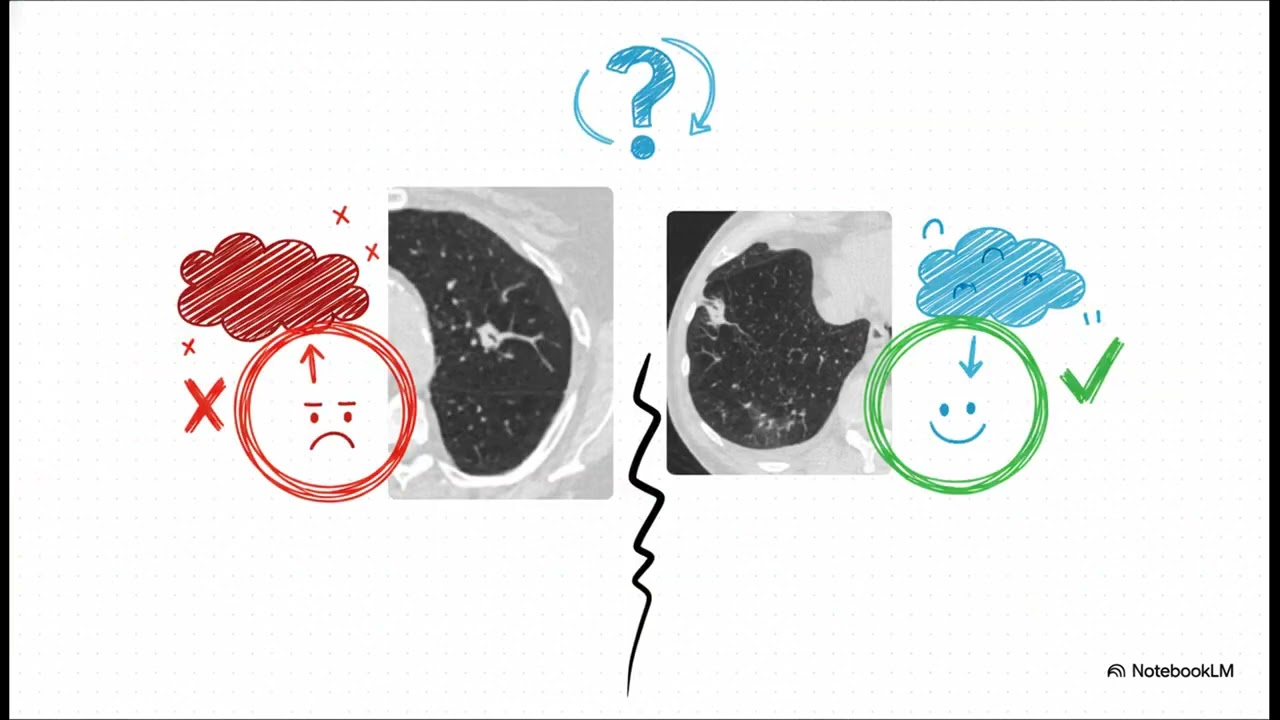
The study included over 14,000 participants who underwent low-dose computed tomography (LDCT) lung cancer screening between 2019 and 2023. Results showed that the frequency of use of Lung-RADS v2022 category 0 was approximately twice that of category 4B in v1.1. However, this increase was primarily due to imaging patterns such as ground-glass opacity and tree-in-bud nodules—findings that were often not recommended for short-term follow-up in the v2022 guidelines. The clinical signals were quite clear: all examinations classified as Category 0 ultimately failed to confirm malignancy; conversely, over one-fifth of cases classified as Category 4B during v1.1 were eventually diagnosed with lung cancer.
Beyond the statistical results, this study highlights the importance of "classification discipline" in clinical practice. Overuse of Category 0 for low-risk inflammatory imaging may lead to unnecessary short-term imaging follow-ups, increased patient anxiety, additional radiation exposure, and healthcare costs, without contributing to improved cancer detection rates. Conversely, reserving short-term follow-ups for high-risk lesions (such as newly emerging solid or partially solid nodules) not only maintains the proven mortality reduction benefits of lung cancer screening but also aligns better with the core principles of value-based care.
The key message of this publication is highly educational and practically applicable: rigorous adherence to the Lung-RADS v2022 guidelines is crucial. Through continuous radiologist education, structured feedback mechanisms, and the implementation of decision support tools, it is hoped that the consistency and accuracy of classification can be further improved. As lung cancer screening continues to expand globally, the correct and accurate application of the Lung-RADS classification will be a crucial cornerstone for maximizing clinical benefits while minimizing unnecessary harm.
📄 References (APA 7th Edition)
Arora, S., Hammer, M. M., & Byrne, S. C. (2025). Real-world use and outcomes of Lung-RADS v1.1 category 4B versus Lung-RADS v2022 category 0 for suspected infectious or inflammatory findings on lung cancer screening CT. American Journal of Roentgenology, 225, e2533279.
Chen, Y.D. (2025). Optimizing follow-up in lung cancer screening: Precision in application of Lung-RADS category 0 is crucial for value-based care. American Journal of Roentgenology, 225.
#LungCancerScreening #LungRADS #ChestImaging #Radiology #ImageQuality #ValueBasedHealth #LowDoseCT #PatientSafety #ImagingDiagnosisGuidelines #ClinicalDecisionMaking #AJR #Evidence-BasedMedicine #PrecisionMedicine #RadiologyEducation
© 2025 AI Chavelle™ by Jeffrey Chen / SmartRad AI. All rights reserved.
Повторяем попытку...
Доступные форматы для скачивания:
Скачать видео
-
Информация по загрузке: