Great Moon Hoax of 1835
Автор: Daily Dose Documentary
Загружено: 2023-01-17
Просмотров: 1864
Описание:
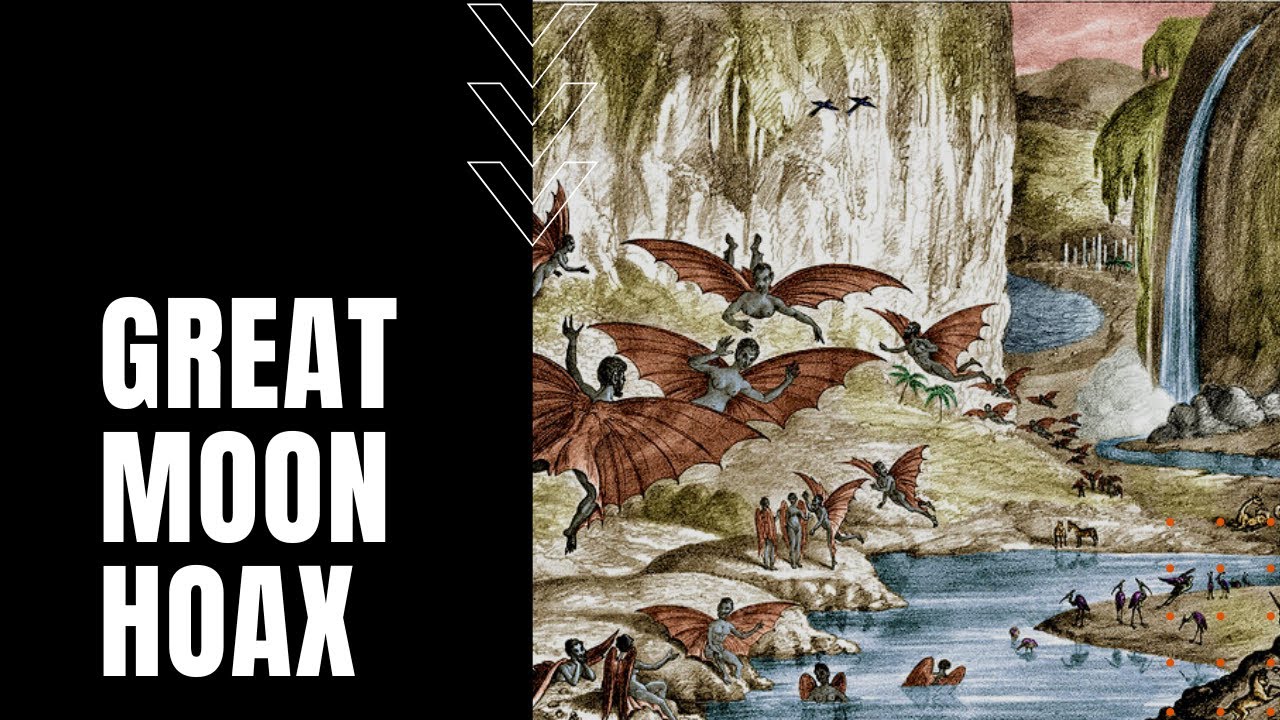
In 1835, a fictional writer Dr. Andrew Grant published in the New York Sun newspaper about having seen life on the moon through a new high-power telescope in South Africa. The popularity and global phenomena of the six articles would be known as the Great Moon Hoax of 1835.
The Daily Dose provides microlearning history documentaries like this one delivered to your inbox daily: https://dailydosedocumentary.com
We strive for accuracy and unbiased fairness, but if you spot something that doesn’t look right please submit a correction suggestion here: https://forms.gle/UtRUTvgMK3HZsyDJA
Learn more: https://dailydosedocumentary.com/grea...
Subscribe for daily emails: https://subscribe.dailydosenow.com/
Become a Patron: / dailydosenow
Follow us on social media:
Twitter: / thedailydose18
Facebook: / thedailydosenow
Click to subscribe on YouTube: https://www.youtube.com/c/DailyDoseDo...
#documentary #history #biography
Today's Daily Dose short history film covers the Great Moon Hoax of 1835, which had many Americans believing in abundance and fantastic biologic life on the moon. The filmmaker has included the original voice over script to further assist your understanding:
Today on The Daily Dose, The Great Moon Hoax of 1835.
On August 25th, 1835, the first of six articles published in the New York Sun newspaper—a penny press that thrived on yellow journalism—published a jaw-dropping discovery of abundant life on the moon. Known collectively as “The Great Moon Hoax,” the stories were purported written by Dr. Andrew Grant, described as a colleague of the famous astronomer Sir John Herschel, who in turn witnessed a plethora of life forms on the moon after he installed a new high-power telescope in Cape Town South Africa. Supposedly reprinted from the Edinburgh Journal of Science, the articles described the existence of fantastic animals such as unicorns, two-legged beavers and winged humanoids covered in a downy coat of fur, at the same time describing the moon’s geography of massive craters, giant amethyst crystals, lush vegetation and raging rivers of pristine water.
Founded in 1833, the New York Sun’s circulation skyrocketed over Dr. Grant’s vivid descriptions of life on the moon, and as the stories spread around the globe, excitement exploded as readers lapped up the mystifying new evidence of an abundance of lunar biology, but as more discerning minds began to pick apart the evidence, the massive hoax began to unravel. First on the scam meter was the Edinburgh Journal of Science, which had ceased publication many years earlier, while Dr. Grant proved to be a nonexistent and quite fictional character. Most likely written by Cambridge-educated yellow journalist, Richard Adams Locke, the articles were intended to poke fun at earlier speculations about life on the moon, including popular science writer Reverend Thomas Dick, who claimed in his bestselling books that the moon was home to 4.2 billion inhabitants.
Failing to recognize the satire, Sun readers became openly hooked by the stories, even fooling a group of Yale University scientists who traveled to the Sun’s New York City office in search of the Edinburgh Journal articles in question. Sun employees shunted the scientists back and forth between offices and departments to discourage them from discovering the truth, sending them back to New Haven without the slightest knowledge that they had been duped. Finally, on September 16th, 1835, the New York Sun newspaper at long last admitted that the articles by Dr. Grant were a hoax, and while readers were for the most part amused by the whole affair, sales of the New York Sun remained robust and highly profitable, making the Great Moon Hoax of 1835, another fish story in man’s eager willingness to believe in the unbelievable.
And there you have it the Great Moon Hoax of 1835, today on The Daily Dose.
Повторяем попытку...
Доступные форматы для скачивания:
Скачать видео
-
Информация по загрузке: