Quiet by Susan Cain | Summary
Автор: Paradise Audiobook
Загружено: 2022-11-09
Просмотров: 123
Описание:
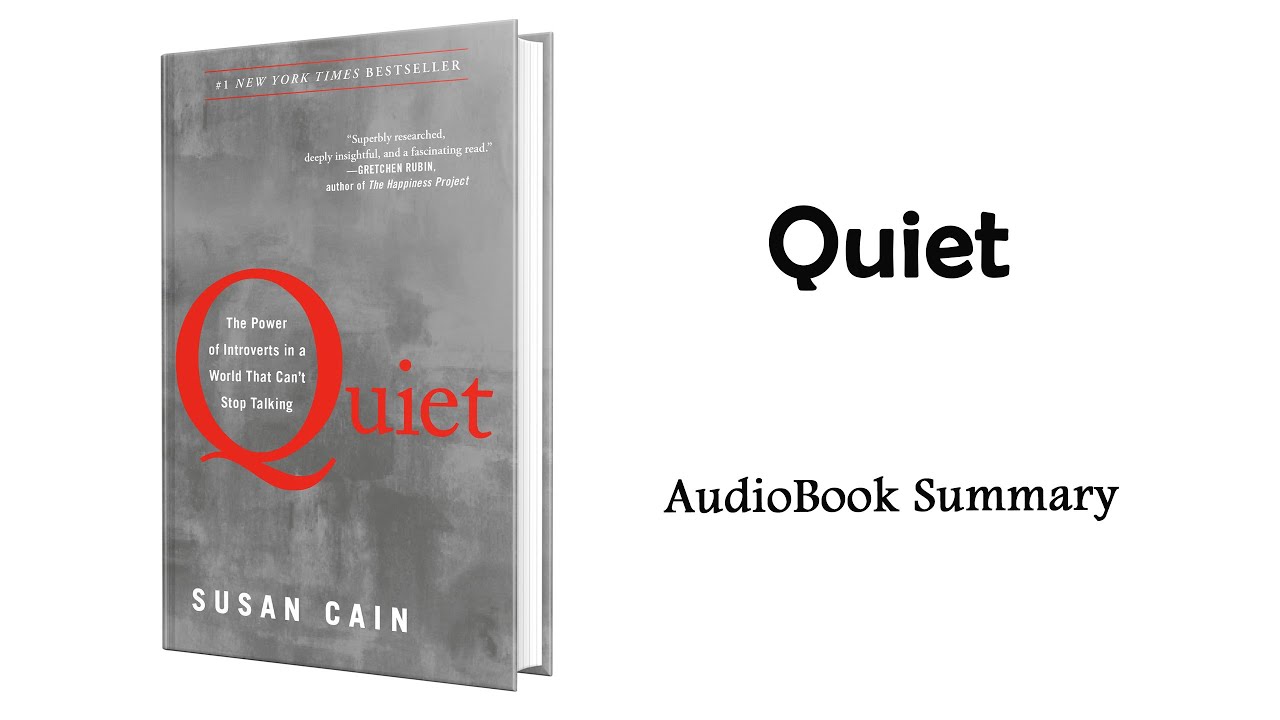
Quiet: The Power of Introverts — Book Summary
If you prefer to listen than talk, don’t like to be the center of attention and prefer to work alone than in groups, you probably are an introvert. At least a third of the population is introverted. Author Susan Cain presents several strategies and ideas for introverts to excel in a world created for extroverts. She explains the challenges and advantages of being an introvert, gives valuable tips on how to behave in certain situations, and how to raise introverted children. Using the result of several types of research on the subject, the author seeks to help introverts understand why they see the world differently. If you are an introvert or know someone like that, this microbook will help you to get the most out of social and professional situations and relationships.
Susan Cain begins her book with a silent bang — presenting all the achievements and accomplishments reached by introverts. In general terms, introverts are people who prefer to think more than talk. They need to spend time alone, do not seek out loud social gatherings, and usually feel guilty about their less friendly nature. It is true that our Western society is very pro-extroverted. We encourage people to speak, to make their voices heard and to mark their place in history. Meanwhile, introverts have quietly secured their places. The likes of Eleanor Roosevelt, Al Gore, Warren Buffet, Gandhi and Rosa Parks, have achieved tremendous changes while being introverts.
Even in adulthood, many feel bruised and embarrassed about having had an introverted childhood. Introverts feel as if they are wrong because they have suppressed feelings. Cain does an excellent job demonstrating that introverts have their place in the world and should not be ashamed.
In general, introverts prefer less external stimuli — noise, interactions, new experiences, social expectations — and extroverts experience as many stimuli as possible. As extroverts delve into problems and tasks, introverts are slower, investigating the situation and expectations before getting involved. Most extroverts prefer to talk; most introverts are excellent listeners. Introverts prefer small social circles of close friends and avoid conflicts and unnecessary conversations. However, it is not correct to relate introversion to shyness. Shyness is the fear of social disapproval or humiliation, while introversion is the preference for environments that are not over-stimulating. A person can be shy and introverted at the same time, but the two characteristics do not always go together. The categories of introversion and extroversion do not have definite limits. You can have traits of both and can respond differently to distinct situations. All of these definitions are useful, but Cain’s focus is on how research on these personalities can help lead a more productive life, regardless of its characteristics.
EXTROVERTED BIAS
Child behavior specialists in the 1920s were concerned with helping children develop winning personalities. Psychologists, social workers, and doctors focused on children with “misfit personalities” -, particularly shy children. “Shyness can lead to terrible results,” they warned, “from alcoholism to suicide,” while an extroverted personality would bring financial and social success.
At the beginning of the 20th century, experts changed how they studied personality traits. An excellent example of this was Dale Carnegie, who transformed the vision of social expectations with his lectures and books, how to have a winning personality and how to become a successful extrovert. Newspaper columns, advertisements, and government campaigns were created to help develop a ‘healthy personality’ — to become someone who was confident, articulate, and socially engaged. Quiet children were labeled as ‘timid.’ In the 1950s, one of the best-selling drugs in pharmacies promised to solve the problem of ‘anxiety generated by not meeting behavioral standards.
Nowadays, Carnegie’s book is still a bestseller and organizations and help groups everywhere promote ways to speak and be heard. Outgoing personality seems to be what everyone desires. Tony Robbins’ success is the best example of how an outgoing personality can make money. “We should be vibrant and confident; we should not seem hesitant, we should smile so that our interlocutors smile at us.” Being extroverted is associated with success and happiness. For decades the Harvard Business School has built its success upon the image of its confident and outgoing CEO. However, extroversion is not all that we think.
These acts of introspective humanitarians are less noticeable but being an extrovert is still revered in every area, from sales to personal development.
#audiobookparadise #audiobook
Повторяем попытку...
Доступные форматы для скачивания:
Скачать видео
-
Информация по загрузке: