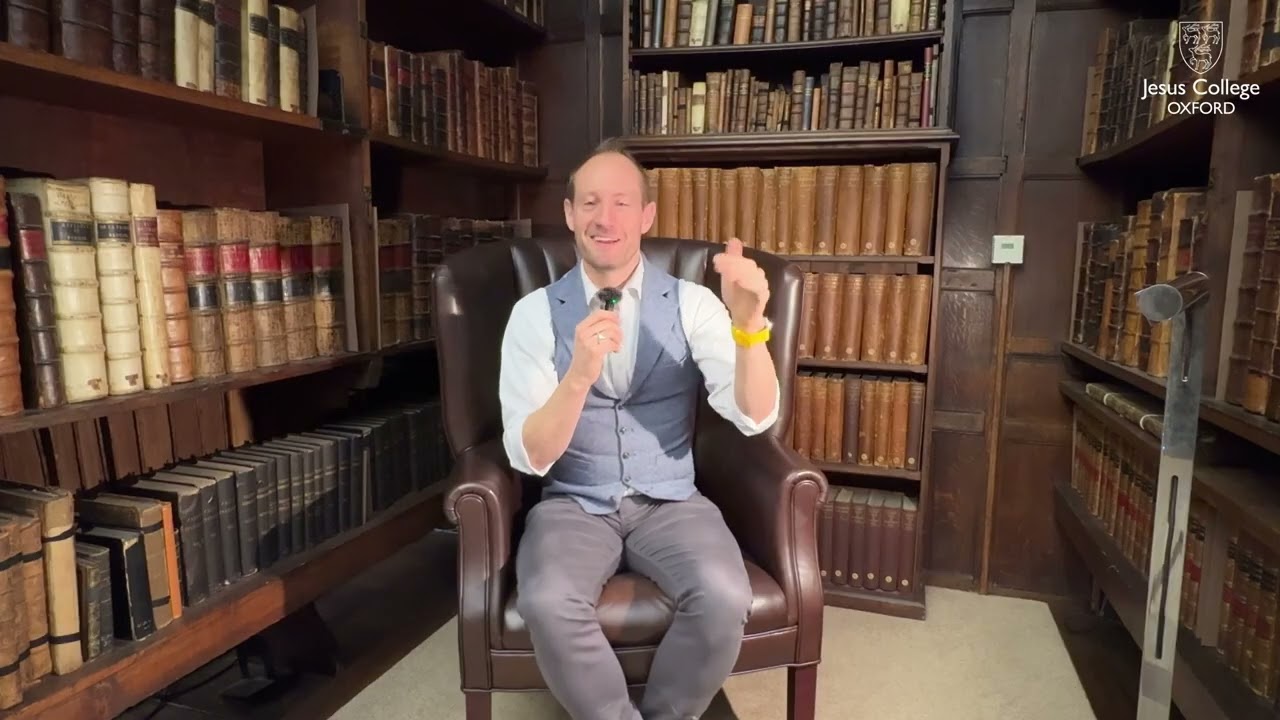
Wesley’s Vision of Social Holiness: Class Meetings, Bands, and the Shape of Shared Grace
Автор: Dr Ken Baker
Загружено: 2026-02-20
Просмотров: 13
Описание:
“There is no holiness but social holiness.”
Those words belong to John Wesley, and they are frequently misheard. Some imagine he meant that holiness is merely about social action, philanthropy, or civic virtue. Others hear in it a general endorsement of friendliness and fellowship.
But Wesley was making a far sharper theological claim.
He was addressing a problem. And it is the same problem that haunts much of modern Christianity: the reduction of salvation to a private transaction and holiness to an individual achievement.
So here is our orienting question:
What theological problem was Wesley addressing by insisting that holiness is social?
To answer that, we need to step into the eighteenth century. The early Methodist revival was marked by intense experiences of conversion, assurance, and moral awakening. People spoke of hearts “strangely warmed.” They sought pardon, renewal, and power over sin.
Yet Wesley quickly realized that individual religious experience, left unattended, either cooled into complacency or flared into enthusiasm without discipline. Personal piety, severed from shared structure, drifted.
He saw the danger of solitary religion.
And so he constructed something remarkably practical: the class meeting.
Class Meetings and Mutual Accountability
The Methodist class meeting was not an optional small group for the spiritually keen. It was the basic unit of Methodist life.
Every member of a Methodist society belonged to a class of roughly twelve people. They met weekly. They gathered under the leadership of a class leader—not necessarily ordained, often a layperson—whose task was neither to lecture nor to entertain, but to inquire.
The central question was simple and disarming:
“How does your soul prosper?”
In those meetings, members confessed sin. They named temptation. They described victories and failures. They prayed for one another. They received counsel and exhortation. They were asked about concrete patterns of life—attendance at worship, acts of mercy, habits of prayer, use of money.
Holiness was tracked.
This is crucial. For Wesley, sanctification was not vague aspiration. It was observable transformation within a community that noticed.
Alongside the class meetings were bands—smaller, more intimate groups, often divided by gender and marital status. Bands required even deeper confession and vulnerability. Where the class meeting focused on encouragement and accountability in general discipleship, the band probed motives, inward sin, and the subtleties of pride and self-deception.
And beyond these weekly structures were early Methodist field gatherings and, later, camp meetings—spaces of intensified proclamation and communal renewal. These were not spiritual spectacles detached from discipline; they fed people back into accountable structures.
All of this embodied a conviction:Holiness is relationally cultivated rather than privately achieved.
Wesley did not deny the necessity of personal faith. On the contrary, he insisted on it. But he rejected the idea that one could pursue sanctification alone.
Why?
Because sin distorts perception. We rationalize. We excuse ourselves. We reinterpret our failures as minor lapses. Without others, we become unreliable narrators of our own souls.
Wesley’s answer was structural.
Social holiness meant that grace works through networks of accountability. It meant that spiritual growth requires conversation, correction, encouragement, and shared practice. It meant that the means of grace are not merely private devotions but communal disciplines.
In short, holiness requires architecture.
Theological Problem Revisited
Now let us return to our key question.
What theological problem was Wesley addressing?
He was confronting a truncated soteriology—one that imagined salvation as an isolated moment rather than a sustained participation in divine love. He was resisting an ecclesiology that reduced church to preaching attendance. He was challenging the Enlightenment drift toward the autonomous self as the primary religious unit.
For Wesley, the church was not a crowd gathered around a sermon. It was a network of interwoven lives.
If justification restores us to God, sanctification restores us to one another.
And so holiness, understood as love perfected, cannot remain private. Love by definition requires an object. It requires neighbour. It requires friction.
The class meeting institutionalized that friction.
A Challenge to Our Assumptions
Now, let us pause and consider how radical this remains.
Many of our contemporary assumptions about spiritual formation are deeply individualistic. We speak of “my quiet time,” “my devotional life,” “my growth journey.” Even when we attend church, we often function as religious consumers rather than accountable participants.
FULL TEXT HERE: https://walthamstowlearninghub.wordpr...
Повторяем попытку...

Доступные форматы для скачивания:
Скачать видео
-
Информация по загрузке: