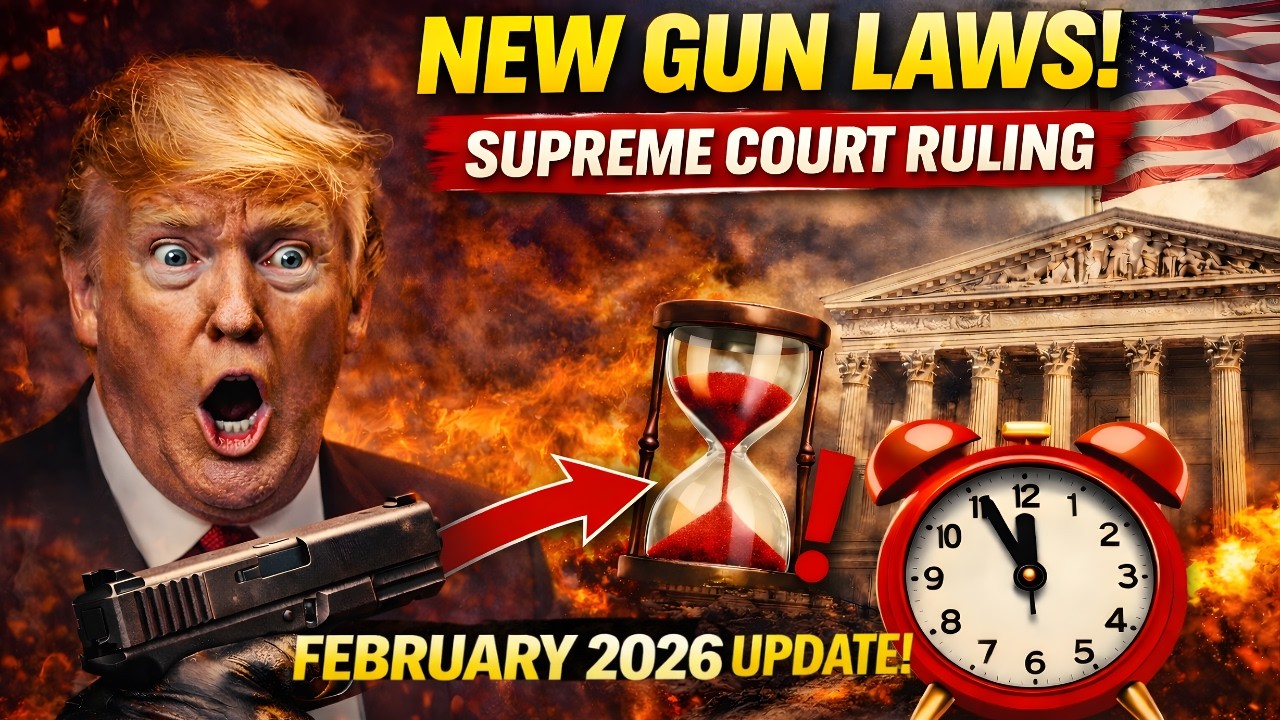
Supreme Court Reshapes Gun Regulations — New Laws Take Effect February 2026
Автор: WorkFlow
Загружено: 2026-02-15
Просмотров: 159
Описание:
Two Supreme Court cases are positioned to redraw the real-world rules gun owners live under—especially where you can carry and who can legally possess. If you assume “my permit = I’m good,” you could walk into a normal business day and accidentally step into a criminal case.
Big framework you MUST understand: The Court’s modern Second Amendment method comes from NYSRPA v. Bruen (2022)—often summarized as “text, history, and tradition.” Courts first ask if the Second Amendment’s plain text covers the conduct, and if it does, the government must justify the restriction by pointing to historical analogues—NOT modern interest-balancing. Source
1) The “Private Property Trap” — Wolford v. Lopez
This case asks whether a state can make it a crime for a licensed concealed-carry holder to bring a handgun onto private property open to the public (stores, restaurants, etc.) unless the owner expressly allows it. Source
Oyez describes that Hawaii and California both flipped the default rule: no guns unless the owner permits (Hawaii allows verbal/written/sign consent; California’s rule is stricter and requires a state-specified sign). Source
Everytown’s summary frames the core question as: should the law presume owners allow guns—or presume they do not—until owners say otherwise, noting oral argument occurred Jan 20, 2026. Source
What to do if this becomes the rule in your state (or while traveling):
Your mental default flips from “look for NO GUNS signs” to “look for GUNS WELCOME permission.”
2) Guns + Marijuana / Drug “Status” — United States v. Hemani
Hemani challenges 18 U.S.C. § 922(g)(3) (gun possession ban for an “unlawful user” of controlled substances). Oyez notes the government did not allege he was intoxicated at the exact moment—this is about status, definitions, and timing of “unlawful user.” Source
SCOTUSblog’s docket page shows Hemani is set for argument March 2, 2026. Source
Practical point: Even if marijuana is legal under your state law, federal definitions can still drive federal firearm risk—especially if “unlawful user” is interpreted broadly.
3) “AR-15 / Common Use” signals — Snope v. Brown
Even when SCOTUS denies review, it can signal what’s next. In Snope v. Brown, Justice Kavanaugh issued a statement respecting denial, and Justice Thomas dissented—both discussing “common use” and urging eventual review of rifle bans. Source
CTA:
Subscribe for plain-English updates as Wolford and Hemani move toward decisions and states respond with new effective dates. Comment “DEFAULT NO” if you want a travel checklist video.
Disclaimer: Educational information only—NOT legal advice. Laws vary by state and facts matter. If you’re in a real situation, talk to a qualified attorney.
Hashtags
#SupremeCourt #GunLaw #SecondAmendment #Bruen #WolfordvLopez #Hemani #ConcealedCarry #GunOwners #FirearmsLaw #MarijuanaAndGuns #922g3 #PrivatePropertyCarry #SCOTUS #LegalUpdate #GunRights
Повторяем попытку...
Доступные форматы для скачивания:
Скачать видео
-
Информация по загрузке: