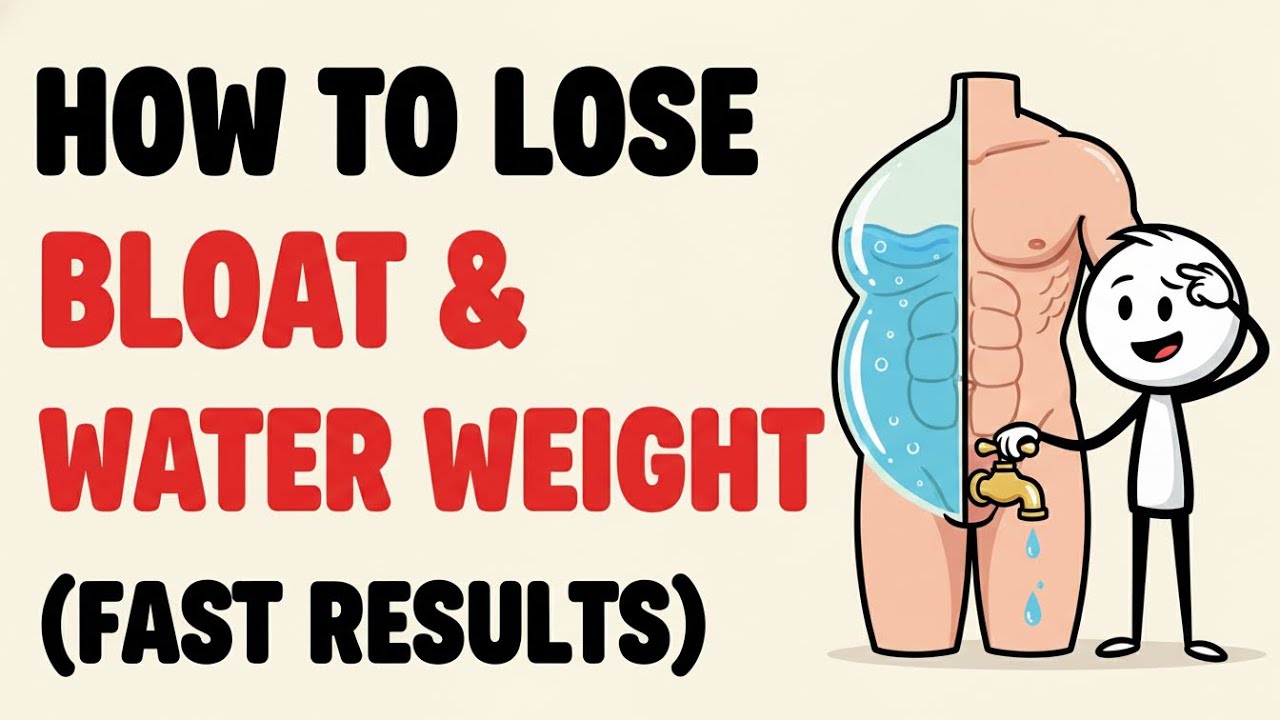
How to Lose BLOAT & Water Weight Fast | Science Explained
Автор: Healthy Stickman Science
Загружено: 2025-12-26
Просмотров: 217
Описание:
How to Lose BLOAT & Water Weight Fast | Science Explained
Science Explained: This video reveals how bloating and water retention form inside your body — and how science helps reduce them fast and safely.
In this science-based video, we break down what really causes bloating and water weight, and why your body holds onto excess fluid even when you’re not gaining fat. From sodium balance and insulin signaling to gut inflammation and hormone-driven water retention, this video explains the hidden mechanisms behind stubborn bloating.
You’ll learn how fluid shifts inside your tissues, how the kidneys regulate sodium and water, and why stress hormones and refined carbohydrates can silently trap water inside your body. We also explain what happens when bloating begins to release, how circulation improves, and why the scale often drops quickly once water balance is restored.
Discover:
• Why bloating is not fat
• How sodium, insulin, and cortisol affect water retention
• The role of gut inflammation and digestion
• How kidneys regulate excess fluid
• Why water weight drops quickly once balance returns
• What science says about losing bloating safely
📚 Sources:
Fernandez-Elias, V.E., Ortega, J.F., Nelson, R.K., & Mora-Rodriguez, R. (2015). "Relationship Between Muscle Water and Glycogen Changes After Endurance Exercise and Recovery." European Journal of Applied Physiology, 115(9), 1919-1926.
Kreitzman, S.N., Coxon, A.Y., & Szaz, K.F. (1992). "Glycogen Storage: Illusions of Easy Weight Loss, Excessive Weight Regain, and Distortions of Estimates of Body Composition." The American Journal of Clinical Nutrition, 56(1 Suppl), 292S-293S.
Whitworth, J.A., Mangos, G.J., & Kelly, J.J. (2000). "Cushing's Syndrome, Cortisol, and One-Day Biochemistry." The American Journal of the Medical Sciences, 320(1), 11-16.
McMullan, C.J., Curhan, G.C., Forman, J.P., & Schernhammer, E.S. (2016). "Short Sleep Duration and Rapid Decline in Renal Function." Kidney International, 89(6), 1324-1330.
DeFronzo, R.A. (1981). "The Effect of Insulin on Renal Sodium Metabolism." Diabetologia, 21(3), 165-171.
Brands, M.W., & Manhiani, M.M. (2012). "Sodium-Retaining Effect of Insulin in Diabetes." American Journal of Physiology-Regulatory, Integrative and Comparative Physiology, 303(11), R1101-R1109.
Clausen, T. (2003). "Na+-K+ Pump Regulation and Skeletal Muscle Contractility." Physiological Reviews, 83(4), 1269-1324.
Swaminathan, R. (2003). "Magnesium Metabolism and its Disorders." The Clinical Biochemist Reviews, 24(2), 47-66.
Pimentel, M., et al. (2006). "Eradication of Small Intestinal Bacterial Overgrowth Reduces Symptoms of Irritable Bowel Syndrome." The American Journal of Gastroenterology, 101(12), 2618-2626.
Deloose, E., Janssen, P., Depoortere, I., & Tack, J. (2012). "The Migrating Motor Complex: Control Mechanisms and Its Role in Health and Disease." Nature Reviews Gastroenterology & Hepatology, 9(5), 271-285.
Gibson, P.R., & Shepherd, S.J. (2005). "Personal View: Food for Thought – Western Lifestyle and Susceptibility to Crohn's Disease. The FODMAP Hypothesis." Alimentary Pharmacology & Therapeutics, 21(12), 1399-1409.
Understanding the difference between fat gain and water retention can help you reduce bloating faster, feel lighter, and avoid extreme or harmful methods.
🔔 Like, subscribe, and share for more science explained health videos.
💬 Comment below: Do you struggle more with bloating or water weight?
#scienceexplains #kidney #fasting #healthscienceexplains #health #healthysciencestickman #bloating #waterweight #metabolichealth #guthealth
Повторяем попытку...
Доступные форматы для скачивания:
Скачать видео
-
Информация по загрузке: