Normalizing Process Explained | Heat Treatment // Diploma & Polytechnic
Автор: Polytechnic Class (READBY)
Загружено: 2026-02-15
Просмотров: 3
Описание:
📘 Normalizing Process Explained | Purpose, Steps & Advantages (Diploma & Polytechnic)
In this video, we clearly explain the Normalizing Process, an important heat treatment method in Engineering Materials and Manufacturing Processes for Diploma, Polytechnic, and Engineering students.
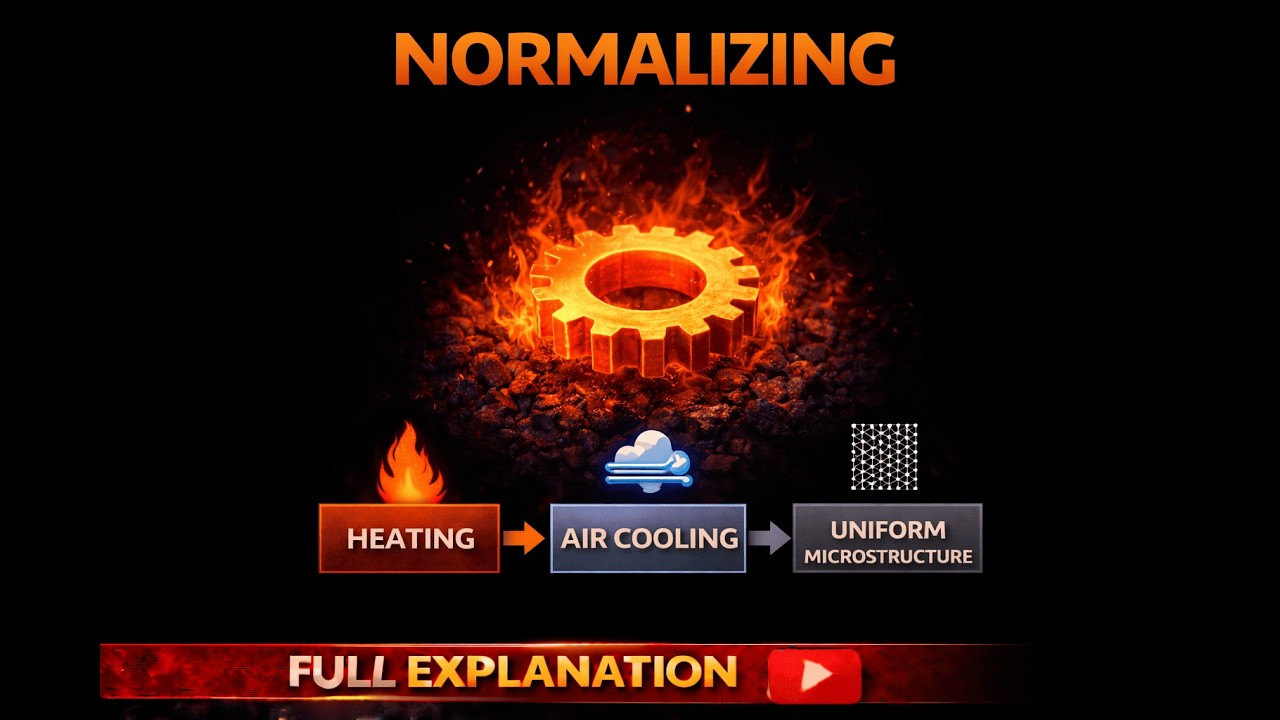
This lecture helps you understand how normalizing improves the grain structure, strength, and uniformity of steel by heating above the critical temperature followed by air cooling. The topic is explained in a simple and exam-oriented way for easy understanding and quick revision.
🎯 Topics Covered in this Video:
✅ What is Normalizing? (Definition & Concept)
✅ Purpose of Normalizing Process
✅ Steps of Normalizing – Heating, Soaking & Air Cooling
✅ Difference between Normalizing and Annealing
✅ Effect on Mechanical Properties
✅ Advantages of Normalizing Process
✅ Industrial Applications
✅ Exam-important concepts explained simply
👨🎓 Best for:
• Polytechnic Students
• Diploma Engineering Students
• Mechanical / Production Engineering Students
• Engineering Materials & Heat Treatment Subjects
• Semester Exams & Viva Preparation
📚 Explanation available in Hindi + English (Bilingual) for easy understanding and strong concept clarity.
👍 Like the video if it helps your learning
🔔 Subscribe for more Engineering lectures
📤 Share with your classmates and friends
#NormalizingProcess
#HeatTreatment
#EngineeringMaterials
#SteelHeatTreatment
#Normalizing
#DiplomaEngineering
#PolytechnicStudents
#MechanicalEngineering
#EngineeringLecture
#MaterialScience
#EngineeringEducation
#ExamPreparation
#TechnicalEducation
#EngineeringStudents
#नॉर्मलाइजिंगप्रोसेस
#हीटट्रीटमेंट
#इंजीनियरिंगमटेरियल
#डिप्लोमाइंजीनियरिंग
#पॉलिटेक्निकस्टूडेंट्स
#मैकेनिकलइंजीनियरिंग
#इंजीनियरिंगस्टडी
#तकनीकीशिक्षा
#एग्जामतैयारी
#इंजीनियरिंगक्लास
Повторяем попытку...
Доступные форматы для скачивания:
Скачать видео
-
Информация по загрузке:







![Пожалуй, главное заблуждение об электричестве [Veritasium]](https://imager.clipsaver.ru/6Hv2GLtnf2c/max.jpg)