OPRA Implant System and Electrodes Movie 1
Автор: Stefano Di Criscio
Загружено: 2014-10-15
Просмотров: 617
Описание:
OPRA Implant System and Electrodes Movie 1
Prosthetic control using implanted electrodes and osseointegration (OPRA)
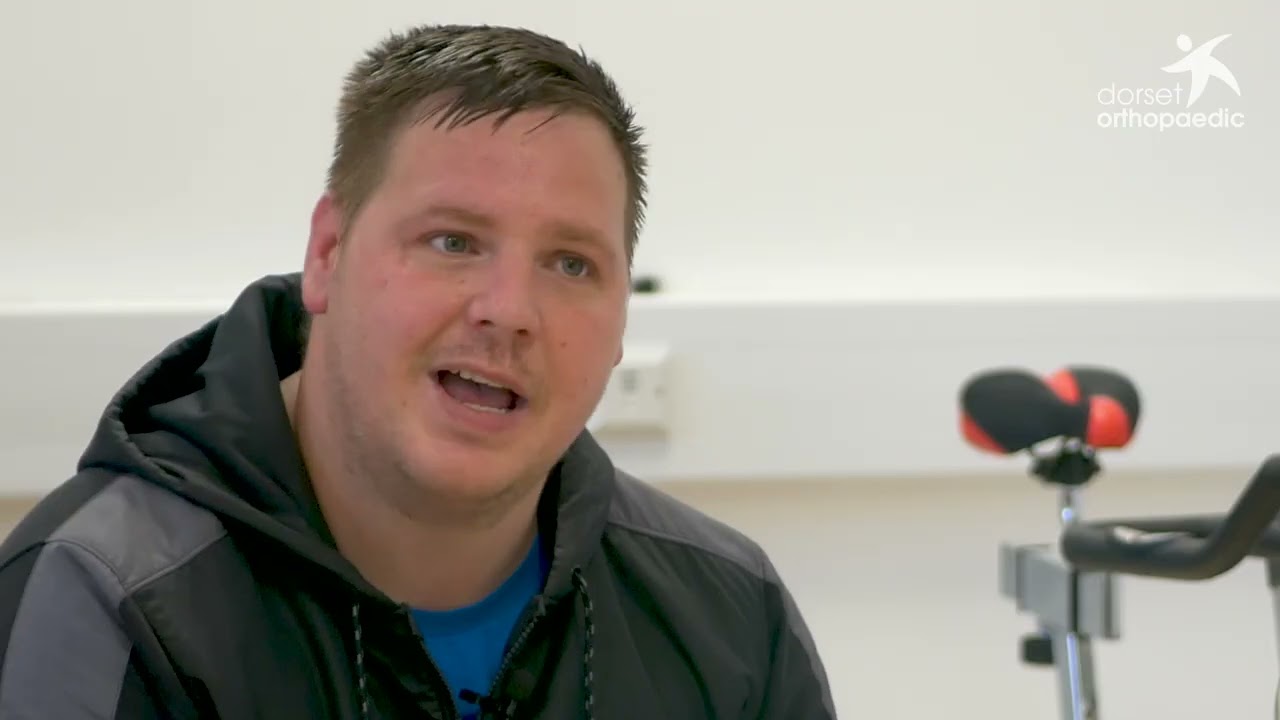
First recipient of a robotic arm directly interfaced to bone, nerves, and muscles, via an osseointegrated implant (OPRA Implant System). The patient demonstrates superior control over conventional technology using superficial electrodes (Movie 1 of 10.1126/scitranslmed.3008933).
Artificial arms get closer to the real thing
Smarter nerve stimulation and muscle monitoring vastly improve prosthetic movements.
Nature 08 October 2014 doi:10.1038/nature.2014.16111
http://www.nature.com/news/artificial...
References
1. Tan, D. W. et al. Sci. Transl. Med. 6, 257ra138 (2014).
A neural interface provides long-term stable natural touch perception
Sci Transl Med 8 October 2014: Vol. 6, Issue 257, p. 257ra138 Sci. Transl. Med. DOI: 10.1126/scitranslmed.3008669
http://stm.sciencemag.org/content/6/2...
Abstract
Touch perception on the fingers and hand is essential for fine motor control, contributes to our sense of self, allows for effective communication, and aids in our fundamental perception of the world. Despite increasingly sophisticated mechatronics, prosthetic devices still do not directly convey sensation back to their wearers. We show that implanted peripheral nerve interfaces in two human subjects with upper limb amputation provided stable, natural touch sensation in their hands for more than 1 year. Electrical stimulation using implanted peripheral nerve cuff electrodes that did not penetrate the nerve produced touch perceptions at many locations on the phantom hand with repeatable, stable responses in the two subjects for 16 and 24 months. Patterned stimulation intensity produced a sensation that the subjects described as natural and without “tingling,” or paresthesia. Different patterns produced different types of sensory perception at the same location on the phantom hand. The two subjects reported tactile perceptions they described as natural tapping, constant pressure, light moving touch, and vibration. Changing average stimulation intensity controlled the size of the percept area; changing stimulation frequency controlled sensation strength. Artificial touch sensation improved the subjects’ ability to control grasping strength of the prosthesis and enabled them to better manipulate delicate objects. Thus, electrical stimulation through peripheral nerve electrodes produced long-term sensory restoration after limb loss.
2. Ortiz-Catalan, M., Håkansson, B. & Brånemark, R. Sci. Transl. Med. 6, 257re6 (2014).
An osseointegrated human-machine gateway for long-term sensory feedback and motor control of artificial limbs
Sci Transl Med 8 October 2014: Vol. 6, Issue 257, p. 257re6 Sci. Transl. Med. DOI: 10.1126/scitranslmed.3008933
http://stm.sciencemag.org/content/6/2...
Abstract
A major challenge since the invention of implantable devices has been a reliable and long-term stable transcutaneous communication. In the case of prosthetic limbs, existing neuromuscular interfaces have been unable to address this challenge and provide direct and intuitive neural control. Although prosthetic hardware and decoding algorithms are readily available, there is still a lack of appropriate and stable physiological signals for controlling the devices. We developed a percutaneous osseointegrated (bone-anchored) interface that allows for permanent and unlimited bidirectional communication with the human body. With this interface, an artificial limb can be chronically driven by implanted electrodes in the peripheral nerves and muscles of an amputee, outside of controlled environments and during activities of daily living, thus reducing disability and improving quality of life. We demonstrate in one subject, for more than 1 year, that implanted electrodes provide a more precise and reliable control than surface electrodes, regardless of limb position and environmental conditions, and with less effort. Furthermore, long-term stable myoelectric pattern recognition and appropriate sensory feedback elicited via neurostimulation was demonstrated. The opportunity to chronically record and stimulate the neuromuscular system allows for the implementation of intuitive control and naturally perceived sensory feedback, as well as opportunities for the prediction of complex limb motions and better understanding of sensory perception. The permanent bidirectional interface presented here is a critical step toward more natural limb replacement, by combining stable attachment with permanent and reliable human-machine communication.
Повторяем попытку...

Доступные форматы для скачивания:
Скачать видео
-
Информация по загрузке: