Diabetes mellitus and its genetic basis | IDDM & NIDDM | class 12
Автор: Visible Science
Загружено: 2023-11-27
Просмотров: 3373
Описание:
Aslam o alikum
I am Hassam ur Rahman and I am teaching Fsc biology since 2014 .I am always trying to improve myself and provide best lecture to students.i am taking content for the lecture from authentic and relevant sources but human errors are possible . you are requested to please highlight the mistakes.My lectures are equally reliable for Fsc and mdcat students
#visiblescience #mdcatbiology #alevelbiology #neetbiology #fscbiology
My personal channel, I am sure it will change your life and very beneficial for you
https://youtube.com/@hassamurRahman?f...
My Facebook page link
https://www.facebook.com/hassam.urahm...
This lecture is about
DIABETES MELLITUS AND ITS GENETIC BASIS
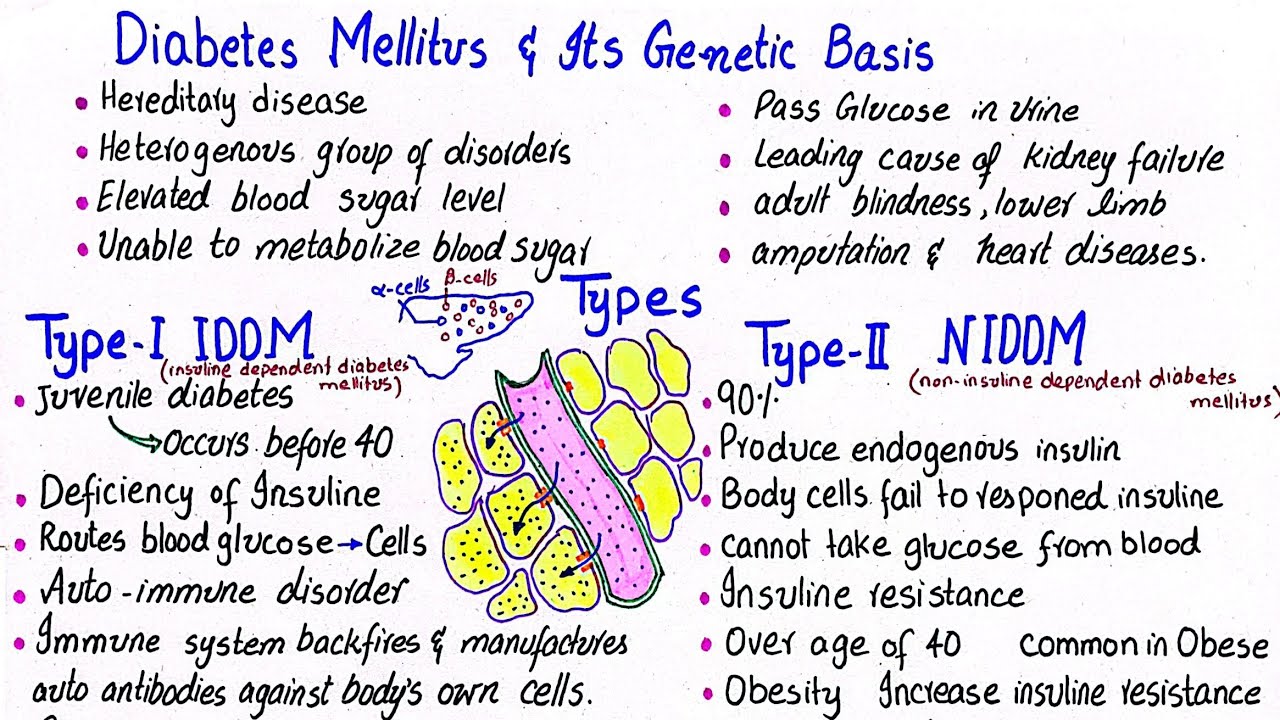
Diabetes mellitus is a hereditary disease. It is actually a heterogenous group of disorders
which are characterized by elevated blood sugar level. Diabetics are unable to metabolise
blood sugar in their body. They pass glucose in their urine. Diabetes is the leading cause
of kidney failure, adult blindness, lower limb amputation and heart disease.
There are two major types of diabetes: Type I is IDDM or insulin dependent diabetes
mellitus. Type II is NIDDM or non insulin dependent diabetes mellitus. Type I is also
called Juvenile diabetes because it usually occurs in early age before 40. It arises due to
deiciency of pancreatic hormone insulin that normally routes blood glucose to cells for
use. Type I is an auto immune disorder. The immune system backires and manufactures
auto antibodies against body’s own cells. Sometimes, speciic viral infections activate
auto immune response. T - cells of immune system attack pancreas and destroy insulin
producing (5 - cells. As a result, pancreas does not produce insulin. Diabetics of type I
must receive exogenous (from outside source) insulin to survive.
Progress is being made in understanding the genetic basis of this disease. The •insulin
gene is located on short arm of chromosome 11. Polymorphism and genetic variations
within this locus is responsible for diabetes type I susceptibility. But today, it is no
more just a recessive single gene trait, rather it is a multifactorial (polygenic with
environmental inluence) inheritance associated with several alleles.
Diabetes mellitus type II is non insulin dependent. It accounts for 90% of all diabetic
patients. These persons produce some endogenous insulin themselves, but their
body cells gradually fail to respond to insulin and cannot take up glucose from blood.
They develop a sort of insulin resistance. It occurs among people over the age of
40, and is more common among the obese. Obesity increases insulin resistance. As
exercise reduces obesity it indirectly increases insulin sensitivity and improves glucose
tolerance.
There, deinitely exists a genetic component in the form of an underlying tendency
to develop diabetes under certain environmental conditions. About 2% - 5% of type II
diabetics get the disease early in life, before 25 years of age. It is called maturity onset
diabetes of the young (MODY). MODY can be inherited as an autosomal dominant
trait. About 50% of cases of MODY are caused by mutations in glucokinase gene.
Glucokinase enzyme usually converts glucose to glucose - 6 - phosphate in pancreas.
MODY can also be caused by mutations in any of the four other genes which encode
transcription factors involved in pancreatic development and insulin regulation. But
these four MODY genes do not play any signiicant role in adult - onset type II.
Повторяем попытку...
Доступные форматы для скачивания:
Скачать видео
-
Информация по загрузке: