🔍 Basement “Leak”, Rising Damp or Sneaky Condensation? 💧🧱 | Damp Ring EXPOSED!
Автор: Damp Surveys
Загружено: 2025-09-02
Просмотров: 347
Описание:
00:00 Intro – architect-designed basement flat & “bunker” cupboards
00:36 Suspicious damp ring one foot above slab
01:08 Plasterboard construction & hollow-sounding wall
01:46 Gap under MDF skirting; mild swelling observed
02:28 Possible moisture sources: penetration, leak, condensation
02:55 Thermal-imaging reveals cold base of wall
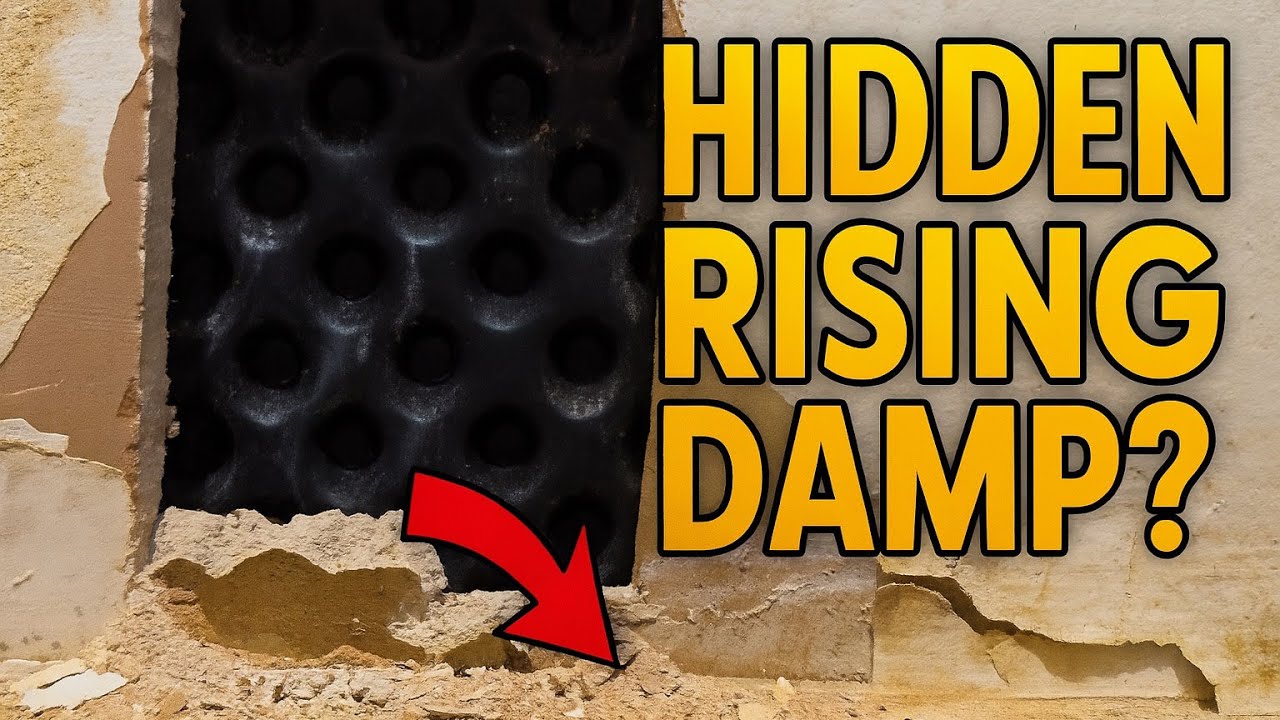
03:13 Opening the wall – cavity-membrane inspection (no water)
04:03 Exposed pipework shows past condensation (green corrosion)
04:40 Remedy ideas: cut plasterboard, fan + dehumidifier
05:10 Separate ground-floor damp patch & failed tanking
05:38 Brown staining in other bunkers – interstitial condensation
06:11 Upstairs: insufficient floor expansion gap
06:30 Ground-floor wall damp – likely roof ingress
06:45 Render & planter defects letting rain track in
08:12 Main-supply leak test – negative
08:38 Neighbouring pub’s historic leaks ruled out
09:06 Kitchen ventilation: noisy 23 L/s fan rarely used
10:00 Bathroom fan only 3 L/s (needs 15 L/s)
10:22 Data-logger demo & dew-point explanation
11:59 Summer ventilation still inadequate
12:16 Recommend two dehumidifiers (bunker + kitchen)
13:36 Mould threshold: 85 % RH for long periods
13:52 Summary – condensation, not penetration, is prime culprit
14:30 Thank-you & next steps
🧾 CONCLUSION
Your lower-ground damp is multi-factorial:
• Condensation / excess vapour in the unheated cupboard mimics a leak. Cold incoming mains pipes and an uninsulated solid floor let moisture condense; plasterboard that touches the slab then “wicks” it upward, producing tide-marks.
• Possible services leak (softener/filter circuit) cannot be ruled out, but no active flow was detected during testing.
On the ground floor
• Penetrating damp is seeping through the back wall where cracked felt/render and a plant-pot junction allow rain to track down and bypass the tanking. Brown staining confirms water migration through masonry.
• Penetrating damp in the centre is under a cracked bitumen felt roof.
⸻
✅ ACTION LIST
Lower-ground floor
1. Cut and raise plasterboard – remove skirting, trim boards 10 mm clear of the slab, reinstall skirting.
2. Insulate all cold pipes in the basement cupboard to reduce surface condensation.
3. Lower indoor vapour load – cook with lids on, simmer not boil, use the kitchen extractor fan and close the kitchen door.
4. Also upgrade extraction – ideally fit a true 60 L/s kitchen fan or consider installing a bathroom style continuous floor extractor fan - running background at a 5 l/s with a boost function to 15 l/s when humid (set to 65%RH).
5. Add a 20 L/day dehumidifier in the basement cupboard; aim to keep dew point below outside air year-round.
6. Position a second 20 L/day dehumidifier in the open-plan kitchen during cooking sessions to mop up excess vapour whenever the extractor alone cannot maintain dew-point control.
7. Measure dampness in wall with Dr Meter or similar Moisture meter. Continue data-logging – use https://damp.ai/detect
Ground floor
1. Repair external defects – replace the tired felt roof or overlay with EPDM/GRP (Glass Reinforced Plastic) or Bitumen Felt.
2. Improve drainage falls – ensure the rear balcony/flat roof sheds water away, eliminating ponding.
3. Fill hairline render cracks and reseal around the soil-pipe and planter collar. Consider replacing Planter, isolated from the wall.
Floor
1. Relieve floor expansion – lift skirting beside the raised board, multi-tool a 8–10 mm expansion gap, then refix.
Повторяем попытку...
Доступные форматы для скачивания:
Скачать видео
-
Информация по загрузке: