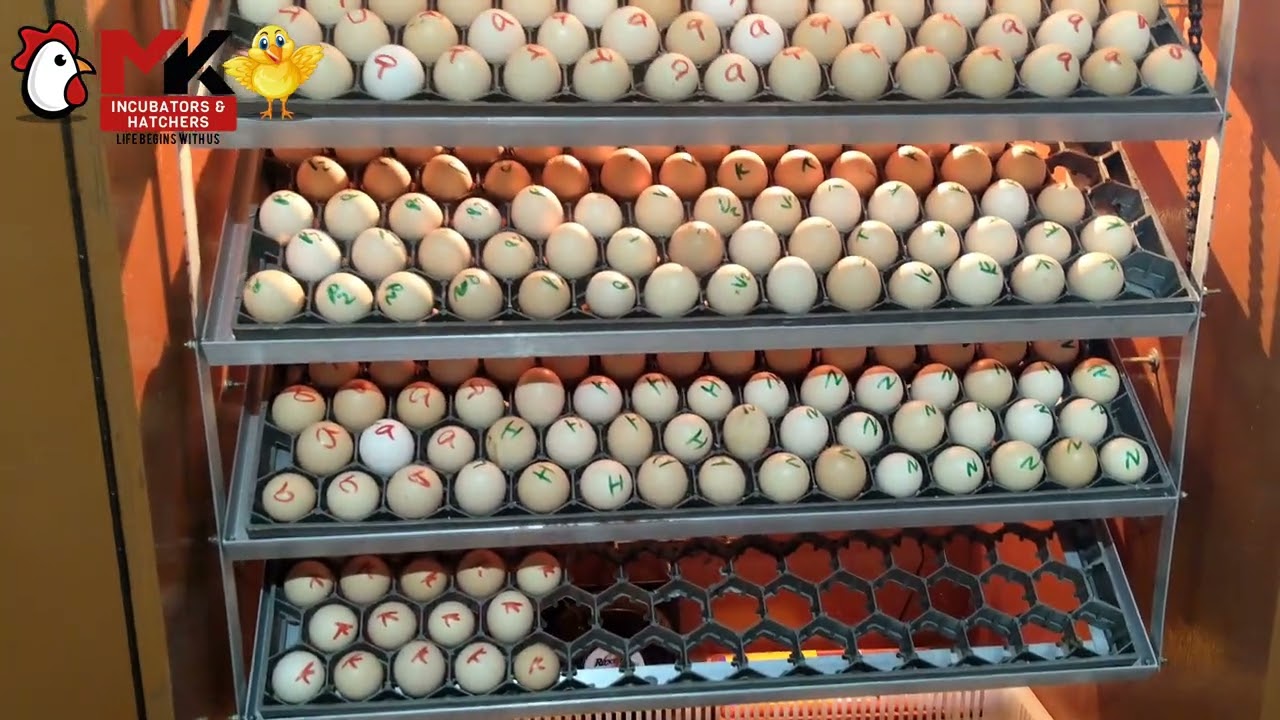
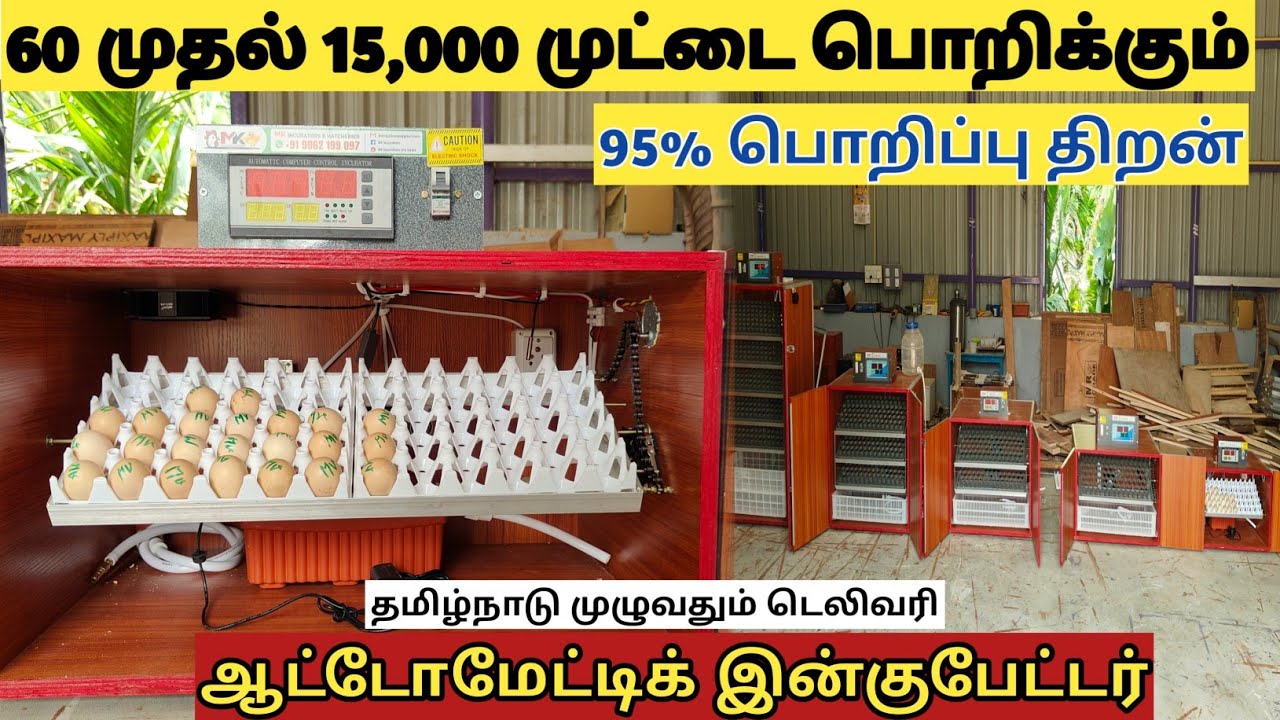
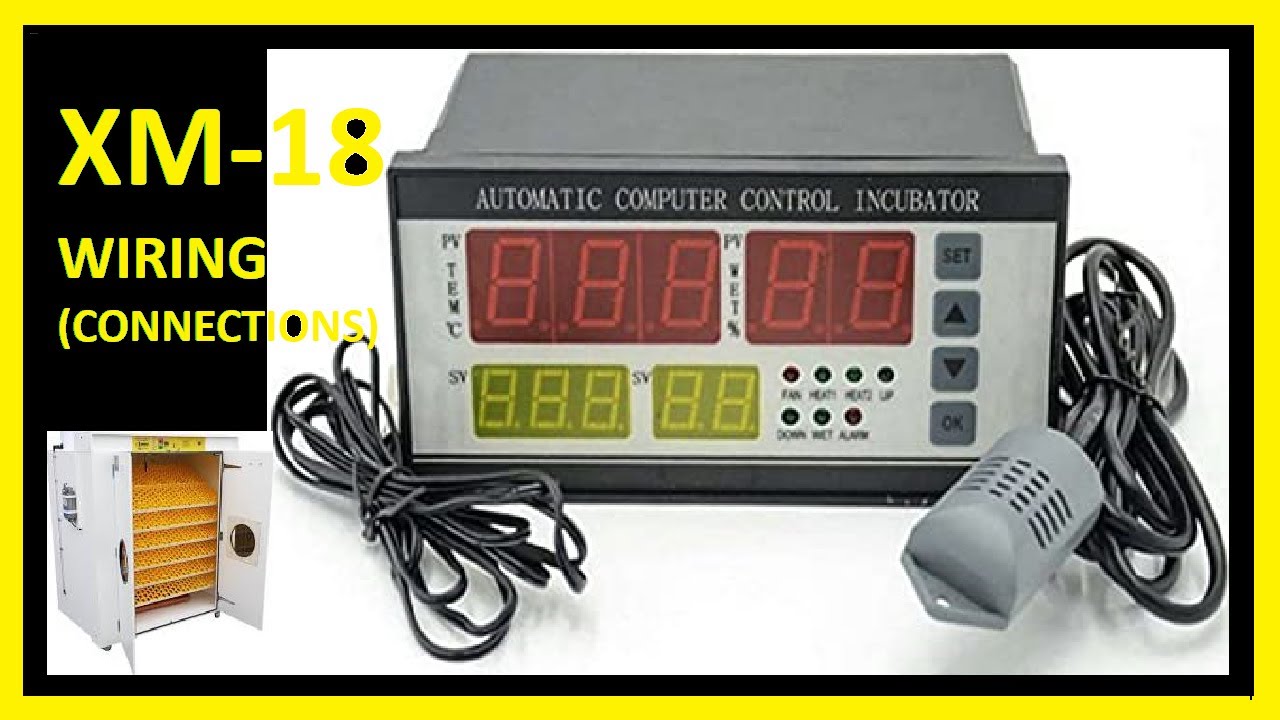
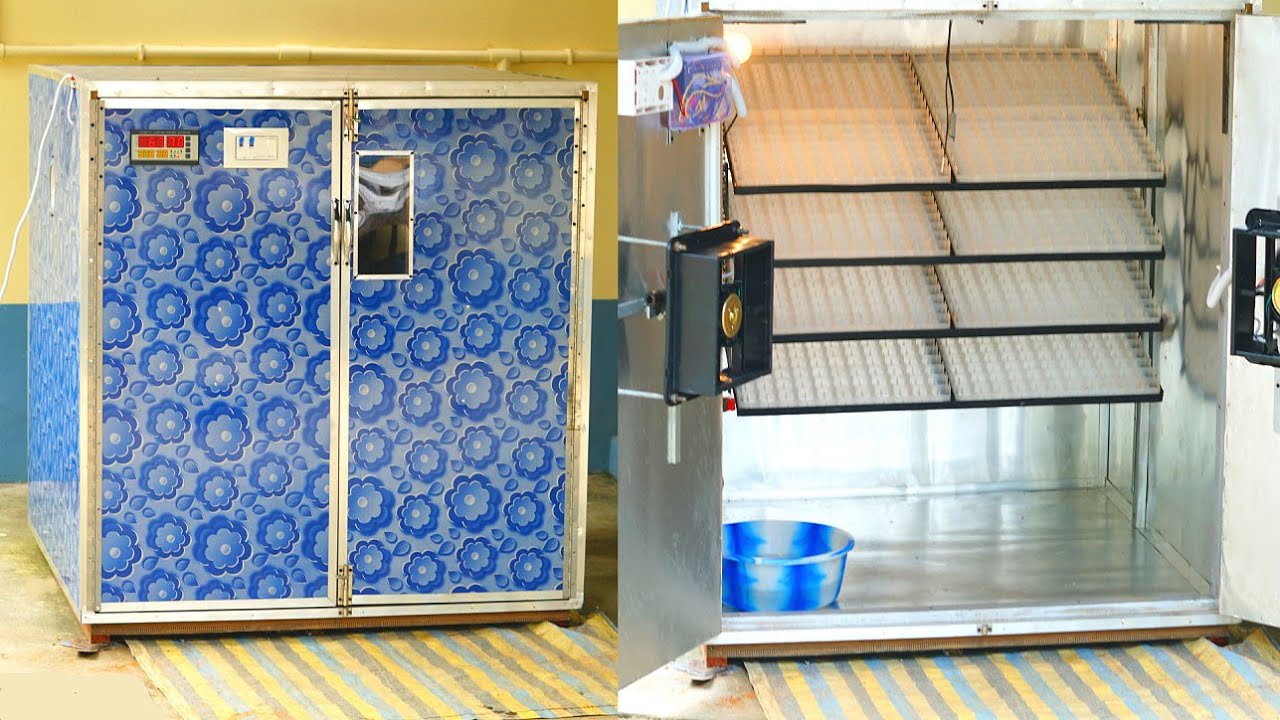
fully automatic incubator
Автор: MK INCUBATORS AND FARMS
Загружено: 2025-08-16
Просмотров: 2358
Описание:
mk Incubators Namakkal Rasipuram Tamilnadu
An egg incubator is a device that provides the ideal environmental conditions for eggs to hatch. It simulates the role of a hen or other parent bird, regulating factors such as temperature, humidity, and egg turning. Incubators are used for a variety of purposes, from small-scale hobbyist use to large-scale commercial poultry operations.
Key Features and Functions
Temperature Control: Maintaining a stable and precise temperature is crucial for embryo development. Incubators are equipped with thermostats and heating elements to keep the temperature within the optimal range for the specific type of egg (e.g., chicken eggs typically require around 99.5°F or 37.5°C).
Humidity Regulation: Proper humidity is essential to prevent the eggs from losing too much moisture. Incubators often have a water reservoir or other system to maintain the correct humidity level, which can vary depending on the stage of incubation.
Egg Turning: In nature, a parent bird turns its eggs periodically to prevent the embryo from sticking to the shell and to ensure even heat distribution. Many modern incubators have an automatic egg-turning mechanism that rotates the eggs at regular intervals.
Ventilation: Good air circulation is necessary for the developing embryos to receive a constant supply of oxygen and for the removal of carbon dioxide. Incubators are designed with vents to facilitate this airflow.
Types of Incubators
Incubators come in a wide range of sizes and levels of automation.
Manual vs. Automatic: Manual incubators require the user to turn the eggs by hand. Automatic incubators have a built-in turning mechanism, which can be a significant convenience.
Still-air vs. Forced-air: Still-air incubators rely on natural convection to distribute heat. Forced-air incubators use a fan to circulate the air, resulting in more uniform temperature distribution.
Hobbyist vs. Industrial: Small-scale incubators for home use might hold only a handful of eggs, while large industrial incubators used in commercial hatcheries can hold tens of thousands of eggs.
Benefits of Using an Incubator
Higher Hatching Rate: Incubators can provide a more consistent and controlled environment than a natural nest, leading to a higher success rate for hatching.
Hatching Year-Round: They allow for the hatching of eggs regardless of the season or the availability of a brooding hen.
Disease Prevention: Using an incubator can help reduce the risk of disease transmission from a broody hen to the chicks.
Convenience: For large-scale operations, incubators are essential for managing a high volume of eggs and chicks efficiently.
Hatching Different Species: Incubators can be used to hatch a variety of bird eggs, including chickens, ducks, quails, and geese, as well as reptile eggs.
Повторяем попытку...
Доступные форматы для скачивания:
Скачать видео
-
Информация по загрузке:









![Alternate Function of Blower and Circulation Fan/XM18[DIY Incubator]](https://imager.clipsaver.ru/zh1-sg_HITk/max.jpg)