Eco-Museum of Himarë. Storytelling of Vuno Village and Heroes square, in English
Автор: Co.Co. Tour
Загружено: 2021-03-23
Просмотров: 180
Описание:
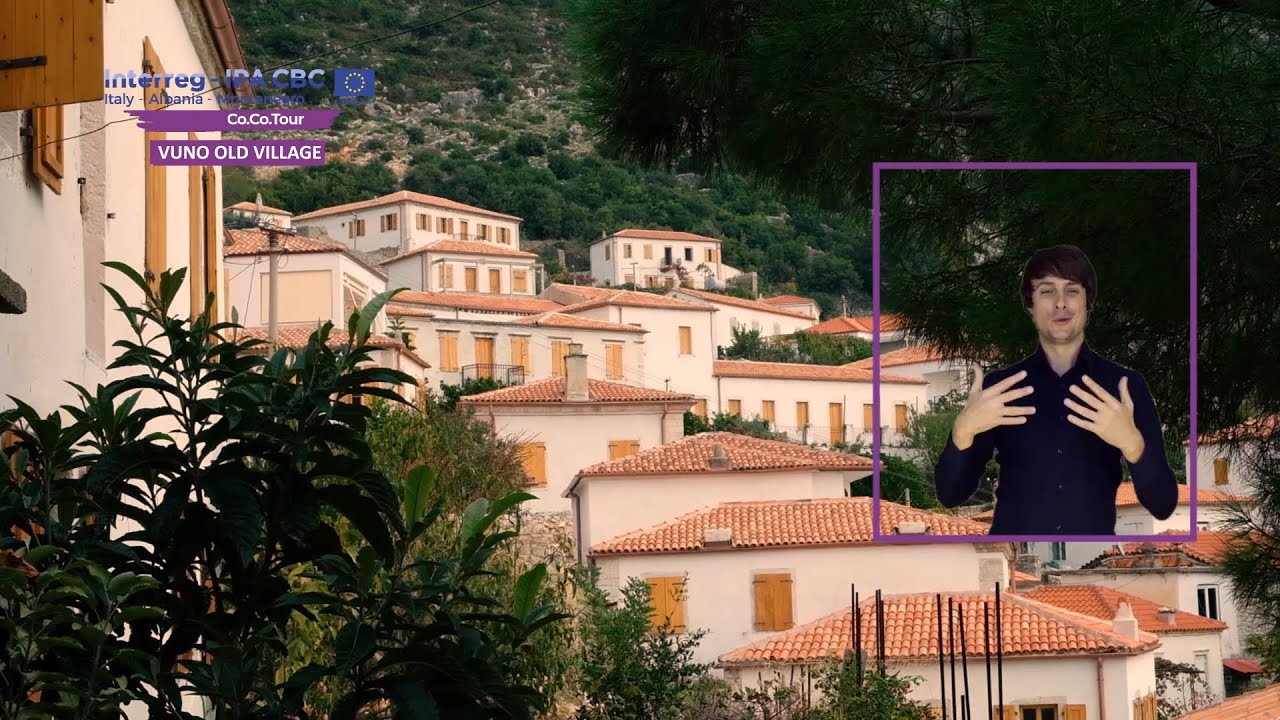
Vuno is one of those villages that contributes greatly to the surrounding area with its history, protagonism in the great events of the nation, as well as its impact on the national culture. The village, which dates back to the 2nd century BC, is located on the slopes of Mount Mjegullosh. Positioned slightly away from the sea, it is separated from it by a plateau filled with endless olive groves and other fruit trees that make up a real fortune for the inhabitants. Characteristic in Vuno are the traditional stone houses built compacted with each other on the mountainside, which appears mostly as residential complexes. The cobbled streets, the rugged terrain, and the stairs stand out as soon as you start walking around the picturesque village, often even winding under the arches on which the houses stand.
[Interview, Mr. Alqivadh Andoni, Vuno village head]
The tradition has been that all the men of the village emigrated to France, Greece, Italy, collected a sum of money, and then either built or bought a house.
The homes of many patriotic and education-loving figures can be seen throughout the village. Every house or residential complex has a prominent history and figure: Kasneci Complex which has produced 7 generals and diplomatic representatives since the period of Ali Pasha Tepelena; Odise Kasneci, representative of the province of Himara in the Albanian League of Prizren; The Simonidhi Complex, Dr. Simonidhi, at the same time a deputy of King Zog throughout his reign; Koleka Complex, Spiro Koleka, whose signature is part of the Vlora government, founded by Ismail Qemali; The Nushi complex, Gogo Nushi, a major contributor to the National Liberation War and educated in France, has made a valuable contribution to the government of the time; The house of Naqo Konomi, the first teacher of the Albanian language in the school opened in Vuno in 1902; The house of Nase Benit, who fought against the invaders, and who is considered the author of the Himariote poem “Who is the flower of the vilayet?”.
In Vuno you cannot miss the stone Churches and Monasteries full of mysticism which carry not only cultural and monumental values but also spiritual.
Vuno’s history is enriched by a long list of national heroes, whose names are located above the obelisk in the center of the village, known as the Heroes’ Square. Among them are Kozma Nushi, who became involved in the anti-fascist movement and was shot in Mathauzen in 1944; Llambro Andoni, battalion commander involved in the national liberation wars and Zaho Koka, World War II partisan and People’s Hero, and many other figures.
After 2018, the square, the promenade, and the old houses have been reconstructed by the Albanian Development Fund and Vuno has already adopted a new and livelier appearance as a touristic village.
Disclaimer: The contents of this publication are the sole responsibility of the expert and
can in no way be taken to reflect the views of the European Union.
Повторяем попытку...
Доступные форматы для скачивания:
Скачать видео
-
Информация по загрузке: