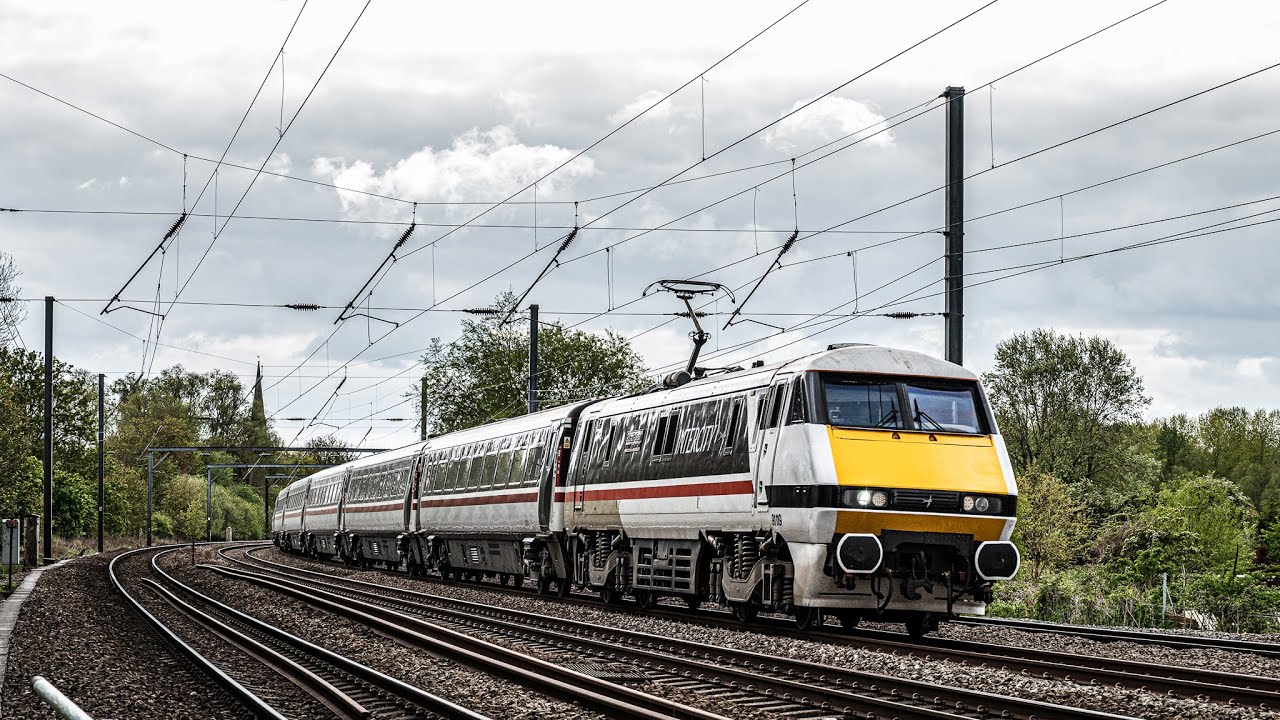
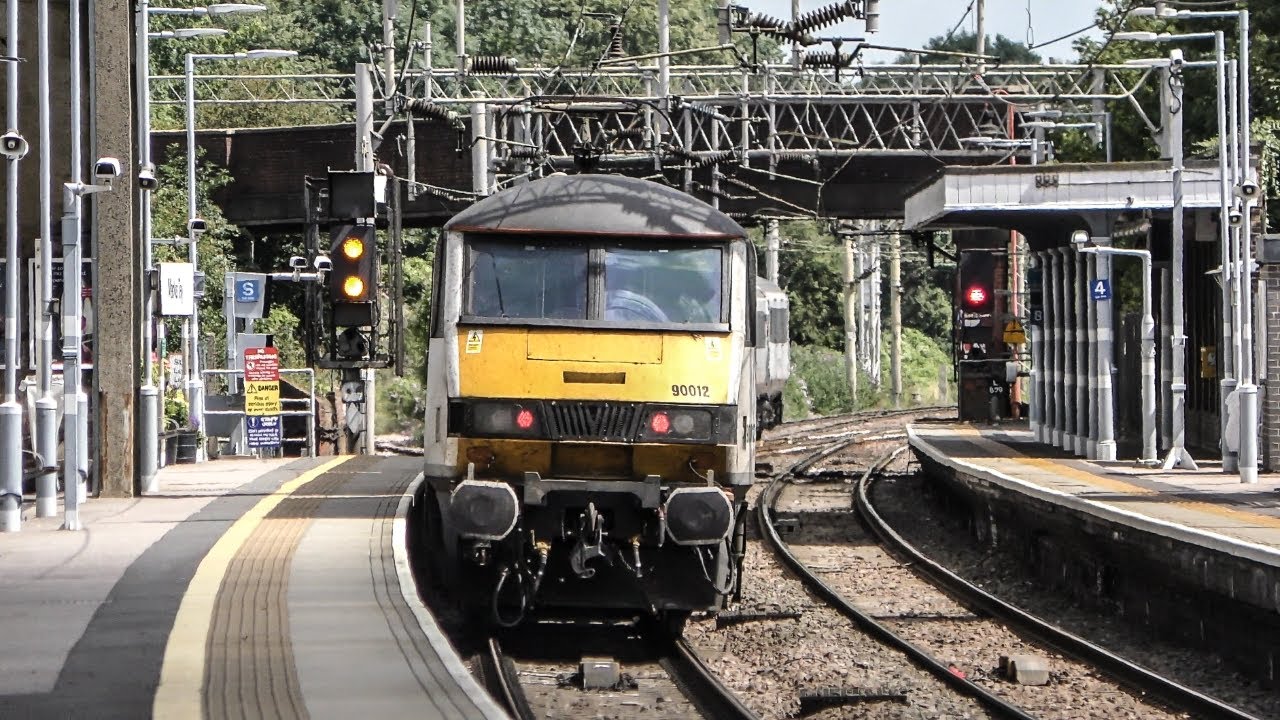
Class 90 MK3 Coach Window Hang | 01/12/18
Автор: Richard Chalklin
Загружено: 2018-12-05
Просмотров: 1621
Описание:
This video is property of "Richard Chalklin"
2160p 4K HD!
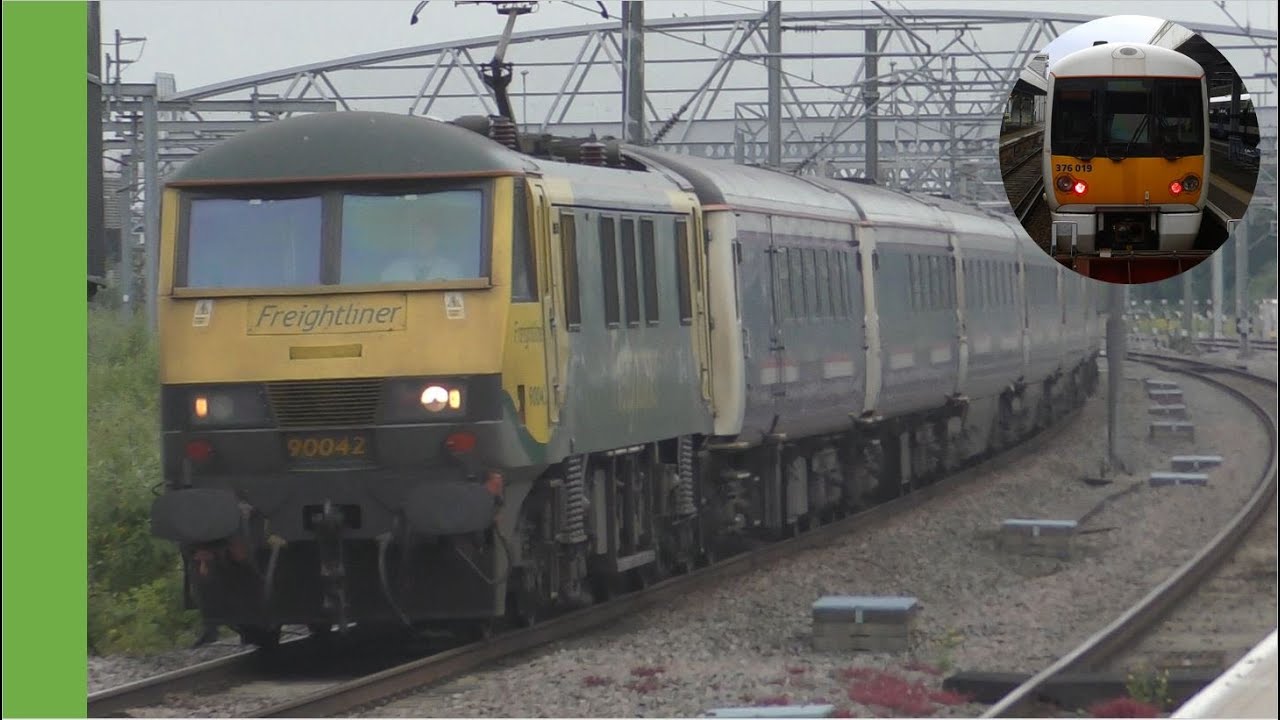
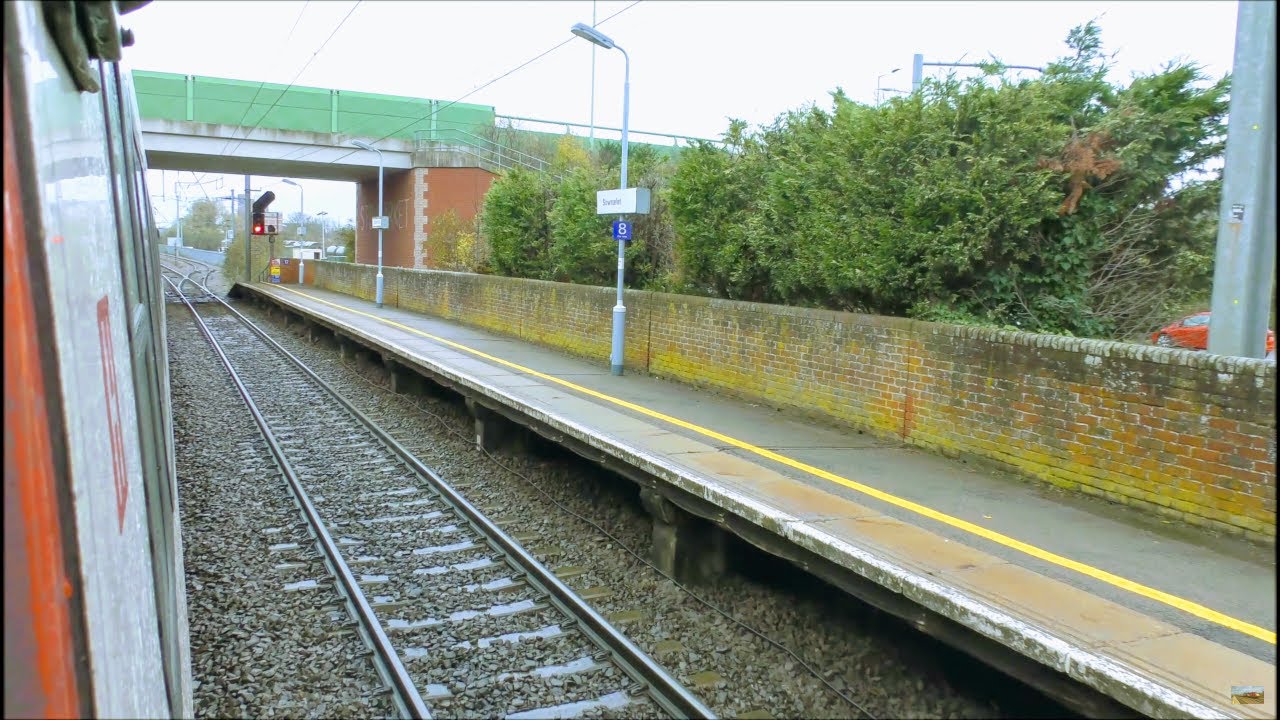
As mentioned in my community post from earlier this month, i did end up doing some window hanging on my way to Manningtree so here it is.
MK3 Coach info:
The British Rail Mark 3 is a type of passenger carriage developed in response to growing competition from airlines and the car in the 1960s. A variant of the Mark 3 became the rolling stock for the High Speed Train (HST).
Originally conceived as locomotive-hauled coaching stock, the first coaches built were for the prototype HST in 1972. Production coaches entered service between 1975 and 1988, and multiple-unit designs based on the Mark 3 bodyshell continued to be built until the early 1990s. The Mark 3 and its derivatives are widely recognised as a safe and reliable design, and most of the surviving fleet is still in revenue service on the British railway network in 2018.
Introduction:
Under the chairmanship of Stanley Raymond, it was decided to reduce journey times further on long-distance trains by increasing line speed to 125 mph where practical – the maximum considered possible on Britain's Victorian-age railway. At the end of 1968 proposals were submitted to the Commercial and Operating Departments of British Rail for a new fleet of third-generation standard coaching stock, designed to run at 125 mph.
The rapid development required for the HST in 1969 made the Mark 3 coach design the obvious choice for this train, and in 1972 the first Mark 3 coaches were built, ten for the prototype HST.
Construction:
The Mark 3 looks similar to Mark 2D, 2E and 2F coaches, but is of a completely different design. It has a ridged roof and under-frame skirt compared with a smooth roof and visible below-frame equipment on the Mark 2.
The bodyshell is 75 feet (23 m) long, almost 10 feet (3.0 m) longer than the Mark 2, of full monocoque construction with an all-welded mild steel stressed skin, and has a reputation for its exceptional strength and crashworthiness.[citation needed] An important advance over its predecessor was the adoption of secondary air suspension between the body and the bogies, giving an exceptionally smooth ride. The bogies, classified BT10 (BT5 on the prototype vehicles), were designed specifically for the Mark 3 and have coil-spring primary suspension with hydraulic dampers, enabling a maximum speed of 125 mph (200 km/h) – the Mark 2 is limited to 100 mph (160 km/h). Disc brakes in place of the Mark 2 clasp brakes completed the engineering package enabling – in conjunction with wheel slip protection (WSP) – efficient deceleration from 125 mph and almost silent brake operation.
Ancillaries such as electrical and air-conditioning systems were grouped together in discrete modules housed behind an aerodynamic skirting between the bogies; on the Mark 2 these were mounted above and below the passenger seating area. The lighting and air-conditioning fittings were for the first time integrated into the ceiling panels. Other new features were the pneumatically operated automatic gangway doors triggered by pressure pads under the floor. From 1993, after fatal falls from moving trains, a central door-locking system operated by the train guard was installed to protect the passenger operated slam-doors.
The main difference between the HST vehicles and the loco-hauled Mark 3A relate to electrical supply arrangements. HST coaches take an industrial voltage/frequency 3-phase supply directly from an auxiliary alternator in the power car to supply on-board equipment such as air conditioning; loco-hauled vehicles take a standard single-phase 1000 V AC or DC train heat supply from the locomotive and convert it through motor generator units under the floor. These convert the train supply to 3-phase 415/240 V 50 Hz AC to power air conditioning and other ancillaries. The two types are non-interconnectable in service conditions. The other main difference is the lack of buffers on HST coaches.
The later Mark 3B build provided first class loco-hauled vehicles for the West Coast Main Line. These are similar to Mark 3As, but have an improved motor alternator unit with compound-wound motor, and seating derived from the Advanced Passenger Train (APT).
Prototype:
Ten coaches were constructed to run between a pair of Class 41 power cars as the prototype HST, exploring different seating and layout options for first and standard class passengers, and evaluating different designs of catering facilities. In 1973 the prototype HST was evaluated as an 8-coach formation. The two spare coaches, 2903 and 2904, were rebuilt and redeployed in the Royal Train, where they remain.
Повторяем попытку...
Доступные форматы для скачивания:
Скачать видео
-
Информация по загрузке: