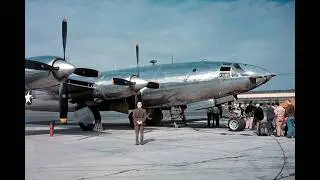
America Built a Twin-Engine Mustang… and Then Nobody Talked About It
Автор: Dwaynes Aviation
Загружено: 2026-01-18
Просмотров: 1864
Описание:
Meet the North American F-82 Twin Mustang, the “Double Mustang” that looked like a hangar prank but ended up becoming the last piston-engined fighter ordered into production by the U.S. Air Force. Built by North American Aviation at Inglewood, California, the Twin Mustang was born from a very real problem: escorting Boeing B-29 Superfortress raids across the Pacific when single-seat fighters ran out of legs. Edgar Schmued (the P-51 Mustang’s design legend) and NAA’s team essentially created a new airframe that resembled two Mustangs using a lineage tied to the XP-51F, and joined it with a center wing carrying six .50-cal M3 Browning machine guns, plus the fuel and crew endurance to go long.
Then the twist: it arrived too late for WWII… and became even more relevant after. In 1947, Col. Robert E. Thacker and the P-82B “Betty Jo” proved the concept with a nonstop Hawaii-to-New York run, a range flex that still stands out in fighter history.
And in Korea, the F-82 wasn’t a museum piece, it was first-night, first-week, real work: Itazuke Air Base (Japan), Kimpo Airfield (near Seoul), Inchon, and radar runs through overcast. On June 27, 1950, Lt. William “Skeeter” Hudson and radar operator Lt. Carl Fraiser scored the first U.S. aerial victory of the Korean War in an F-82G, while pilots like Lt. Charles Moran and Maj. James W. Little piled on in the same chaotic fight over Kimpo.
This video breaks down the designs, the units (68th Fighter (All Weather) Squadron, 339th, 347th Provisional Fighter Group), the tech (including SCR-720 interception radar roots), and why the Twin Mustang vanished as jets like the Lockheed F-94 Starfire took over.
#F82 #TwinMustang #KoreanWar #Warbirds #AviationHistory
Повторяем попытку...

Доступные форматы для скачивания:
Скачать видео
-
Информация по загрузке: