Consort Music with original instruments: Dowland - Lawes - Coperario - Simpson - Purcell
Автор: calefonxcalectric
Загружено: 2024-09-07
Просмотров: 171
Описание:
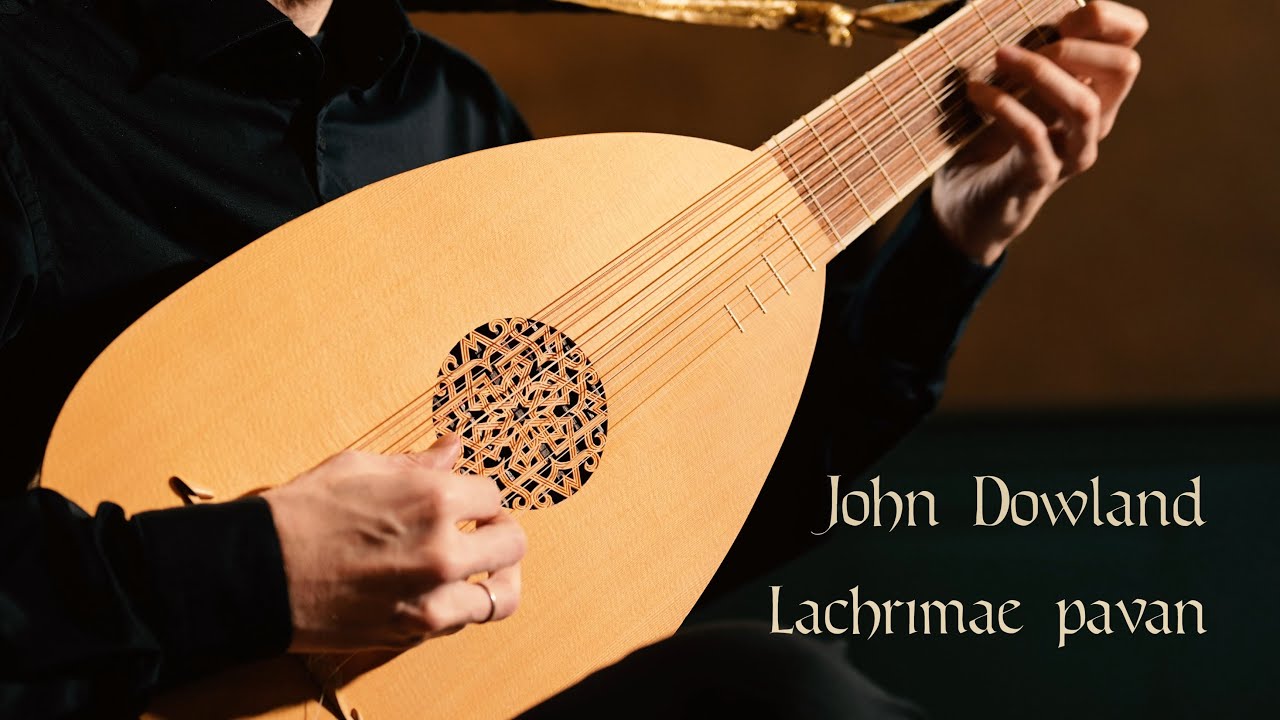
00:00 Pavan in C a 4 (John Dowland, 1563-1626)
05:16 Suite No. 1 in c a 6 (William Lawes, 1602-1645): Fantasia - In Nomine - Air *
17:58 Fantasia a 5 (John Cooper [Giovanni Coperario], c.1570-1626)
21:16 Suite a 3 (Cooper [Coperario]): Fantasia - Alman - Galliard
28:01 Ricercar a 4 ¨Bonny sweet Robin¨, 1621 (Thomas Simpson, 1582-c.1628)
31:17 Trio-Sonata VI in g (Henry Purcell, 1659-1695)
LEONHARDT-CONSORT (with original instruments)
Marie Leonhardt: Baroque violin (Jacob Stainer, 1676)
Antoinette van den Hombergh: Baroque violin (Michele Platner, Rome ca. 1740)
Wim ten Have: Baroque viola (Joseph Hill, London 1770)
Wiel Peeters: Baroque viola (Johannes Tononi, 16th century)
Dijck Koster: Baroque violoncello (Giovanni Battista Guadagnini II, 1749)
Anner Bylsma: Baroque violoncello (M. Goffrilleri, Venezia 1699) *
Gustav Leonhardt: conductor, harpsichord (Rainer Schütze, Heidelberg 1963, after Dutch model ca. 1700)
Recorded: November 1970, Westzaan, Holland
Photo: Blickling Hall, Norfolk
It is often asserted in Europe, with characteristic Continental superiority, that the British are an unmusical nation, whose composers — in comparison to those on the mainland — have never succeeded in climbing out of a state of creative turpitude. On closer scrutiny, however, quite a different picture offers itself: the famous 13th century canon “Sumer is icumen in” — a document of native polyphony, with its fondness for minor thirds and sixths, the existence of organs with over 400 pipes as early as the 10th century, the “Golden Age of Music” at the time of Shakespeare and, last but not least, the present renewed impetus through composers like Vaughan Williams, Tippet and Britten are proof that the British have good reason to consider themselves a nation creative in music, whose leading representatives have extended their artistic influence to the Continent as well.
It was during the reigns of Elizabeth I (1558—1603) and James I (1603—1625) that musical activity reached a peak. With the arrival on the scene of the Italian madrigal English composers made up hundreds of delightful choral songs to the musical recipes of Luca Marenzio and Giovanni Gastoldi. Although written in imitation of the Italian form, in their melodic line, their essence, their interpretation of the words and their popular vein these songs always retained their English character. This was the heyday of keyboard music, whose varied art forms are contained in the “Fitzwilliam Virginal Book”, dance forms flourished, as did the solo lute song, which, under Dowland, reached a perfection which has remained unsurpassed. The most outstanding characteristic of this classic epoch, however, was the cultivation of chamber music, which outstripped all other instrumental and vocal forms and only towards the end of the 17th century yielded ground to the more expansive orchestral style of France’s Lully. Known as “consort music”, this purely instrumental ensemble music has retained its vitality right up to the present day. Two to six performers usually participated in such communal music-making, which was generally restricted to a private circle without an audience. It was considered the done thing (and numerous members of the nobility and high-ranking citizens were known to be competent musicians) to play as many instruments as possible. A particularly revealing description of the English consort was given by the German composer and theorist Michael Praetorius: “A consort is when several persons with all kinds of instruments such as clavicymbal or large spinet, large lyre, double harp, lute, theorbo, bandora, zither, viola da gamba, a small descant viol, a flute or recorder sometimes even a quiet trombone or rackett, in an ensemble and company, made music in accord, quite gently, soft and sweetly, and in graceful symphony play together with each other”.
This “playing together with each other” is to be taken literally. The works presented here require a carefully balanced combination of sound from the chosen instruments — unlike the mere grouping of a number of different instruments of earlier times. It is just these early steps in true instrumentation that give the music its peculiar charm: viols, recorders and lutes sound most convincing when played in a restrained, quiet and objective manner. Its fine, delicate lines, in which the upper melody part does not yet bear the main weight of the emotional content, are brought out best through a reserved, tempered mode of playing — subjective emotionalism in the performer would simply mean a grotesque caricature and hysterical perversion of the original.
Telefunken / Das Alte Werk (SAWT 9576-B) 1971
Повторяем попытку...

Доступные форматы для скачивания:
Скачать видео
-
Информация по загрузке: