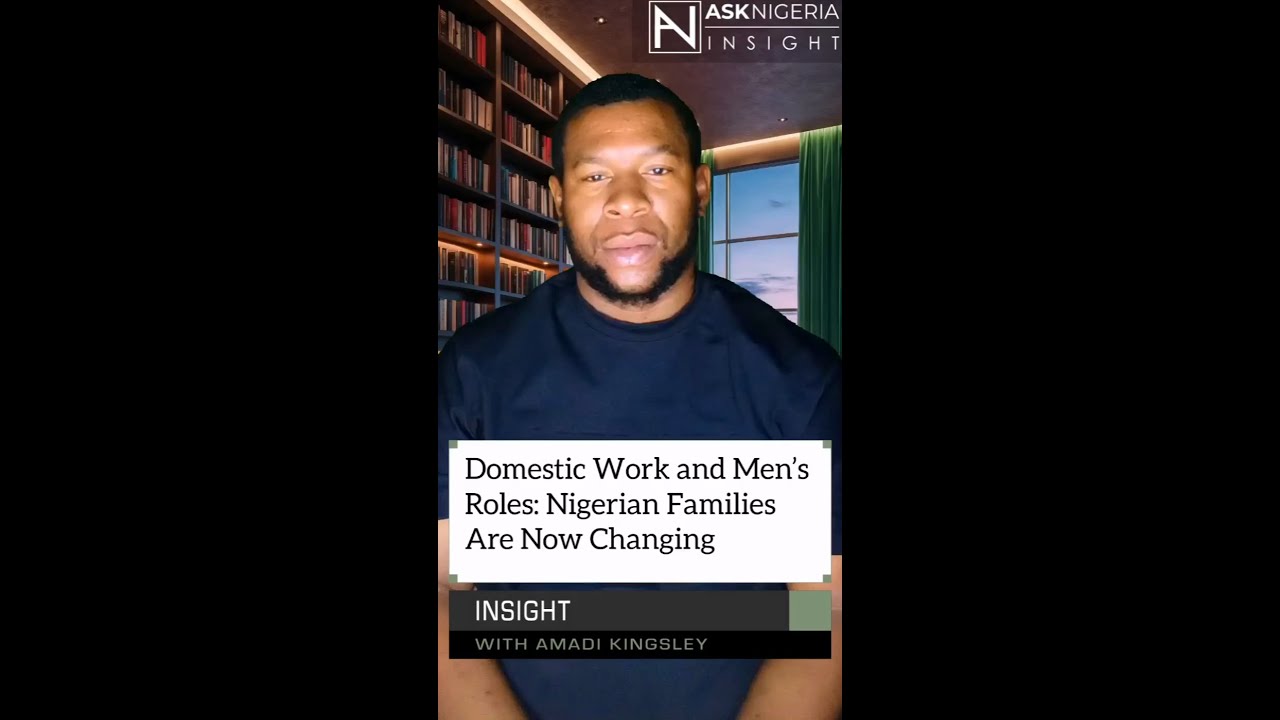
Domestic Work and Men’s Roles: Nigerian Families Are Now Changing ┃ Ask Nigeria Insight!
Автор: Ask Nigeria
Загружено: 2026-01-14
Просмотров: 10
Описание:
Domestic Work and Men’s Roles: Nigerian Families Are Now Changing ┃ Ask Nigeria Insight! View exclusively on social media, join us for accurate and in depth reports about issues shaping Nigeria. 📰🇳🇬
When we talk about domestic work in Nigeria, one idea has lasted for generations: housework is women’s work, and men are providers. But today, that idea is changing and fast. Across Nigeria, families are facing rising living costs, dual-income households, and changing expectations. More women are working outside the home, and men are discovering that supporting a family is not only about money it’s also about presence, care, and partnership. Traditionally, Nigerian men were rarely expected to cook, clean, or care for children. These tasks were culturally assigned to women and reinforcing it by social norms, religion, and upbringing. A man helping in the kitchen was often mocked or seen as weak. But those beliefs are being questioned in modern Nigerian homes. Today, many men are stepping into domestic roles not because culture is forcing them to, but because reality demands it. Shared chores reduce stress, improve communication, and strengthen marriages. Studies and recent social campaigns show that homes where men participate in domestic work experience less conflict and better emotional balance. Government and Social society organisations have also joined the conversation. Programs like Lagos State “Men Wey Sabi” initiative encourage men to see household responsibilities as teamwork, not punishment. Community leaders now openly say that helping at home does not reduce masculinity it improves family stability. Changing family dynamics are also shaping children’s futures. When boys grow up seeing their father cook, clean, or care for siblings, they learn cooperation, empathy, and responsibility. These lessons challenge harmful gender stereotypes and prepare young men for healthier relationships. Of course, resistance still exists. Some argue that men already contribute financially and shouldn’t be expected to do more. Others fear cultural erosion. But shared domestic work is not about replacing traditions it’s about adapting them to today’s realities. At its core, this conversation is about partnership. Nigerian families thrive well when responsibility is shared, respect is mutual, and roles are based on cooperation, not gender. Domestic work is not women’s work. It is family work and Nigeria’s future families depend on it. So let me ask you should housework still be about gender, or about teamwork? Drop your thoughts and Let’s talk it.
Повторяем попытку...
Доступные форматы для скачивания:
Скачать видео
-
Информация по загрузке: