Chromatic Mediant Chords
Автор: Dr. Anthony Fesmire
Загружено: 2019-08-10
Просмотров: 23093
Описание:
In this video, Dr. Anthony Fesmire introduces chromatic mediant chords. This video is part of a hybrid Music Theory IV class taught at College of the Desert.
Video Text
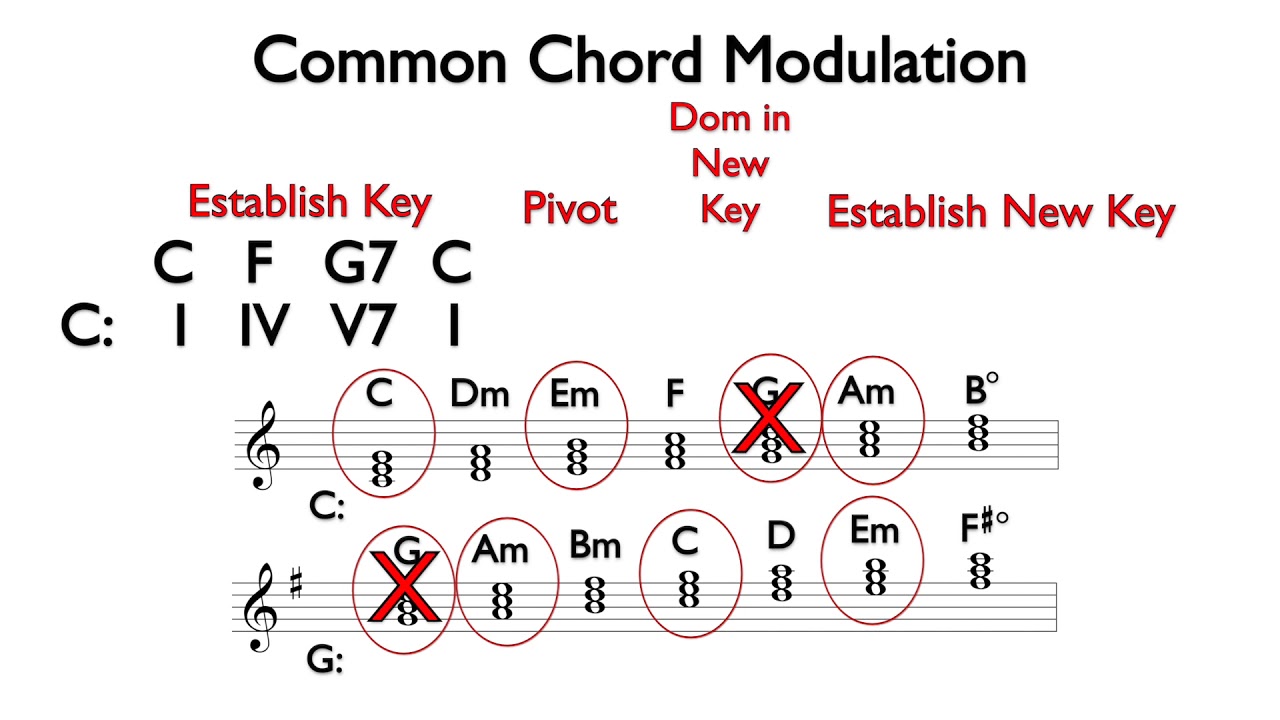
Each scale degree in a major scale has its own name. We have used some of these names throughout our study of music theory. The first note of a major scale is the tonic, the fourth note is the subdominant, the fifth note is the dominant, and the seventh note is the leading tone. This leaves only three notes that we have not discussed previously. The second note of the scale is known as the supertonic because it is above the tonic. The third scale degree is the mediant, and the sixth scale degree is the submediant. The term mediant is used with the two notes that are a third away from the tonic. The mediant being a third above, and the submediant being a third below. Each of these terms can also be applied to chords. For example, a C major triad in the key of C is referred to as the tonic triad. In the same key, the G chord is referred to as the dominant triad, and G7 is the dominant seventh chord.
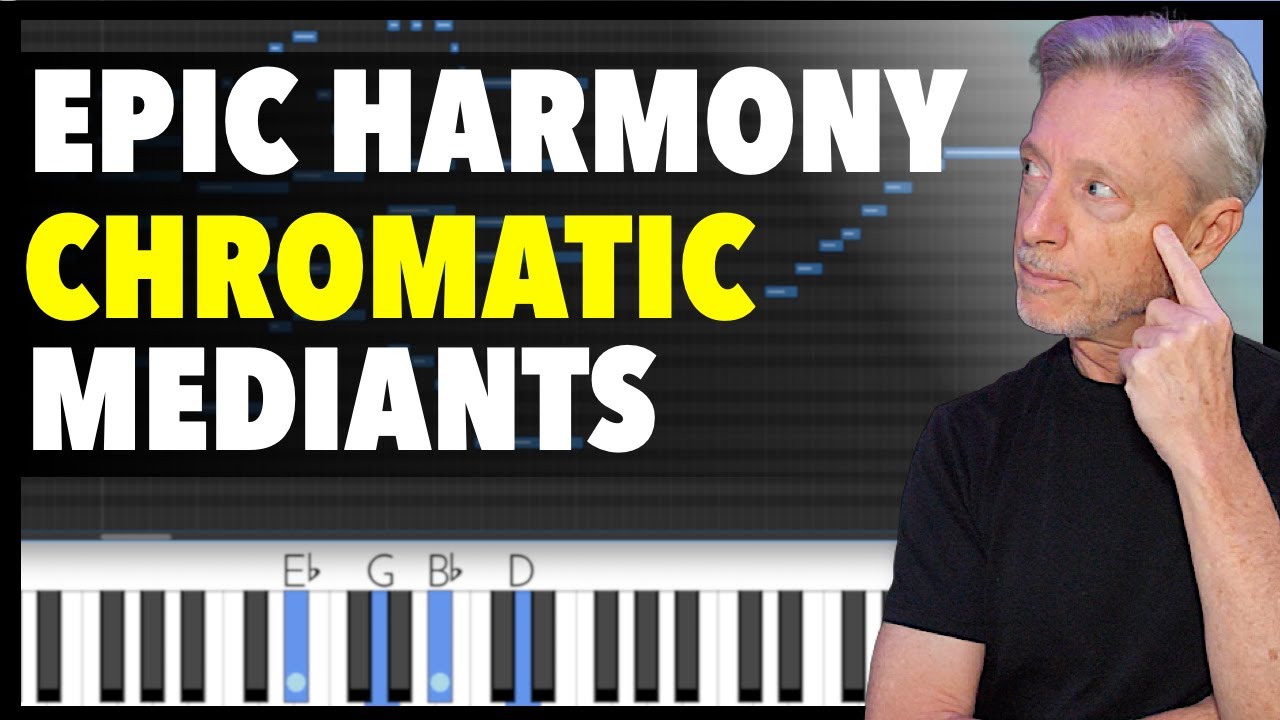
When composing chord progressions in a major key, we have had two options for mediant chords: iii and the borrowed bIII. For submediant chords, we have had the vi and the borrowed bVI. These can be triads or seventh chords. The term chromatic mediant refers to the chromatic alteration of these basic chords. For example III can be major, and biii can be minor; VI can be major, and bvi can be minor. In the key of C major, iii is Em and vi is Am; bIII is Eb, and bVI is Ab. For the chromatic mediants, III is based on E and is E major; biii is based on Eb and is Ebm; VI is based on A and is A major; and bvi is based on Ab and is Abm.
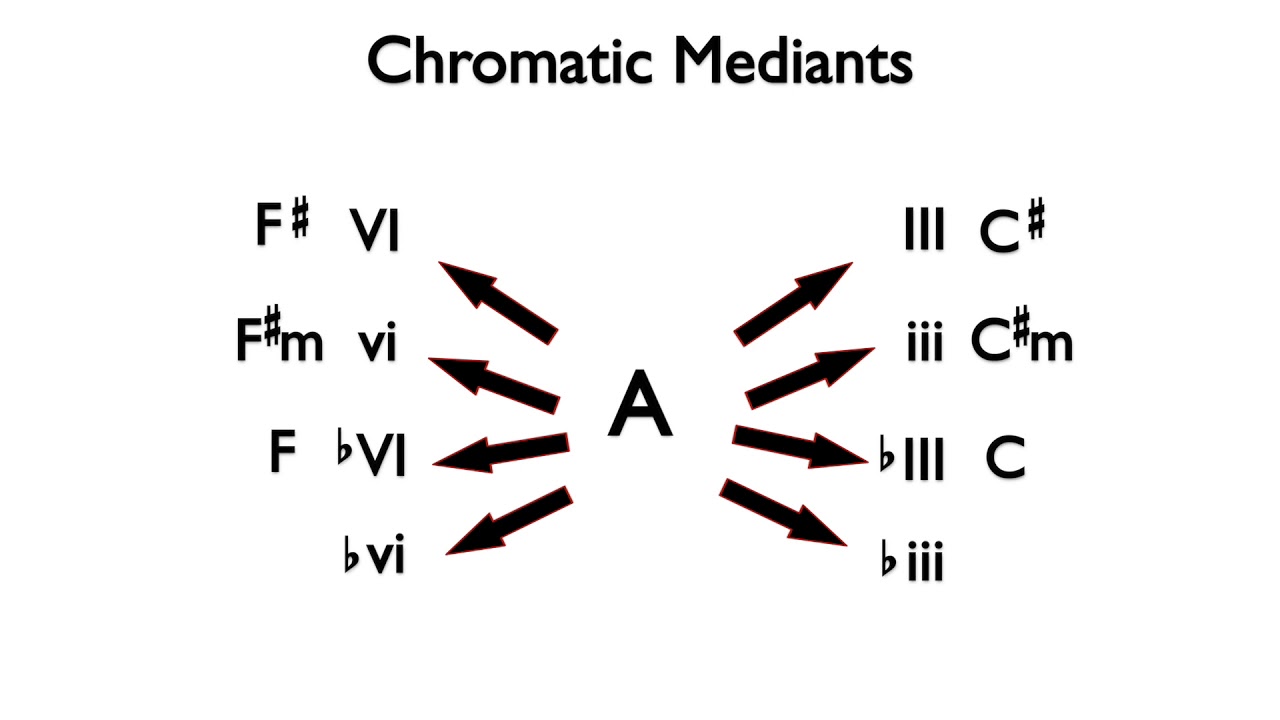
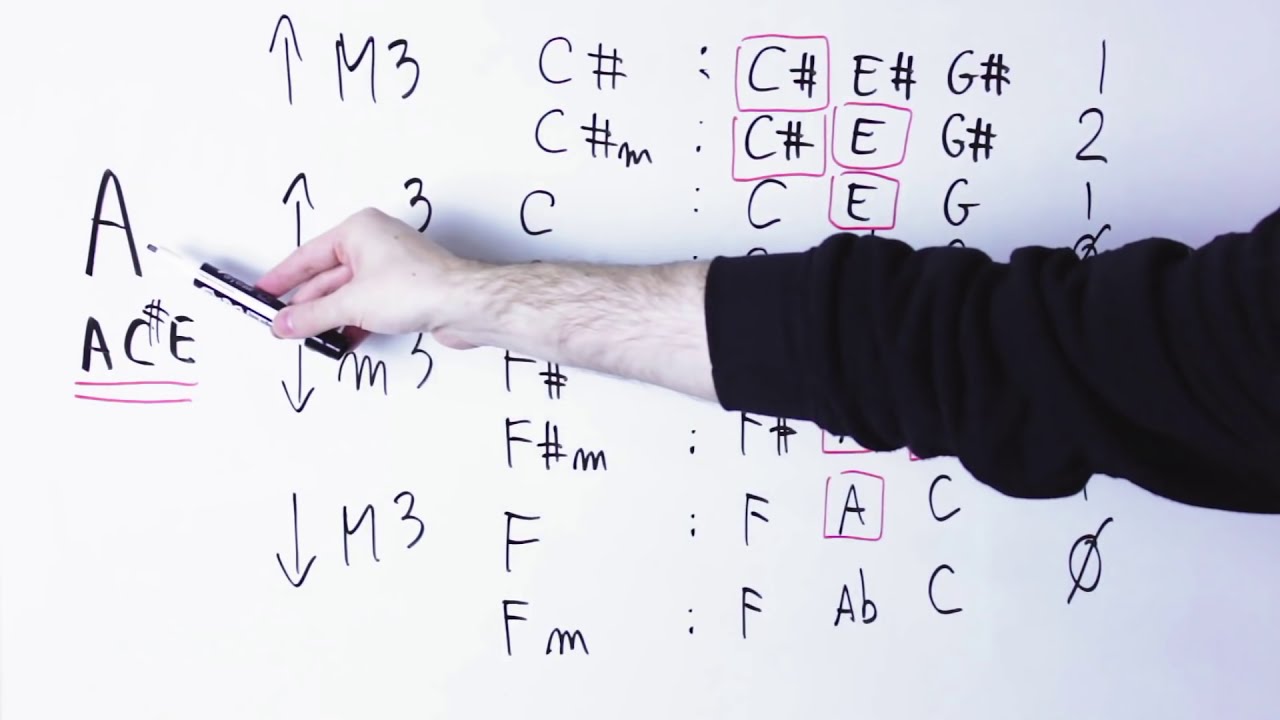
Let’s find these chords in the key of A. The diatonic mediant is C#m and the diatonic submediant is F#m. The borrowed mediant is C and the borrowed submediant is F. For the chromatic mediants, we can change the diatonic mediant to C# and the diatonic submediant to F#. The borrowed mediant can be changed to Cm and the borrowed submediant can be changed to Fm. Now we have a chart with all of the possible mediant relationships in the key of A.
It is important to note that this concept brings us into the realm of non-functional harmony. Non-functional progressions do not have strong movement toward the tonic. In the case of chromatic mediant relationship, these chords create ambiguity.
Here is a typical progression that uses a combination of mediant chords: I, bVI, III, I. This is C, Ab, E, C in the key of C. Here is the sound of this progression.
These chords can be minor as well: i, bvi, iii, i. Here is the sound of this progression.
They can also be used in combination: i, bVI, III, i. Here is the sound of this progression.
Повторяем попытку...
Доступные форматы для скачивания:
Скачать видео
-
Информация по загрузке:




![6 хроматических медиантных аккордовых прогрессий [теория музыки и советы по написанию песен]](https://imager.clipsaver.ru/IVjElQ4tttE/max.jpg)