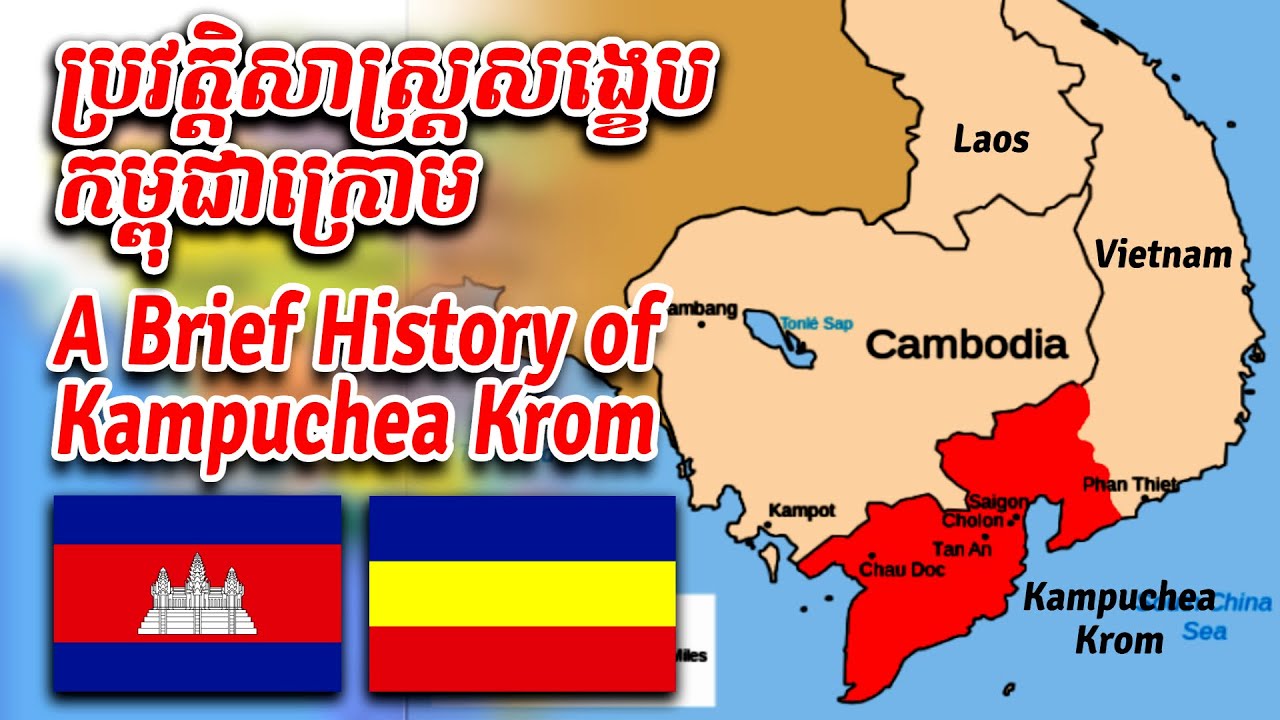
A Brief History of Kampuchea Krom
Автор: THE STORIES
Загружено: 2023-06-18
Просмотров: 11313
Описание:
Kampouchea Krom is the region variously known as Southern Vietnam, Nam Bo, and the former French Cochinchina. Bordering present-day Cambodia, the region is positioned in Cambodian nationalist mythology as a "once-integral part of the Khmer kingdom that was colonised by France as Cochinchina in the mid-nineteenth century, then was ceded to Vietnam in June 1949". In the present day, the region roughly corresponds to the Mekong Delta region of Vietnam.
Kampouchea Krom continues to be home to many ethnic Khmer Krom, with some Khmer estimating their numbers to be between seven million and over ten million.
Territorial history
In a Khmer Buddhist monk's vision, the Khmer have inhabited the land of Kampuchea Krom since it first emerged from the ocean thousands of years ago as a fragrant and glowing land that attracted the teovada, celestial beings who ate the sweet earth and were subsequently unable to fly back to their world, thus staying on earth as the first humans. Throughout history, the area known in Khmer as Kampuchea Krom has been situated within numerous ancient polities, including Nokor Phnom (Funan), Chenla, and the Khmer Empire.
Ancient civilizations
Archaeological research at the Óc Eo site between Rạch Giá and Long Xuyên in present South Vietnam dates Vietnamese incursion in the region to the sixteenth century, prior to which the area was located within the ancient Khmer empire. There is no clear consensus on the ethnic makeup of those living within the region during the earlier Funan and Chenla polities. Linguistic evidence from the period - by way of inscriptions - supports the theory that inhabitants spoke a pre-Khmer Austronesian language. However, archaeologists and historians also contend that this language may have been similar to Khmer, and that a version of Old Khmer may have been used by the end of the Funan period. A further theory is that ethnic distribution within the region may have varied with elevation within the landscape, with Khmer speakers living on higher ground, and Malayo-Polynesian - and later Vietnamese - speakers occupying the lower-lying areas.
17th–19th-century Vietnamese expansion
The period spanning the seventeenth to nineteenth centuries saw an unprecedented expansion of the Vietnamese state into Kampuchea Krom. Historian Barbara Andaya identifies Vietnamese internal feuding and the Trịnh–Nguyễn Civil War of the early seventeenth century as motivating the dispersal of the Vietnamese population into Khmer speaking areas. In particular, Khmer sources note that Vietnamese immigrants flooded into the regions of Prey Nokor (known as the present-day Ho Chi Minh City), Baria, and Daun Nay (Kampong Sroka Trei), following requests by Vietnamese missionaries to King Chey Chettha (1618–1628).
Following the fall of the Ming dynasty in the mid-seventeenth century, Ming loyalists began to migrate across East and Southeast Asia, including towards Kampuchea Krom. Historian Claudine Ang argues that this migration of Ming loyalists into the Mekong delta, or Kampuchea Krom, and their alliance with the southern Vietnamese rather than the Khmer or the Siamese, "gave the Nguyễn lords of the southern Vietnamese state the support that they needed to lay claims on the delta lands", enabling the aggressive southward territorial expansion of the Nguyễn lords in the mid-eighteenth century.
However, it was only after the 1809 death of Mạc Tử Thiêm, whose father Mạc Cửu had arrived in Kampuchea Krom after leaving China following the fall of the Ming dynasty, that the Vietnamese state incorporated the Hà Tiên principality into Vietnamese administrative control. Prior to Mạc Tử Thiêm's death, Hà Tiên had been an autonomous principality. Through the incorporation of Hà Tiên, the Nguyễn dynasty thus further extended their borders amidst a period of tense regional competition involving the Siamese, Vietnamese, and Khmer.
This period of unprecedented southward territorial expansion was cited by the Gia Long emperor to the Qing court in its request for the Vietnamese state to be recognized by the term Nan Yue rather than Annan, a request that ultimately resulted in its current name of Yue Nan, or Vietnam. (See: Mekong Delta - History, Vietnamese Period)
Historian David Chandler argues that further long-term effects of Vietnamese southward territorial expansion into Kampucha Krom included: (1) Cambodia being "cut off to a large extent from maritime access to the outside world"; (2) the removal of "large portions of territory and tens of thousands of ethnic Khmer from Cambodian jurisdiction"; and (3) the placement of Cambodia in a vise between its two powerful neighbors of Siam and Vietnam.
សូមជូនពរពុកម៉ែ ពូមីង យាយតា បងប្អូន... ទាំងអស់ជួបតែសេចក្ដីសុខ សេចក្ដីចម្រើន និងសុខភាពល្អ... គ្រប់ទិវារាត្រី❗
I wish you all ... peace, prosperity and good health ... every day and night ❗
ដោយក្ដីស្រឡាញ់ពីខ្ញុំបាទ The Stories @thestories356
Thanks for watching this video 😊🙏💚📸
☞ SUBSCRIBE
Повторяем попытку...
Доступные форматы для скачивания:
Скачать видео
-
Информация по загрузке: