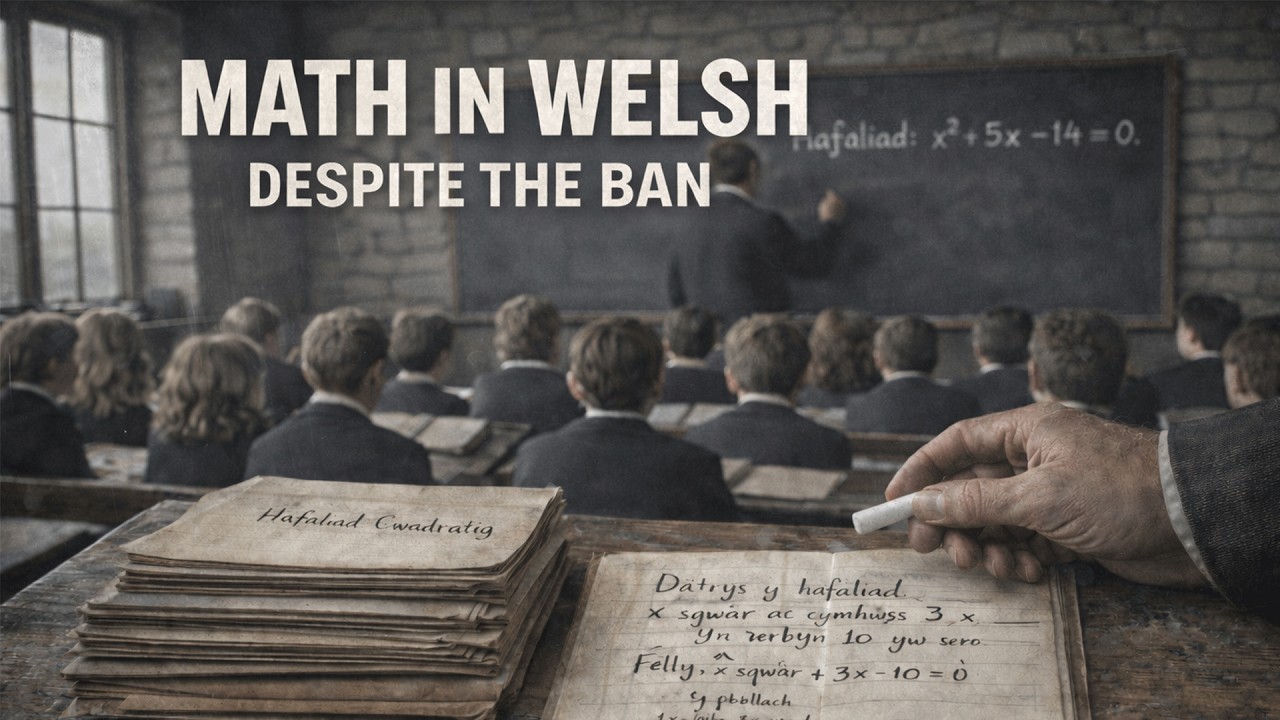
Welsh Border 1882: One School — Two Official Registers
Автор: Local Systems UK
Загружено: 2026-02-22
Просмотров: 3
Описание:
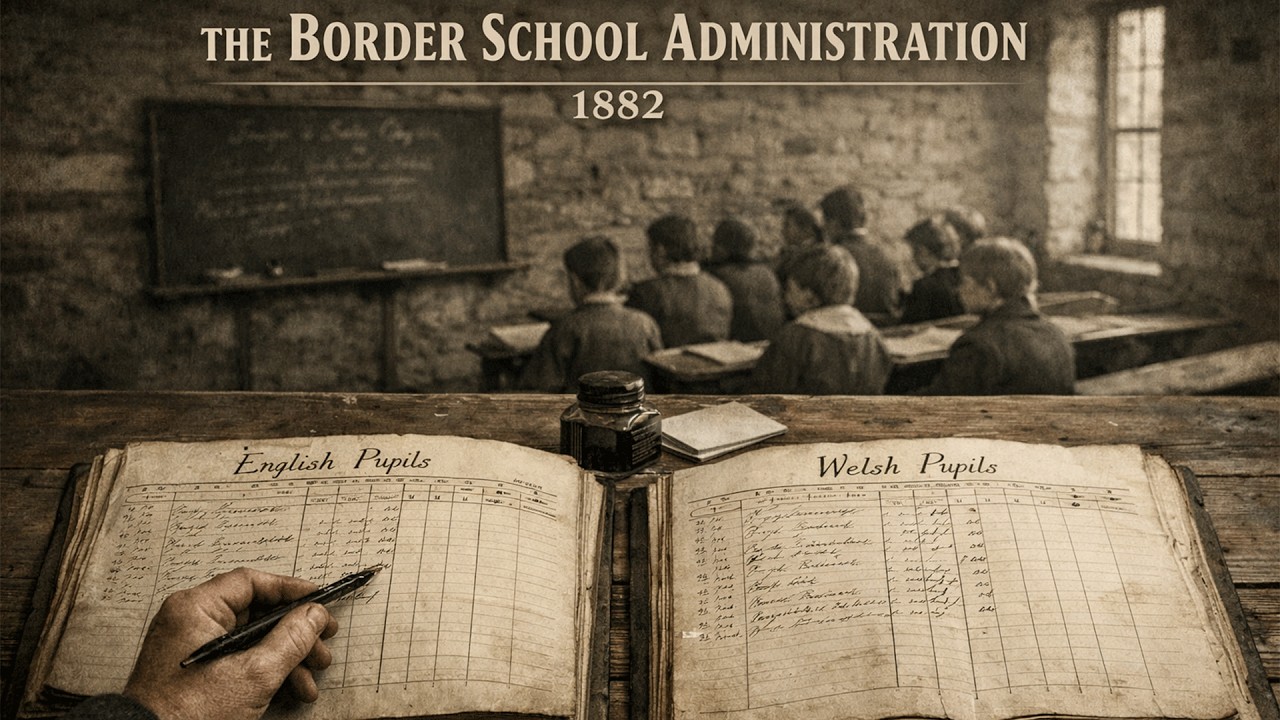
September 4th, 1882. Llanymynech National School. 63 children lined up in two separate queues—one for Welsh speakers, one for English speakers. Same building. Same teacher. Two completely different registers. This is the untold story of how Welsh border parishes created a unique administrative system that documented language death in real time.
The border parishes—Llanymynech, Oswestry, Llansilin, Chirk—existed in linguistic limbo. The England-Wales border ran through churches, graveyards, even hotel buildings. The Lion Hotel had its bar in England and its lounge in Wales, operating under two different licensing laws. This geographic peculiarity created something unprecedented: schools maintaining parallel attendance registers, one English and one Welsh, for children who often sat at the same desk.
Headmaster Thomas Davies kept four separate logbooks. Government inspectors called it "unnecessary administrative complexity." But these registers documented something remarkable: the precise mechanism of language shift within families. The Roberts family from Pant Farm shows the pattern—father spoke only Welsh, mother was bilingual, oldest daughter entered the English register, middle daughter the Welsh register, youngest son would follow in English. Three siblings. Three different linguistic classifications. One household over 15 years.
In 1870, Llanymynech School enrolled 71 students: 58 Welsh register, 13 English register. By 1886, English-register students outnumbered Welsh-register students for the first time. By 1902, only 17 of 94 students were classified as Welsh-speaking. The registers didn't just track attendance—they documented the death of a language, entry by entry, child by child.
This dual-register system existed nowhere else in Britain. Schools 20 miles into Wales kept single registers in Welsh. Schools 20 miles into England kept single registers in English. Only in the liminal space of the border, where identity itself was doubled, did this system develop. It lasted 30 years—1872 to 1902—before the Board of Education mandated consolidation.
The 12 leather-bound volumes survive in the Shropshire Archives. They record more than names and attendance. They record the moment a bilingual community made the collective decision to prioritize English over Welsh. They record teachers who understood that separating children into registers wasn't segregation but recognition—acknowledgment that borderland children lived in two linguistic worlds simultaneously.
This is Local Systems UK. We document how Britain operated before centralization—the local solutions, the regional variations, the administrative systems that emerged from geographic and cultural necessity. Real archives. Real documents. Real history.
📚 SOURCES & ARCHIVES:
Shropshire Archives, Shrewsbury (School Registers 1875-1902)
Montgomeryshire School Board Records (1870-1902)
Education Act 1870 - Parliamentary Archives
Her Majesty's Inspector Reports (Wales, 1880-1900)
British and Foreign School Society Certification Records
🔔 SUBSCRIBE to Local Systems UK for more forgotten stories of British administrative history, regional variations, and the local solutions that existed before national standardization.
💬 COMMENT: Did your family experience language shift? Are you from a bilingual border region? Let us know in the comments.
#WelshHistory #EducationHistory #LanguageShift #BorderParishes #VictorianBritain #WelshLanguage #LocalHistory #ArchivalResearch #BritishHistory #SchoolRegisters #Llanymynech #BilingualEducation #HistoricalDocuments
Повторяем попытку...
Доступные форматы для скачивания:
Скачать видео
-
Информация по загрузке: