Johann Joseph Fux (1660-1741) - Serenata in C-Dur (1701)
Автор: Pau NG
Загружено: 2026-02-13
Просмотров: 1814
Описание:
⭐ More music by Johann Joseph Fux ⭐
Missa pro Gratiarum Actione: • Johann Joseph Fux (1660-1741) - Missa pro ...
Ouverture à 6: • Johann Joseph Fux (1660-1741) - Ouverture à 6
Composer: Johann Joseph Fux (1660-1741)
Work: Serenata in C-Dur aus 'Concentus | musico-instrumen- | talis | in septem partittas, | ut vulgo dicimus, divisus | dedicatus | Iosepho Primo | Romanorum Regi.' (1701)
Performers: Les Passions de l'Âmе; Mеrеt Lüthі (conductor)
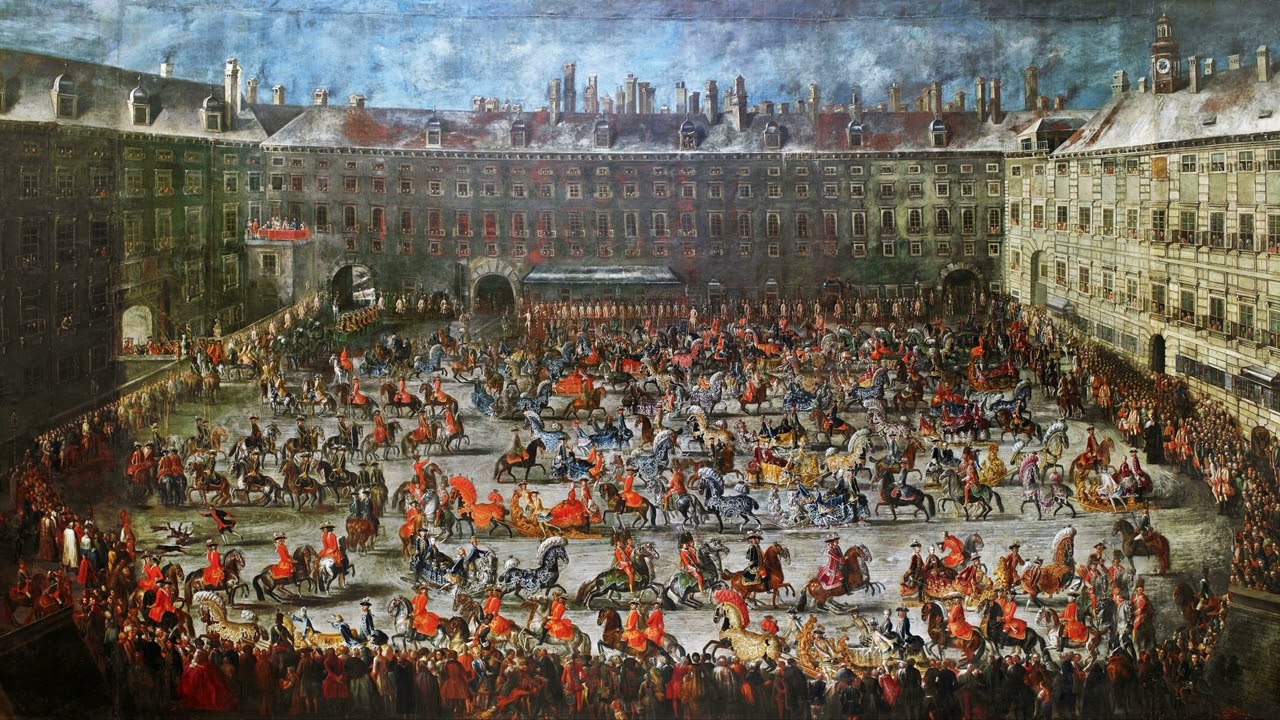
Painting: Franz Michael Augustin Purgau (1714-1770) - Kaiserliche Schlittenfahrt am 7. Februar 1765
HD image: https://flic.kr/p/2rWjvhQ
Further info: https://rism.online/sources/990019255
Listen free: No available
---
Johann (Johannes, John, Giovanni) Joseph (Giuseppe, Gioseffo) Fux [Feux, Fuchs]
(Hirtenfeld, 1660 - Vienna, 13 February 1741)
Austrian composer and music theorist. His exact date of birth is unknown. According to his death certificate he was 81 when he died. His father, Andreas Fux (c.1618-1708), married twice, and Johann Fux may have been his eldest child. Although a peasant, Andreas Fux was a parish official attached to the church at St Marein and came into contact with a number of musicians, among them the Graz organist Johann Hartmann Peintinger and the Kantor Joseph Keller, who probably influenced his son's early musical development. In 1680 he enrolled as a ‘grammatista’ at Graz University, and in 1681 he entered the Jesuit Ferdinandeum as a student of grammar and music. By August 1685 he had taken a position as organist at St Moritz in Ingolstadt. Fux's movements between the beginning of 1689, when a new organist was appointed at St Moritz, and his marriage in 1696 remain uncertain. Although Fux's employment as court composer in Vienna dates officially from April 1698, he himself was ambiguous about his length of service in this capacity. In various documents, he implied that he began to work for the imperial household in 1695, or even 1693. Together with the recently appointed composers Carlo Badia, Giovanni Bononcini and Marc’Antonio Ziani, Fux effectively began to introduce elements of late Baroque style into the sacred and secular genres cultivated at court. After the death of Leopold I in 1705 and the accession of his son Joseph I, he retained the office of court composer. In the same year he was appointed deputy Kapellmeister at the Stephansdom, where in 1712 he succeeded Johann Michael Zacher as first Kapellmeister. He retained this office until the end of 1714, and during the same period he also directed services at the Salvatorkirche. His duties as deputy Kapellmeister at the Stephansdom centred on the music performed before the statue of Our Lady of Pötsch, which the emperor had had placed on the high altar of the cathedral in 1697. After the unexpected death of Joseph I on 17 April 1711, the empress-regent Eleonora dissolved the Hofmusikkapelle, and many of its personnel.
By October 1711 he had been appointed deputy Kapellmeister to the court. In January 1715 Charles VI appointed him as Hofkapellmeister, a position he held for the rest of his life. As a composer who served three emperors, he undertook an especially taxing combination of duties. His coronation opera, 'Costanza e Fortezza', nominally in celebration of the Empress Elisabeth Christine's birthday but effectively written to mark the coronation of Charles VI as King of Bohemia, represents the peak of his public office. The publication of the 'Gradus ad Parnassum' in 1725 has been compared in importance with the publication of Fischer von Erlach's 'Entwurf einer Historischen Architektur' (1721). Both works embody the concept of Habsburg style selfconsciously, and persuasively relate their author's achievements to a coherent past. On 8 June 1731 Fux's wife died, and some seven months later the composer drew up his will (5 January 1732). His activities at court notably decreased, with many of his responsibilities being assigned to Antonio Caldara and others. He had complained of serious illness at the close of the Gradus, and by the late 1720s his rate of composition had sharply declined. His last testimonial is dated 10 March 1740. On 13 February 1741 he developed a ‘raging fever’ and died. He was much mourned at court. The most outstanding of his many students were Gottlieb Muffat, Georg Christoph Wagenseil and Jan Dismas Zelenka. According to Carl Philipp Emanuel Bach, Johann Sebastian Bach placed him first among those contemporary composers whom he most admired. Fux represents the culmination of the Austro-Italian Baroque in music. His compositions reflect the imperial and Catholic preoccupations of the Habsburg monarchy no less than does the architecture of Fischer von Erlach or the scenic designs of the Galli-Bibiena family. His 'Gradus ad Parnassum' (1725) has been the most influential composition treatise in European music from the 18th century onwards.
Повторяем попытку...
Доступные форматы для скачивания:
Скачать видео
-
Информация по загрузке: