How to Perform a Left Join from Child to Parent in EF Core
Автор: vlogize
Загружено: 2025-05-26
Просмотров: 1
Описание:
Discover how to achieve a `left join` from child to parent using Entity Framework Core with LINQ query syntax for clearer data retrieval.
---
This video is based on the question https://stackoverflow.com/q/66151774/ asked by the user 'Davood Mir' ( https://stackoverflow.com/u/3332302/ ) and on the answer https://stackoverflow.com/a/66152338/ provided by the user 'Svyatoslav Danyliv' ( https://stackoverflow.com/u/10646316/ ) at 'Stack Overflow' website. Thanks to these great users and Stackexchange community for their contributions.
Visit these links for original content and any more details, such as alternate solutions, latest updates/developments on topic, comments, revision history etc. For example, the original title of the Question was: EF core left join from child to parent
Also, Content (except music) licensed under CC BY-SA https://meta.stackexchange.com/help/l...
The original Question post is licensed under the 'CC BY-SA 4.0' ( https://creativecommons.org/licenses/... ) license, and the original Answer post is licensed under the 'CC BY-SA 4.0' ( https://creativecommons.org/licenses/... ) license.
If anything seems off to you, please feel free to write me at vlogize [AT] gmail [DOT] com.
---
How to Perform a Left Join from Child to Parent in EF Core
When working with databases in Entity Framework Core (EF Core), you might often want to retrieve related data from different tables. A common scenario is needing to perform a join operation to connect records from a child entity to its parent entity. While this can typically be done using a standard join, sometimes you may need to use a left join.
In this guide, we will explore how to perform a left join from child to parent in EF Core. We will start by understanding the concept of left joins, followed by a practical solution using LINQ syntax.
Understanding Left Joins
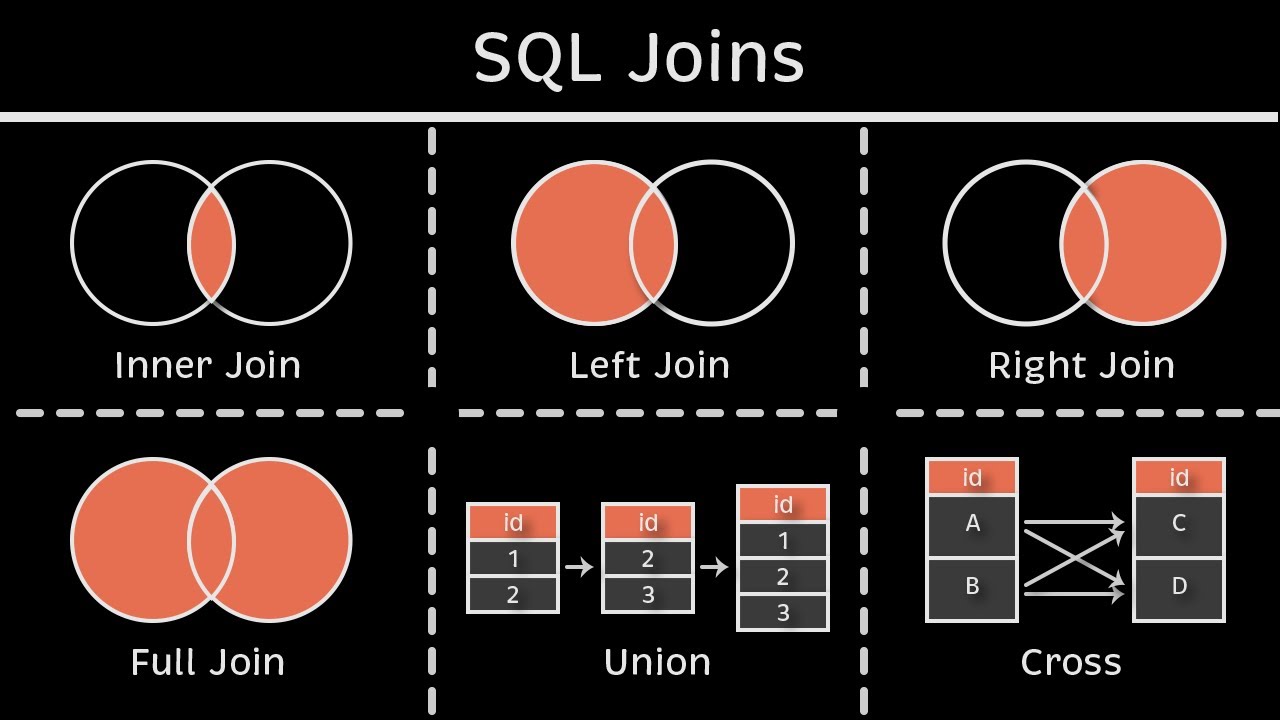
A left join is used when you want to retrieve all records from the left table (in this case, the child entity) and the matched records from the right table (the parent entity). If there is no match, the result will contain nulls for columns of the right table.
In simpler terms, using a left join allows you to see every child entry, regardless of whether it has a corresponding parent, giving a complete view of child records.
Problem Statement
You may encounter a scenario where you're trying to perform a left join but your initial approach translates to an inner join, which does not produce the results you need. For instance, consider the following code snippet:
[[See Video to Reveal this Text or Code Snippet]]
This code performs an inner join rather than the desired left join. But how can we achieve a left join?
Solution: Using LINQ Query Syntax for Left Join
The recommended approach to perform a left join in EF Core is to use LINQ query syntax. This allows for a more intuitive way to express your queries. Here is an example of how to do that:
[[See Video to Reveal this Text or Code Snippet]]
Breakdown of the Code
From Clause: This initiates the query by specifying the child entity (Child).
Join Clause: This connects the child entity to the parent entity (Parent), based on the ParentId.
Into Clause: The results of the join are stored into a group join (gj), which allows you to work with potential matches.
From Clause with DefaultIfEmpty: This is where the left join comes into play. DefaultIfEmpty() ensures that if there is no matching parent for a child, the parent will be null in the result.
Select Clause: Finally, a new anonymous object is created which includes both the parent and child records.
Conclusion
Performing a left join in Entity Framework Core is entirely feasible using LINQ query syntax. This approach not only simplifies your queries but also ensures you retrieve all child records along with their associated parent records, while safely handling any missing matches.
By leveraging this understanding of left joins in EF Core, you can enhance your data retrieval processes, leading to richer and more informative queries in your applications.
Now you're equipped with the knowledge to implement left joins effectively. Happy coding!
Повторяем попытку...

Доступные форматы для скачивания:
Скачать видео
-
Информация по загрузке: