F. Schubert: Arpeggione - New Transcription for Viola and Piano
Автор: hahnklang
Загружено: 2013-10-27
Просмотров: 156544
Описание:
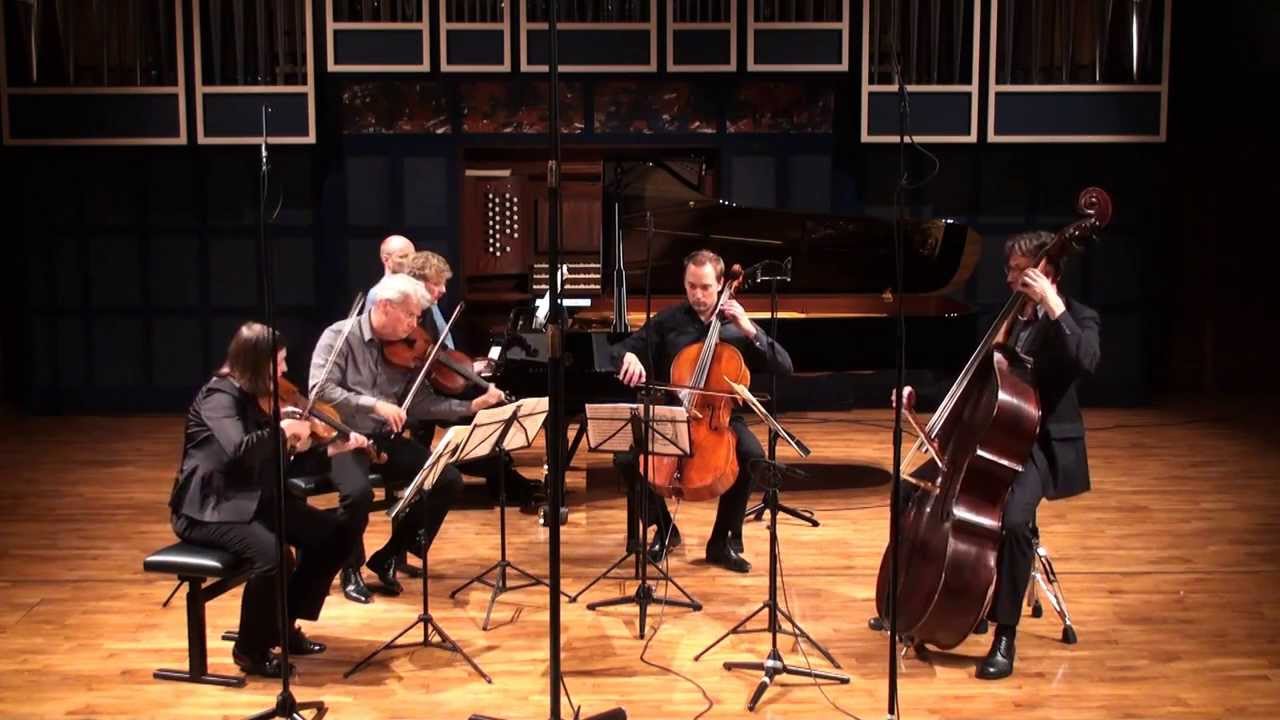
Hartmut Lindemann - Viola
Diana Baker - Piano
Franz Schubert: Sonate für Arpeggione
00:00 - Allegro Moderato
12:06 - Adagio
15:41 - Allegretto
Recorded in 2012 at the Konzerthaus Detmold
Recording Producer: Ephraim Hahn
Recording Engineer: Benjamin Reichert
The Arpeggione was invented by Johann Georg Stauffer in Vienna in 1823. At approximately the same time an identical instrument was produced in the workshop of the violin maker Peter Teufelsdorfer in Budapest. Both Arpeggione instruments were also known as: 'Guitar-Violoncello', 'Guitarre d'amour', 'Bogen-Guitarre' and 'Sentimental-Guitarre'.
The instrument had 6 strings and 24 metal frets. It had no protruding edges and a flat back. It was tuned like the guitar (E-A-d-g-b-e ́) and possessed a range of five octaves. Unlike the guitar it had an arched belly. The string stop was similar to that of the cello. With a gamba-like sound, this hybrid instrument enjoyed only a decade of popularity. Examples can be found in the Musical Instrument Museums in Berlin and Leipzig.
A single significant composition for the Arpeggione, the Sonata in A minor D821 by Franz Schubert, was written in November 1824. It was commissioned by Vincent Schuster, the author of the only tutor for the Arpeggione (1825).
Schubert's work was not published until 1871, by which time the Arpeggione had become obsolete. Consequently, we know the sonata only in arrangements for cello, viola and, less frequently, for the violin.
Regarding the performance practice of this piece, I should here remark that I consider historical recordings to be documents of musical history. A first recording on 78 r.p.m. gramophone records was made in 1929 by Gaspar Cassadó and the Hallé Orchestra under Hamilton Harty. This was a trumped up paraphrase for cello and orchestra. An exemplary performance of the original was released in 1937 by Emanuel Feuermann and Gerald Moore.
A minor is a particularly grateful key for the guitar. Schubert's choice of A minor was therefore appropriate for the Arpeggione. In my view, however, this key does not take into consideration the virtuoso demands and challenges made by this work upon the violist. My search for a suitable key for a more effective adaptation for the viola led me to G minor.
Because the use of the thumb position, so liberating for cellists when playing in the higher positions, is not available to the violist, the tessitura in most editions for viola has been drastically and, sometimes, insensitively altered; a solution which leads to unsatisfactory results. It was with Schubert's approval that his Lieder were soon transposed into keys suitable for voices of different registers. In deciding upon the key of G minor, I am doing no more than upholding this tradition. The resultant ideal conditions for the violist parallel those of the original key for the Arpeggione. Most of the difficult passage work can now be more easily executed.
The Adagio, for reasons of sonority, I have transposed a seventh higher. In the key of D-Major the natural resonance of the viola is displayed to best advantage.
In this G minor version the open strings of the viola assume the same role as did those of the Arpeggione in the original A minor. This surely accords with the aims of authentic performance practice. Incidentally, since the world-wide introduction of equal temperament tuning, the idiosyncrasies of the individual keys are much attenuated. It is, therefore, no longer of significance whether a work sounds in A or in G minor.
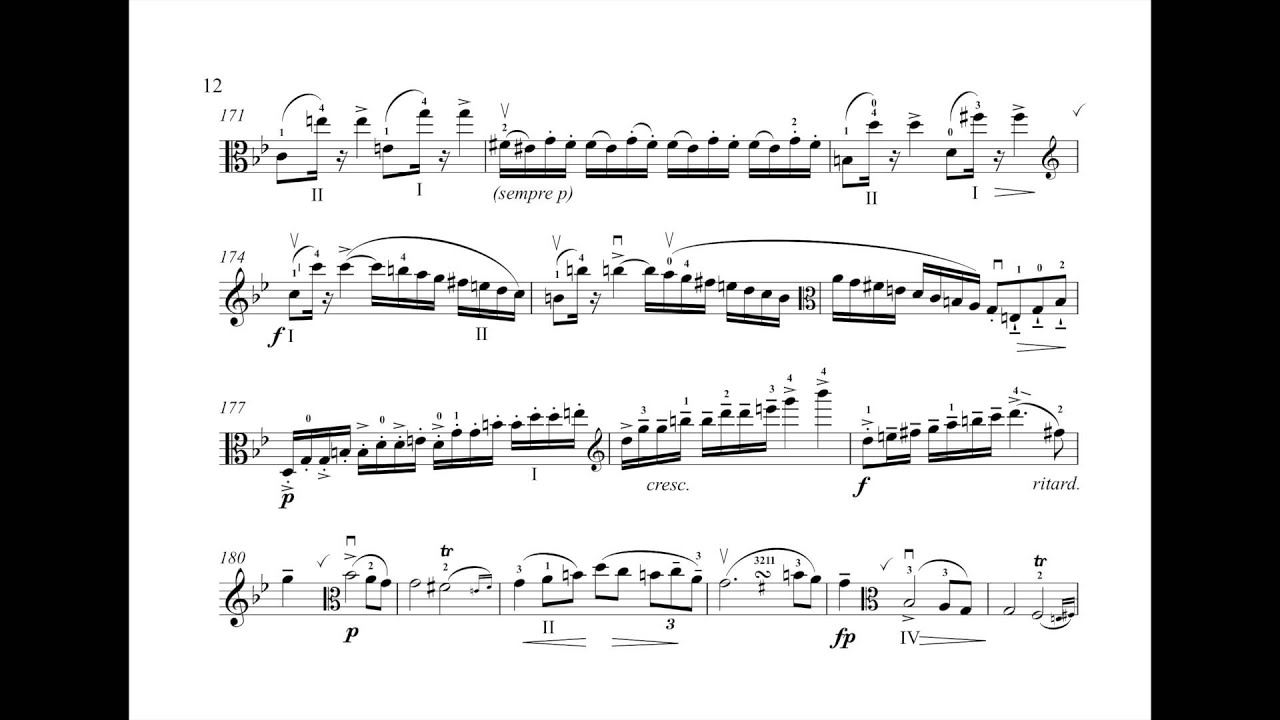
To benefit fully from the advantages of a transposition into G minor I have included, in the viola part, suggestions for such technical aspects of a performance as fingering and bowing. In the piano part, easily identifiable between brackets, can be found dynamic markings which differ from those
of the Urtext. These represent the fruits of my many years of experience playing this sonata in public. I recommend those who study this work to make themselves acquainted with the facsimile of Schubert's score.
Professor Hartmut Lindemann, Cologne, February 2011.
The scores of this version are awaylable in public domain:
Solo part: https://hahnklang.de/score/Schubert%2...
Piano part: https://hahnklang.de/score/Schubert%2...
Повторяем попытку...
Доступные форматы для скачивания:
Скачать видео
-
Информация по загрузке:




![[NYCP] Schubert - Arpeggione Sonata (Richard O'Neill, viola)](https://imager.clipsaver.ru/S0YLqYI6x1A/max.jpg)

![[Yo-Yo Ma+Emanuel Ax] Schubert: Arpeggione Sonata D821 for Cello & Piano](https://imager.clipsaver.ru/B_k-osomA3M/max.jpg)