SLN Webinar: How genomics can inform conservation: insights into species history & distribution
Автор: Snow Leopard Network
Загружено: 2026-01-21
Просмотров: 31
Описание:
SLN Webinar: How genomics can inform conservation: Genomic insights into species history and current distribution of snow leopards
https://snowleopardnetwork.org/2026/0...
About the Talk:
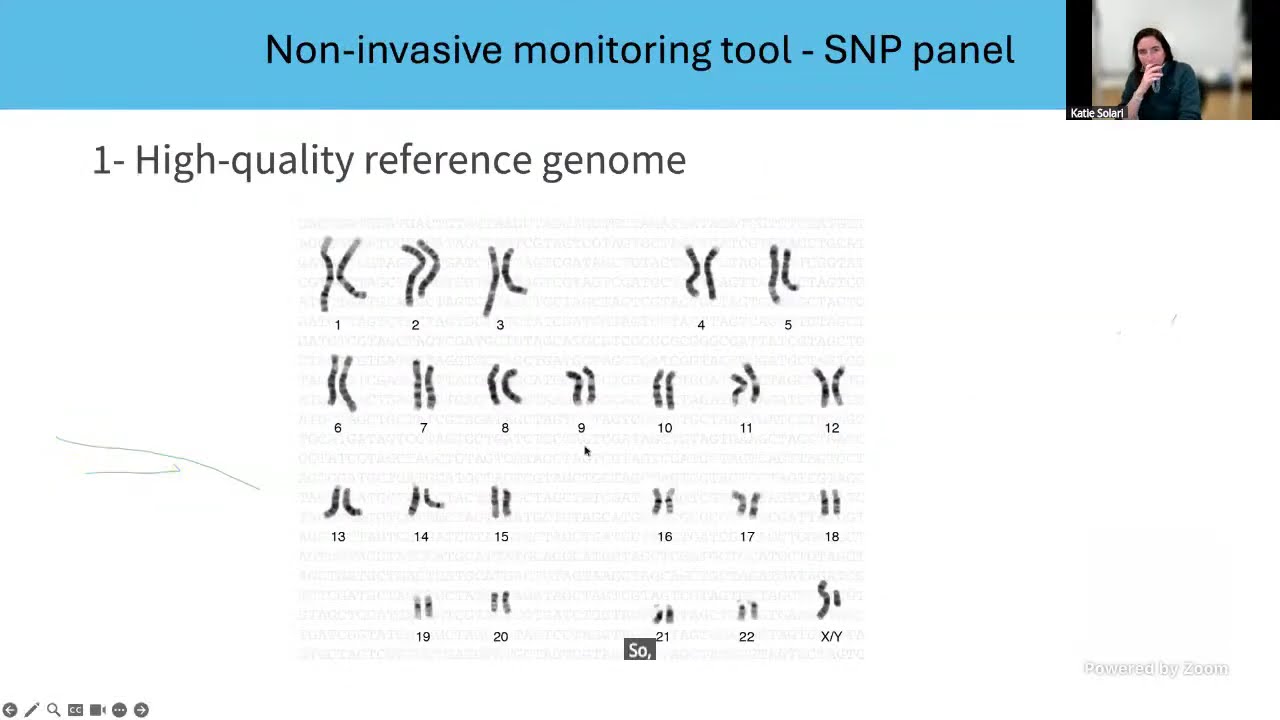
Genomic data can help inform conservation in numerous ways. Katie will begin by describing what insights they have been able to make regarding the evolutionary history and current status of snow leopard using whole genome sequencing data (these results are thoroughly described in the PNAS publication), and will then detail how this genomic information was used to create a new molecular tool (specifically, a SNP panel), to identify snow leopard individuals genetically from fecal samples (this project is thoroughly described in the Molecular Ecology Resources publication). Katie completes her presentation by discussing how this SNP panel can be employed across the snow leopard range to hopefully aid in existing conservation efforts. Our speaker hopes that some researchers in the audience might be interested in utilizing this SNP panel on samples from their research area and will be eager to answer any questions about how this can be done.
About our Speaker:
Katie Andrea Solari has a PhD in Ecology and Evolutionary Biology from Stanford University. Katie is currently a research scientist in the Petrov Lab at Stanford University and the Associate Director of the Program for Conservation Genomics (PCG). Katie’s work focuses on developing methods and generating genetic data that can be used to aid conservation management. This includes producing genomic datasets for species of conservation concern and distilling this data down to SNP panels that can be used to gain meaningful information from non-invasive samples.
About our Facilitator:
Shakeel Ahmad has a PhD in Wildlife Ecology from Quaid-i-Azam University, Pakistan. His doctoral research focused on understanding snow leopard population dynamics in relation to resource availability, using non-invasive genetic approaches and spatial capture–recapture models. Shakeel’s work emphasizes the application of molecular ecology and advanced spatial and statistical analyses to estimate population size, density, and prey availability of large carnivores. His broader research interests include large carnivores and their prey ecology, human–wildlife interactions, and the use of non-invasive tools such as camera trapping and non-invasive genetics to support evidence-based wildlife conservation and management.
Повторяем попытку...
Доступные форматы для скачивания:
Скачать видео
-
Информация по загрузке: