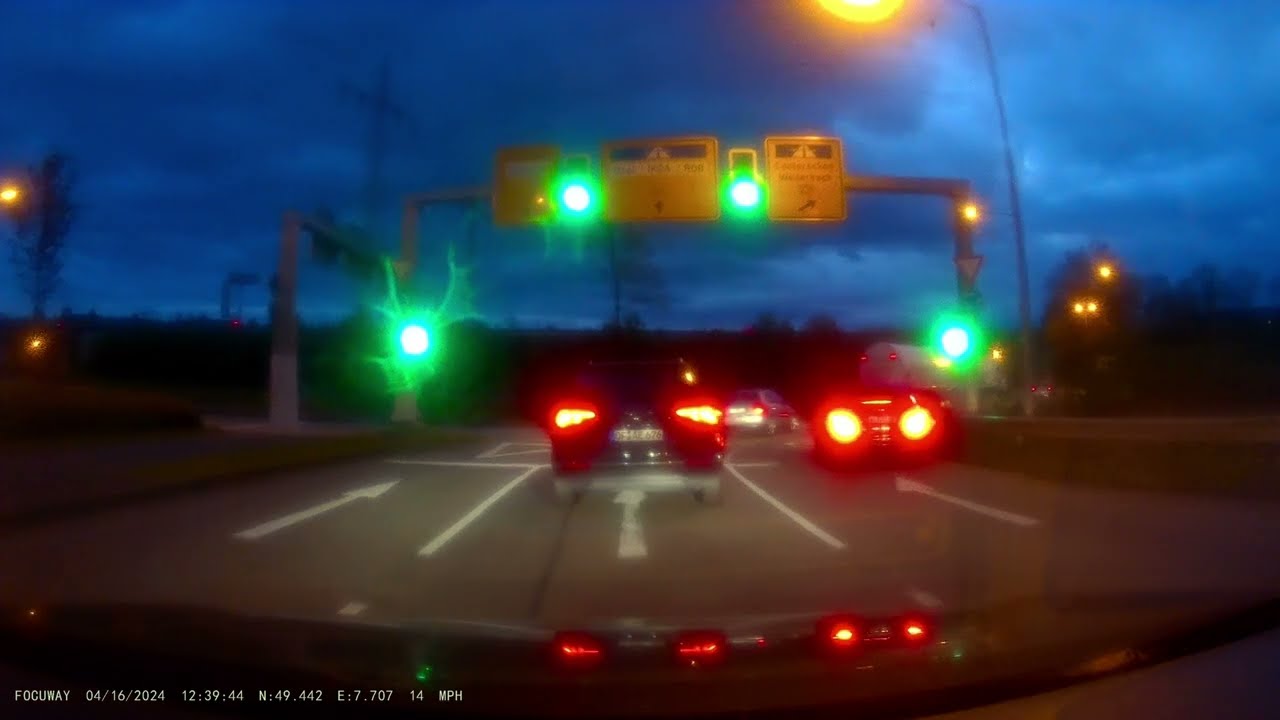
Grocery Shopping Again | Kaiserslautern, Germany - Schopp, Germany | Dash Cam | POV | Slow TV
Автор: Dashcam Diner
Загружено: 2025-03-02
Просмотров: 41
Описание:
Schopp is a municipality in the district of Kaiserslautern, in Rhineland-Palatinate, western Germany. Schopp station lies on the Biebermühl Railway.
he place was first mentioned in documents in 1345. In the Middle Ages Schopp, together with Waldfischbach, Geiselberg, Schmalenberg and Heltersberg, was under the cloister Hornbach. With the secularization of the monastery in 1557, the places came to the Electorate of Palatinate.
From 1798 to 1814, when the Palatinate was part of the French Republic (until 1804) and then part of the Napoleonic Empire, Schopp was incorporated into the canton Waldfischbach in the department of Donnersberg and was under the Mairie Waldfischbach. In 1815, the place was first added to Austria. A year later, the community moved to the Kingdom of Bavaria and was there part of the Rhine Circle. From 1818 to 1862 the town was part of the Landkommissariat Pirmasens, which was subsequently converted into a district office.
1939 Schopp was incorporated into the district of Pirmasens. After the Second World War, the community within the French occupation zone became part of the then newly formed state Rhineland-Palatinate. In the course of the first Rhineland-Palatinate administrative reform Schopp moved in 1969 in the district of Kaiserslautern. Three years later, the town was incorporated into the newly created collective municipality Kaiserslautern-Süd, which was merged into Landstuhl in July 2019.
Kaiserslautern is a town in southwest Germany, located in the state of Rhineland-Palatinate at the edge of the Palatinate Forest. The historic centre dates to the 9th century. It is 459 kilometres (285 miles) from Paris, 117 km (73 miles) from Frankfurt am Main, 666 kilometers (414 miles) from Berlin, and 159 km (99 miles) from Luxembourg.
Kaiserslautern is home to about 100,000 people. Additionally, approximately 45,000 NATO military personnel are based in the city and its surrounding district (Landkreis Kaiserslautern).
Prehistoric settlement in the area of what is now Kaiserslautern has been traced to at least 800 BC. Some 2,500-year-old Celtic tombs were uncovered at Miesau, a town about 29 kilometres (18 miles) west of Kaiserslautern. The recovered relics are now in the Museum for Palatinate History at Speyer.
Kaiserslautern received its name from the favourite hunting retreat of Holy Roman Emperor Frederick Barbarossa who ruled the Holy Roman Empire from 1155 until 1190. The small river Lauter made the old section of Kaiserslautern an island in medieval times. Ruins of Frederick's original castle, built 1152–1160, can still be seen in front of the Rathaus (city hall). A second castle, Nanstein Castle, was built at Landstuhl to guard the western approach to the city. Barbarossa's influence on Kaiserslautern remains today, in its nickname as a "Barbarossa city". Local legends claim in 1497, a nearly 6 m long pike was caught in a lake, the Kaiserwoog, with a ring saying it was placed by Emperor Frederick II, personally in 1230, later finding its way onto the city's coat of arms.
The Stiftkirche, Kaiserslautern's oldest church, was constructed in 1250–1350. As the population of Kaiserslautern grew, King Rudolf von Habsburg chartered the town an imperial city in 1276.[8] St. Martin's Church was built in the 14th century, originally as a Franciscan monastery church. Today a section of the original city wall still stands in the courtyard of the church.
By 1375, the city of Kaiserslautern was pledged to Electoral Palatinate and therefore became subsequently part of the Wittelsbach inheritance.
Modern-day Kaiserslautern is a centre of information and communications technology, home to a well-known university, a technical college and many international research institutes located throughout the city. Kaiserslautern is a popular destination for tourists, offering a range of attractions, and sites for tourists to visit.
Town Hall Kaiserslautern is one of the tallest buildings and is located in the city centre. The bar and coffee shop on the top floor provides a panoramic view of the city and surrounding countryside.
The tallest building in the centre of Kaiserslautern is St. Mary's, a Roman Catholic church, whilst the highest structure in all Kaiserslautern is the television tower in the suburb of Dansenberg, southwest of the city centre.
Kaiserslautern's large botanical gardens feature a Japanese-style garden. Another unusual feature is the Waschmühle, an enormous 160-metre (520 ft) public swimming pool that is the largest in Europe. There are several pedestrian-only shopping zones with numerous and varied restaurants and bars located in the city centre surrounding the old city . In the Altstadt you will find the "Kaiserbrunnen", a large ornamental fountain with symbols of the city's history such as a sewing machine, as produced by the Pfaff company in the city, a football representing the city's football club and various animals that children can climb.
An American redneck in Europe
Повторяем попытку...
Доступные форматы для скачивания:
Скачать видео
-
Информация по загрузке:




![[ Driving Japan ] Tokyo City Highway. Relax and sleep. 首都高速](https://image.4k-video.ru/id-video/-F-hrZKXM-k)
![🇯🇵 Японский пеший тур - Исследование пригородов Киото, Япония [ 4K HDR - 60 кадров в секунду ]](https://image.4k-video.ru/id-video/OjHbS-_nncw)