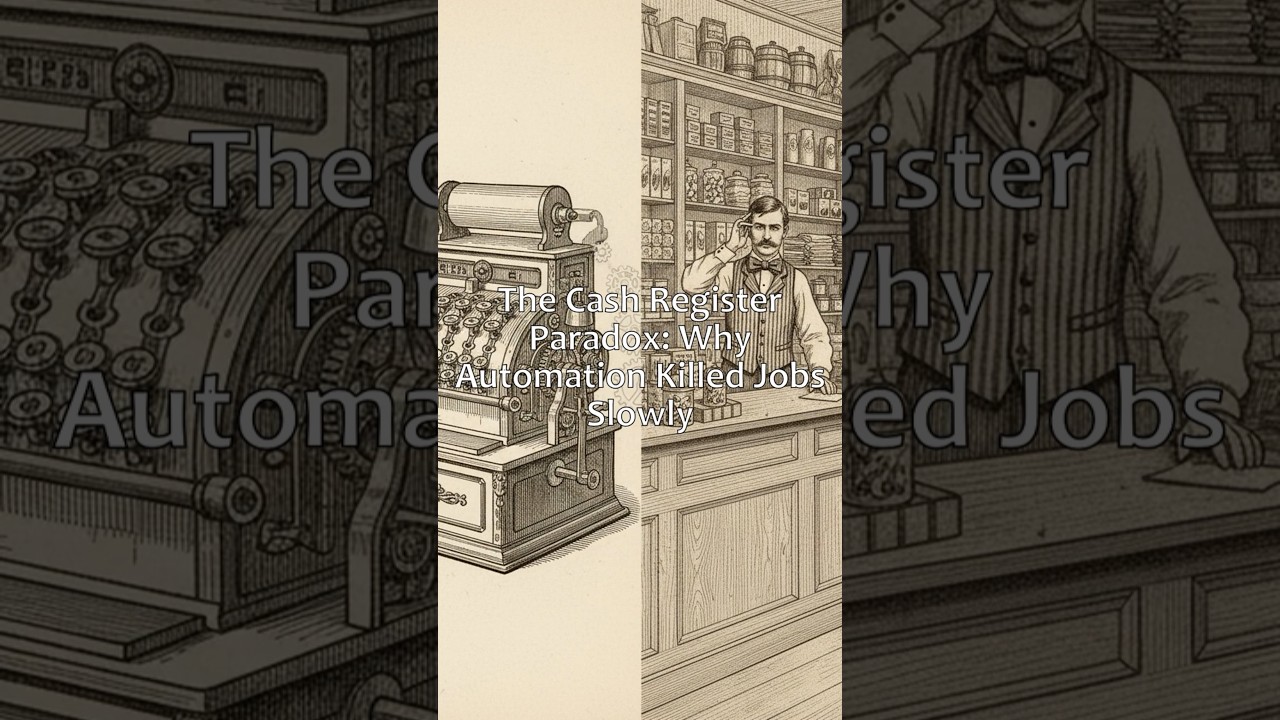
The Cash Register Paradox: Why Automation Killed Jobs Slowly
Автор: Automated Past
Загружено: 2026-01-20
Просмотров: 473
Описание:
The Cash Register That Didn't Kill the Clerk (But Changed Everything)
In 1879, James Ritty's cash register promised to revolutionize retail—but the real story is far more complex than simple automation replacing workers.
When the cash register first arrived, store owners expected it to eliminate clerks by removing the need for mental arithmetic and careful money handling. Instead, something unexpected happened: the technology freed employees from tedious calculation, allowing them to become better salespeople. They could charm customers, answer questions, and move merchandise faster than ever before.
As clerks became more efficient, retailers hired even more of them to keep pace with growing business. The cash register had fundamentally altered retail economics—not by eliminating labor, but by making labor more productive and more profitable to deploy.
But decades later, the real disruption arrived quietly. Self-service stores and department stores emerged, built on the foundation of reliable cash registers. These new formats required far fewer clerks per customer because the entire workflow had been redesigned around the technology.
The irony? The cash register didn't kill the retail clerk in 1879—but it made possible the store formats that eventually would.
This story reveals a deeper truth about automation: its most devastating impact often comes not from machines replacing workers directly, but from how they reshape entire systems around them.
Sometimes progress whispers before it roars.
---
What does this tell us about technology, labor, and the future of work?
Повторяем попытку...
Доступные форматы для скачивания:
Скачать видео
-
Информация по загрузке: