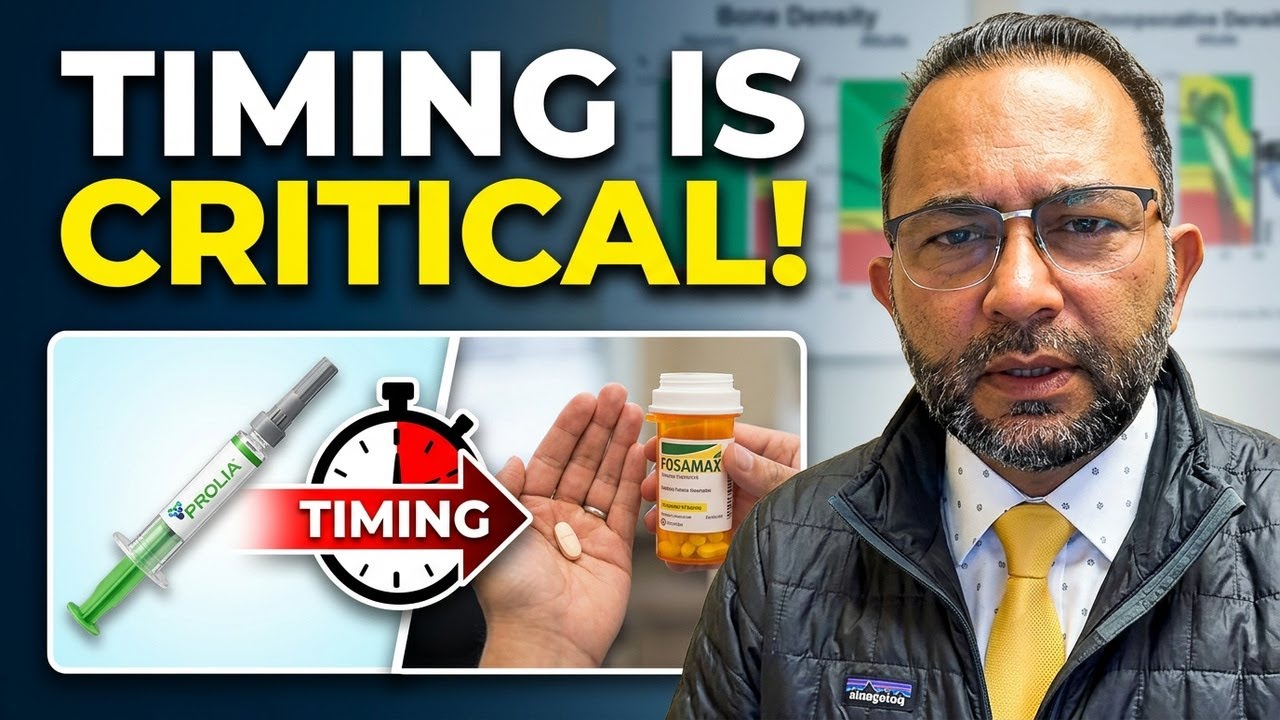
Switching from Prolia to a pill? Timing matters more than most people realize?
Автор: DrPKlyfe : Let The Nature Help Heal You.
Загружено: 2026-03-07
Просмотров: 18
Описание:
Are you switching from Prolia to an oral bone medication like Fosamax (alendronate) or Actonel (risedronate)? In this video, Dr. PK explains what patients need to know about osteopenia, osteoporosis, fracture prevention, and safe transition planning.
Stopping Prolia (denosumab) without the right follow-up treatment may lead to rapid bone loss and a higher fracture risk. That’s why timing matters. In this video, you’ll learn:
Why the timing of your switch is so important
Which oral bisphosphonates are commonly used
What questions to ask your doctor before changing treatment
The role of DEXA scan, FRAX score, calcium, and vitamin D
Why Vitamin D3 and K2 do not replace osteoporosis medications when fracture risk is high
When IV Reclast may be considered instead of oral medication
This video is for education only and is not personal medical advice. Always speak with your own healthcare professional before changing osteoporosis treatment.
[INTRO: 0:00-0:20]
Visual: Dr. PK on screen, warm, welcoming tone.
Dr. PK:
"Hello everyone, Dr. PK here! Today, we're going to talk about osteopenia and osteoporosis treatment, specifically what happens when you switch from Prolia to oral medications. This is an important topic, so if you or a loved one is in this situation, stick around because I’m breaking it down for you."
[HOOK: 0:21-0:40]
Visual: Title card that reads “Switching from Prolia to Oral Bone Medications” with bullet points like “Timing Matters,” “Oral Options,” and “Preventing Fractures.”
Dr. PK:
"Maybe your doctor has suggested you switch from Prolia to an oral medication. You're likely wondering, is that okay? And what should you expect? I’m here to explain the key things you need to know to keep your bones healthy and strong."
[KEY POINT 1: Timing Matters (0:41-1:30)]
Visual: Dr. PK speaking, with text on screen reading “Timing is Crucial.”
Dr. PK:
"First up: timing matters. If you’ve been on Prolia for osteoporosis treatment and are about to stop, it’s essential to make the transition carefully. Prolia is a powerful injection that helps reduce bone breakdown, but stopping it abruptly without a plan can increase your risk of fractures.
That’s why most doctors start you on an oral bisphosphonate around the same time you would be due for your next Prolia injection. Oral options like Alendronate (Fosamax) or Risedronate (Actonel) are common choices. These help “lock in” the benefits you’ve already gained from Prolia, preventing rebound bone loss. So, switching is often okay as long as it’s done with proper planning."
[KEY POINT 2: Questions to Ask Your Doctor (1:31-2:10)]
Visual: Text overlay with questions to ask your doctor.
Dr. PK:
"Now, here are some key questions you should ask your doctor when transitioning:
1️⃣ When is your next Prolia dose due? – You don’t want to miss that window.
2️⃣ Do you need Prolia if you only have osteopenia? – Prolia is usually reserved for higher fracture risk, so make sure it’s the right choice for you.
3️⃣ Have you had a recent DEXA scan or FRAX score? – This helps determine your true fracture risk and guides the medication choice.
4️⃣ Do you have any swallowing or digestive issues? – Some oral meds may not be ideal if you have reflux or ulcers. In that case, IV meds like Reclast might be recommended."
[KEY POINT 3: Vitamin D, Calcium, and Lifestyle (2:11-3:00)]
Visual: A graphic showing vitamin D, calcium, and exercise benefits.
Dr. PK:
"In addition to medications, don’t forget about the basics:
Vitamin D — Make sure your levels are in the 30–50 ng/mL range, which is ideal for bone health.
Calcium — Aim for about 1,000–1,200 mg/day, but ideally from food sources like dairy, leafy greens, or fortified products.
Exercise — Strength training and balance exercises are vital to prevent falls and fractures. They’ll help you build the strength your bones need to stay resilient."
Visual: Dr. PK explaining with a thought bubble showing “Vitamin D3 & K2” and “Medications.”
Dr. PK:
"Now, I’ve seen some comments that suggest Vitamin D3 and K2 are all you need for bone health. While they’re important, they don’t replace the power of medications like Prolia or oral bisphosphonates, especially when your fracture risk is higher. Remember, medications work—they help reduce fractures, which is the goal. Vitamin D and calcium are supportive, but they’re not a substitute for prescription bone meds if your risk is elevated."
[CLOSING: 4:01-4:30]
Visual: Dr. PK on screen with a “Thank You” text overlay.
Dr. PK:
"So, if you’re transitioning from Prolia to an oral medication, make sure to do it carefully. Ask your doctor the right questions and stay on top of your vitamin D and calcium levels. Most importantly, don’t delay the switch—get your bones the protection they need.
I hope this video helped clarify your options! If you found this information useful, don’t forget to like, share, and subscribe for more bone health tips. See you next time!"
Повторяем попытку...
Доступные форматы для скачивания:
Скачать видео
-
Информация по загрузке: